


Winemaker Notes
Deep, dark and dense red with an intense nose of red and black berries, spice. The palate is a beautiful composition, silky tannins, power and elegance. Overall, the wine is expressive, noble and complete.
Professional Ratings
-
Jeb Dunnuck
The 2019 Châteauneuf Du Pape Grand Vin offers more depth, with a darker core of fruit as well as complex notes of peppery garrigue, loamy earth, and incense. The balance here is spot on, it's medium to full-bodied, and has great tannins, all making for a brilliant Châteauneuf du Pape with tons to love. It shows the sunny style of the vintage as well but doesn't lose a beat with regards to elegance and finesse. Give bottles 3-4 years and it should have two decades of overall longevity.
-
Robert Parker's Wine Advocate
Hints of vanilla, menthol and cedar gently mark the nose of the 2019 Chateauneuf du Pape Grand Vin, which saw about 20% new oak in its élevage. There's plenty of raspberry and black cherry to balance out the ledger in this balanced, age-worthy effort. It's full-bodied and labeled a full 1% higher in alcohol than its Saintes Pierres sibling, with a rich, ripe mouthfeel, ample concentration and a long, velvety finish that adds hints of salted licorice. Tasty stuff.
Rating: 95+ -
Vinous
Saturated ruby. Expansive, smoke- and mineral-accented black raspberry, cherry cola, cassis, baking spice and succulent herb scents show outstanding detail and lift. Sweet and expansive in the mouth, offering vibrant red/blue fruit liqueur, candied lavender, spicecake and licorice flavors that stain the palate. Powerful yet impressively lively and focused on the extremely long, floral- and spice-driven finish, which is framed by steadily building tannins.
-
Wine Enthusiast
With earthy intensity, this wine presents fresh aromas of black cherry, currant, wild thyme, and vanilla. The palate is powerful, beginning with a round layer of wild strawberry before transitioning to black cherries, plum, clove, and cocoa. Silky tannins and balanced acidity hint at its potential, though it needs more time to fully harmonize. Cellar through 2030+ for optimal development.
-
Wine Spectator
This lures you in with a well of slightly warmed cassis mixed with raspberry pâte de fruit and mulled bitter cherry. On the back end, waves of menthol, tobacco, cast iron and warm earth mix in with the fruit. Youthfully backward and on the brawny side, this will need some cellaring to resolve fully. Grenache, Syrah, Mourvèdre, Counoise and Vaccarèse. Best from 2024 through 2038.



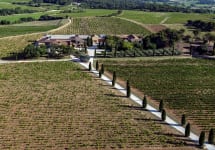
Since their very first vintage bottled under the Guigal name, in 1946, the Guigal family has produced a Chateauneuf-du-Pape. The terroirs of Nalys realize a dream spanning three generations to join this leading prestigious and historic appellation. A property of 125 contiguous acres, Nalys is comprised of three spectacular plots within three of the best vineyards in the appellation: the famous “La Crau”, Nalys, and “Bois Sénéchal”. Already listed in regional land registers at the end of the 16th century, Chateau de Nalys is one of the oldest properties in the appellation, and begins a new chapter in the hands of Guigal.

With bold fruit flavors and accents of sweet spice, Grenache, Syrah and Mourvèdre form the base of the classic Rhône Red Blend, while Carignan, Cinsault and Counoise often come in to play. Though they originated from France’s southern Rhône Valley, with some creative interpretation, Rhône blends have also become popular in other countries. Somm Secret—Putting their own local spin on the Rhône Red Blend, those from Priorat often include Merlot and Cabernet Sauvignon. In California, it is not uncommon to see Petite Sirah make an appearance.

Famous for its full-bodied, seductive and spicy reds with flavor and aroma characteristics reminiscent of black cherry, baked raspberry, garrigue, olive tapenade, lavender and baking spice, Châteauneuf-du-Pape is the leading sub-appellation of the southern Rhône River Valley. Large pebbles resembling river rocks, called "galets" in French, dominate most of the terrain. The stones hold heat and reflect it back up to the low-lying gobelet-trained vines. Though the galets are typical, they are not prominent in every vineyard. Chateau Rayas is the most obvious deviation with very sandy soil.
According to law, eighteen grape varieties are allowed in Châteauneuf-du-Pape and most wines are blends of some mix of these. For reds, Grenache is the star player with Mourvedre and Syrah coming typically second. Others used include Cinsault, Counoise and occasionally Muscardin, Vaccarèse, Picquepoul Noir and Terret Noir.
Only about 6-7% of wine from Châteauneuf-du-Pape is white wine. Blends and single-varietal bottlings are typically based on the soft and floral Grenache Blanc but Clairette, Bourboulenc and Roussanne are grown with some significance.
The wine of Chateauneuf-du-Pape takes its name from the relocation of the papal court to Avignon. The lore says that after moving in 1309, Pope Clément V (after whom Chateau Pape-Clément in Pessac-Léognan is named) ordered that vines were planted. But it was actually his successor, John XXII, who established the vineyards. The name however, Chateauneuf-du-Pape, translated as "the pope's new castle," didn’t really stick until the 19th century.