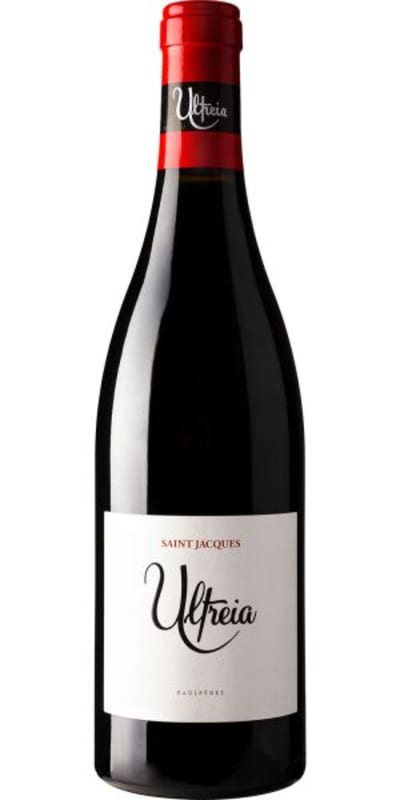


Winemaker Notes
Professional Ratings
-
James Suckling
Floral and fruit-driven on the nose, showing raspberries and blackberries with a delicate lift. The medium- to full-bodied palate has fine-grained, supple tannins and tender red fruit. Sourced 80% from Valtuille, with parcels from El Val and Airola. 100% whole-cluster fermentation.
-
Robert Parker's Wine Advocate
The young 2022 Ultreia Saint Jacques was selected from 10 vineyards, mostly cooler places because of the warmer year. The nose is harmonious and subtle, and it doesn't show any excess ripeness or heat. In fact, it is most impressive. It fermented with 100% full clusters and matured in used oak—barrels and foudres—for 14 months. The palate is medium-bodied, with a juicy texture and very fine tannins. It has a lot of fruit, but with time, it develops more complexity, with notes of fennel and aromatic herbs. There are some 240,000 bottles of this. So, availability should not be a problem.


Primarily found in the Bierzo, Ribeira Sacra and Valdeorras regions of Spain and in the Dão of Portugal (where it is called Jaen), Mencia is an early ripening, low acid grape that can produce wines of great concentration, complexity and ageability. And yet Mencia once suffered from a poor reputation and deemed capable of producing simple and light red wines. Post-phylloxera growers would grow this variety on low, fertile plains, which produced high yields and uncomplicated finished wines. Somm Secret—The recent rediscovery of the ancient, abandoned vines planted on rugged hillsides of deep schist has unveiled the potential of Mencia and added discredit to its old reputation.

One of the few northwestern Spanish regions with a focus on a red variety, Bierzo, part of Castilla y León, is home to the flowery and fruity Mencia grape. Mencia produces balanced and bright red wines full of strawberry, raspberry, pomegranate, baking spice, pepper and black licorice. The well-drained soils of Bierzo are slate and granite.