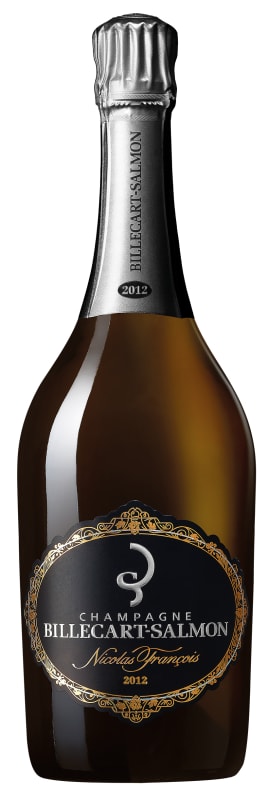


Winemaker Notes
A beautiful golden-yellow hue adorned with bright, patinated gold reflections. The glittering, crystalline appearance is complemented by a rise of finely chiselled bubbles. The intensity and richness of the fruit are complemented by a mineral complexity and enchanting aromas of maturity. Fine, intense notes of orchard fruits, combined with the characteristics of stone fruits and nuts (slightly roasted sliced almonds, Lorraine mirabelles and juicy clementine flesh), all accentuated by the lingering perfume of woodland flowers (acacia and hawthorn). The balance of a tension, enveloped by the wine’s fullness (honeyed biscuits and lemon pulp), and symbolized by noble and pastry flavors (pear clafoutis, Bourbon vanilla, and lime leaf). A texture with a strong personality, with its limestone imprint and an incredible intensity, curbed by its fully integrated low dosage. The elegant finish evolves into notes of cigar boxes and sweet spices (cinnamon and white pepper).
Exceptional vintage with a flavourful, long finish, offering a unique and generous gustatory experience. This cuvée conveys the finesse of Billecart-Salmon’s signature champagne styles with significant ageing potential. Served at cellar temperature, the cuvée will bring out the round flavors of sole in lemon butter or a milk-fed veal chop with chanterelle mushrooms.
Blend: 60% Pinot Noir, 40% Chardonnay
Unlock the secrets of your cuvée with MyOrigin. Your digital tool to discover the Champagne you’re about to taste, down to every last detail: grape varieties, dosage, disgorgement date, number of vintages contained in each cuvée, total sugar and food pairings. Billecart-Salmon reveals everything in full transparency thanks to the 6-digit number located on the back label of your bottle, magnum or jeroboam.
Professional Ratings
-
James Suckling
This complex Champagne has delicious aromas of waffle cones, vanilla beans, apricots and pastry with touches of white chocolate and salted caramel. It’s electric on the palate, which is creamy yet structured and focused, with a fine bead of bubbles and a zesty, tangy backbone of acidity. Long and tense finish. 60% pinot noir and 40% chardonnay (all premier and grand cru), 10% of wines are vinified in oak casks. 10 years on lees. 3.8 g/L dosage.
-
Robert Parker's Wine Advocate
Billecart-Salmon’s 2012 Nicolas François marks the first release since 2008 and stands as another success. The fundamentals remain unchanged: settling and fermentation at low temperatures, a small proportion vinified in oak barrels and partial malolactic fermentation. This vintage was characterized by a prolonged flowering period, significant rainfall and mildew pressure, resulting in a small crop. it exudes aromas of candied lemon, honeysuckle and ripe peach, mingling with nuances of beeswax and orange zest. On the palate, it is full-bodied, ample and enveloping, boasting a layered, concentrated core, a chalky structure and mouthwatering acidity, despite the warm vintage. It concludes with a persistent, saline finish
-
Jeb Dunnuck
A blend of 60% Pinot Noir and 40% Chardonnay, the 2012 Champagne Nicolas François was aged in mostly stainless steel, with 10% in oak barrels, and was disgorged after a lengthy period on lees in March 2024. Rich and toasty, it’s brothy and lush with notes of baked apricot, preserved citrus, black cherry, and ample spice. Fleshy and full-bodied, it is ample in concentration, with a frothy mousse and a lasting, structured finish.
-
Wine Spectator
Sleek and harmonious, with chiseled acidity and a satinlike mousse supporting a fine weave of poached apricot and cherry fruit, pickled ginger, pastry and macadamia nut flavors. Long and mouthwatering, with a clean sweep of salty minerality driving the finish. Pinot Noir and Chardonnay. Disgorged Spring-Summer 2023. Drink now through 2037.


Representing the topmost expression of a Champagne house, a vintage Champagne is one made from the produce of a single, superior harvest year. Vintage Champagnes account for a mere 5% of total Champagne production and are produced about three times in a decade. Champagne is typically made as a blend of multiple years in order to preserve the house style; these will have non-vintage, or simply, NV on the label. The term, "vintage," as it applies to all wine, simply means a single harvest year.

Associated with luxury, celebration, and romance, the region, Champagne, is home to the world’s most prized sparkling wine. In order to bear the label, ‘Champagne’, a sparkling wine must originate from this northeastern region of France—called Champagne—and adhere to strict quality standards. Made up of the three towns Reims, Épernay, and Aÿ, it was here that the traditional method of sparkling wine production was both invented and perfected, birthing a winemaking technique as well as a flavor profile that is now emulated worldwide.
Well-drained, limestone and chalky soil defines much of the region, which lend a mineral component to its wines. Champagne’s cold, continental climate promotes ample acidity in its grapes but weather differences from year to year can create significant variation between vintages. While vintage Champagnes are produced in exceptional years, non-vintage cuvées are produced annually from a blend of several years in order to produce Champagnes that maintain a consistent house style.
With nearly negligible exceptions, . These can be blended together or bottled as individual varietal Champagnes, depending on the final style of wine desired. Chardonnay, the only white variety, contributes freshness, elegance, lively acidity and notes of citrus, orchard fruit and white flowers. Pinot Noir and its relative Pinot Meunier, provide the backbone to many blends, adding structure, body and supple red fruit flavors. Wines with a large proportion of Pinot Meunier will be ready to drink earlier, while Pinot Noir contributes to longevity. Whether it is white or rosé, most Champagne is made from a blend of red and white grapes—and uniquely, rosé is often produce by blending together red and white wine. A Champagne made exclusively from Chardonnay will be labeled as ‘blanc de blancs,’ while ones comprised of only red grapes are called ‘blanc de noirs.’