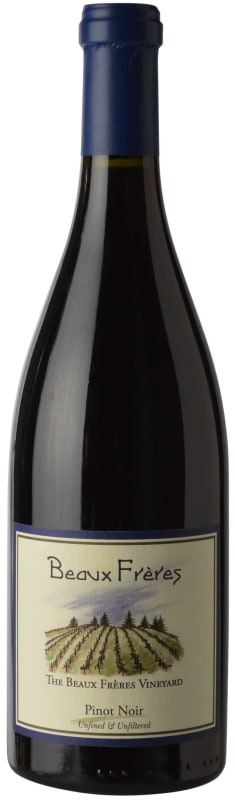


Winemaker Notes
Fresh and complex, pure and polished with high-note acidity elongating a mouthwatering finish: Here in its 27th iteration, The Beaux Freres Vineyard is wearing its heart on its sleeve. Awe-striking in its characteristic juicy cane berry and plum preserves, this classic rendition also shows dried violets and a crispness hearkening to loamy terrain. The quintessential poise, sophistication, and structure of this terroir-driven wine once again show promise for successful cellaring for 10+ years.
Professional Ratings
-
James Suckling
There’s a real sense of depth and detail here with fresh cherries and blueberries, swathed in vanilla-dusted violets, fresh-cut roasting herbs and biscuit spices. The palate has a very plush and smoothly rendered feel with a long, smooth and seamless run of ripe blueberries and cherries. Concentrated and elegant pinot with a long, long finish. Drink across the next decade.
-
Wine Spectator
Combines structure with verve, offering richly expressive raspberry, violet and orange peel flavors that take on polish and complexity toward well buffed tannins. Drink now through 2028.
-
Robert Parker's Wine Advocate
The medium ruby colored 2017 Pinot Noir The Beaux Frères Vineyard opens with aromas of cinnamon stick, citrus peel, desiccated roses, warm earth and dried leaves over a core of fresh cranberries, red currants and blackberries with hints of amaro and crushed raspberries. It’s medium-bodied with slowly blossoming fruits, gaining amplitude with those nuances of earth, spice and amaro, finely framed and wonderfully fresh with a long, nuanced finish. Give this another couple of years in bottle. Rating: 92+


Thin-skinned, finicky and temperamental, Pinot Noir is also one of the most rewarding grapes to grow and remains a labor of love for some of the greatest vignerons in Burgundy. Fairly adaptable but highly reflective of the environment in which it is grown, Pinot Noir prefers a cool climate and requires low yields to achieve high quality. Outside of France, outstanding examples come from in Oregon, California and throughout specific locations in wine-producing world. Somm Secret—André Tchelistcheff, California’s most influential post-Prohibition winemaker decidedly stayed away from the grape, claiming “God made Cabernet. The Devil made Pinot Noir.”

Ribbon Ridge is a regular span of uplifted, marine, sedimentary soils (called Willakenzie), whose highest ridge elevations twist like a ribbon. An early settler from Missouri named Colby Carter noticed this unique topography and gave the region its name in 1865—though it wasn’t declared its own AVA until 140 years later, in 2005. The AVA is enclosed by mountains on all sides between Yamhill-Carlton and the Chehalem Mountains, and is actually part of the larger Chehalem Mountains AVA. Its soils have a finer texture than its neighbors with parent materials composed of sandstone, siltstone, and mudstone. Given its presence of natural aquifers in this five square mile area, most vineyards are actually easily dry farmed!