

Winemaker Notes
#1 Wine Enthusiast Top 100 Wines of 2019
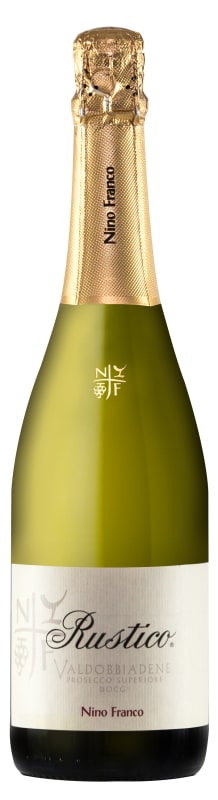
Made in the heart of the Prosecco DOCG zone, Nino Franco’s Rustico Valdobbiadene Prosecco Superiore DOCG is unquestionably the world’s finest value in a high-quality sparkling wine. Made from 100% Glera (traditionally called Prosecco), the non-vintage, light-bodied Rustico offers gorgeously elegant notes of pear, citrus and honeysuckle. The texture is creamy, soft and delicate with persistent effervescence. A sparkling wine whose fresh and immediate drink combined with an excellent floral bouquet. Pair Nino Franco Rustico with charcuterie, risotto, vegetables, seafood and delicate pasta dishes.
The word ‘Rustico’ dates back to an old winemaking tradition where Prosecco was made using a short second fermentation in the bottle and leaving the sediments in the wine. Although no longer the technique, the name ‘Rustico’ has remained as a reflection of quality and tradition.
Professional Ratings
-
Tasting Panel
Vanilla cream and jasmine are dramatically flavorful. Powdered pineapple, mango, and sweet potato attain a high profile with ebullient acidity,
-
Wine Enthusiast
This wine sings with fragrant aromas of green apple, pear, and a hint of citrus. Its palate reveals a refreshing character, featuring vibrant fruit flavors and a lively, invigorating acidity, offering a taste that transports you to an orchard, surrounded by the sweet scents of ripening fruit.
-
Wilfred Wong of Wine.com
The Nino Franco “Rustico” Prosecco Superiore is bright and lively, showing a fine perlage and a pale straw hue. Fresh aromas of pear, apple, and white flowers lead into a crisp, refreshing palate layered with citrus, stone fruit, and a subtle almond note on the finish. Clean and elegant, this sparkling wine is perfect as an aperitif and pairs beautifully with sushi, seafood, or light Venetian cicchetti.
-
Vinous
The NV Valdobbiadene Prosecco Superiore Rustico delights the nose with chamomile and mint, leading to candied apples and sweet melon. It feels silken and creamy, with a pretty inner sweetness and cooling acidity that adds a lovely lift. It tapers off perfumed, leaving a hint of confectionary lime that lingers. (Lot# 24.292 – Bottling date: October 17, 2024)
-
James Suckling
The vintage is on the cork for internal purposes: 2022. This cuvee was bottled on January 17, 2024. It’s made from all the sub-communes of Valdobbiadene. No extra dry here. Alpine scents are strong and compact, avoiding the cold fermentation notes of so many. Excellent Prosecco.


A term typically reserved for Champagne and Sparkling Wines, non-vintage or simply “NV” on a label indicates a blend of finished wines from different vintages (years of harvest). To make non-vintage Champagne, typically the current year’s harvest (in other words, the current vintage) forms the base of the blend. Finished wines from previous years, called “vins de reserve” are blended in at approximately 10-50% of the total volume in order to achieve the flavor, complexity, body and acidity for the desired house style. A tiny proportion of Champagnes are made from a single vintage.
There are also some very large production still wines that may not claim one particular vintage. This would be at the discretion of the winemaker’s goals for character of the final wine.

The wines of Conegliano Valdobbiadene Prosecco Superiore DOCG represent Italy’s highest-quality designation in the Prosecco category. Situated approximately 30 miles north of Venice and 63 miles south of the Dolomites in the province of Treviso, Prosecco Superiore DOCG is defined by a limited geographic area that extends over 15 hillside towns, flanked by the municipalities of Conegliano to the east and Valdobbiadene to the west.
Hand harvesting and cultivation occur in the steep hillsides of Conegliano Valdobbiadene, the birthplace of Prosecco, and while incredibly labor-intensive, also drive quality grape selection and an artisanal approach throughout. To qualify as Prosecco Superiore DOCG, wines must contain at least 85% Glera. Other permitted varieties include Verdiso, Perera, and Bianchetta Trevigiana – but the aromatic Glera is the region’s star. Hardy and vigorous with hazelnut-colored shoots, Glera forms large, loose bunches of beautiful golden-yellow grapes that stand out against the bright green leaves of the vine.
Vines have been grown in Conegliano Valdobbiadene since ancient times. In 1876 Conegliano became home to the first enology school in Italy, an institution of learning and innovation. It fundamentally altered the future course of winemaking in the region, and indeed the entire country, by perfecting the Italian Method of sparkling wine production in autoclaves to preserve and enhance the aromas of the indigenous grape varieties. A Consortium of Conegliano Valdobbiadene producers was formed in 1963 and was instrumental in obtaining the very first Prosecco appellation in 1969. In 2009, Conegliano Valdobbiadene Prosecco was elevated to a DOCG, Italy’s highest wine category. Conegliano, home to the enology school and research center, is known as the area’s cultural capital, while Valdobbiadene, with its high altitudes, dramatically steep hillsides and twisting contours, is devoted mainly to production.
While the vast majority (95%) of Conegliano Valdobbiadene Prosecco is Spumante (sparkling or foamy), it is also made as a fizzy (Frizzante) wine, or even in a rare completely still version called Tranquillo. It comes in three different categories of residual sugar: “DRY,” with 17-32 grams of residual sugar per liter, is actually the sweetest; “Extra-Dry,” ranges from 12-17 grams; and Brut (0-12) is the driest category. Brut Nature or Zero Dossaggio Prosecco has less than 3 grams of residual sugar and Extra-Brut less than 6. Though most Prosecco is made in an autoclave, second fermentation in the bottle is still permitted under the DOCG guidelines, either in the traditional process known as Col Fondo (in which the sediment is left in the bottle) or Metodo Classico with sediment removed.
Due to the Conegliano Valdobbiadene’s complex geologic history, there is tremendous diversity of terroir between the eastern and western portions of the zone and even different sub zones and parcels within the same area. For this reason, in 2009 a sub-category called RIVE was created, which indicates a Prosecco made of grapes from one of 43 registered geographic areas. In order to qualify as a Rive, the grapes have an even lower maximum yield and the wine must be vintage dated. It is also possible to find Prosecco DOCGs made entirely from grapes of a single vineyard parcel.
Conegliano Valdobbiadene is currently shortlisted for inclusion as a UNESCO World Heritage Site.