


Winemaker Notes
Deep ruby color. Intense aromas of white flowers, red cherries and figs. Juicy and complex with hints of cloves and other spices. This well-balanced wine is an elegant expression of the blend of Malbec and Cabernet Sauvignon.
Professional Ratings
-
Robert Parker's Wine Advocate
Approximately half of the volume of the 2017 Amancaya matured in oak barrels, and the other half was kept in concrete vats for one year. This comes from vineyards in Altamira, and the barrels used for the élevage are mostly in barriques produced by Lafite that have a very light toast, with the idea to preserve the aromatics of the wine and let it breath and provide structure in the élevage without interfering with the aromas. The oak is very nicely integrated and folded into the fruit, and the wine comes through as quite pure and fruit driven, with moderate ripeness and a harmonious palate. This was born as the classical second wine in a Bordeaux sense. This wine is sold in Argentina as Petit Caro. 350,000 bottles produced. It was bottled in December 2018.
-
Wilfred Wong of Wine.com
COMMENTARY: The 2017 CARO Amancaya Reserve Red Blend offers excellent satisfaction on the palate. TASTING NOTES: This wine is spiffy in its aromas and flavors of black fruit and savory spices. Enjoy it with grilled beef. (Tasted: December 31, 2020, San Francisco, CA)

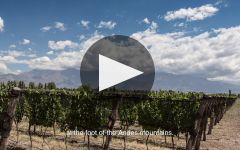


CARO was born of the alliance between two wine cultures (French and Argentine), two noble grape varieties (Cabernet Sauvignon and Malbec), and two renowned wine families, Domaines Barons de Rothschild (Lafite) and Nicolás Catena. Vignerons since the 19th century, these two powerful organizations have combined their deep knowledge of Mendoza's high altitude terroir and the art of winemaking to create a unique wine: CARO. Two noble grapes, two families, one dear and elegant wine.
The idea of forming a partnership between Domaines Barons de Rothschild (Lafite) and the Catena family was born in 1999. Initial enthusiasm quickly became a concrete plan to produce a single wine that would combine French and Argentine cultures and the two signature grapes of each producer, Malbec and Cabernet Sauvignon.
The Catena family has produced wine for three generations. Consequently, it was able to draw on its vast knowledge of the high altitude terroirs of the Mendoza region as well as its passion for Malbec to find the best vineyards. DBR (Lafite) contributed its centuries-old skills in growing, vinifying and ageing great Cabernet Sauvignon, as well as its know-how in blending different grape varieties to produce one wine that is greater than the sum of its parts.
The vineyard locations for the Cabernet Sauvignon are 40% from a 20-year-old vineyard in Agrelo, a region 3,117 feet in elevation, and 10% from 30-year old vines in El Cepillo la Consulta, with an elevation of 3,773 feet. The vineyard locations for Malbec are 10% from a 12 year old vineyard in Tupungato at 4,593 feet elevation and also 40% from a 53-year-old vineyard in Vistalba, at 3,609 feet elevation. Throughout the season we monitor the vineyard technique, irrigation management and bud thinning to ensure low yields in balance with the canopy, good ventilation and illumination.
Previously CEO of Bodegas Argento S.A., Estate Manager Philippe Rolet began his career at Domaine William Fèvre, (France) before joining the Alta Vista Group in Mendoza where he was CEO and President. Aged 46, he holds a French Management degree and is today at the head of the French Honorary Consulate in Mendoza.

One of the world’s most classic and popular styles of red wine, Bordeaux-inspired blends have spread from their homeland in France to nearly every corner of the New World. Typically based on either Cabernet Sauvignon or Merlot and supported by Cabernet Franc, Malbec and Petit Verdot, the best of these are densely hued, fragrant, full of fruit and boast a structure that begs for cellar time. Somm Secret—Blends from Bordeaux are generally earthier compared to those from the New World, which tend to be fruit-dominant.

By far the largest and best-known winemaking province in Argentina, Mendoza is responsible for over 70% of the country’s enological output. Set in the eastern foothills of the Andes Mountains, the climate is dry and continental, presenting relatively few challenges for viticulturists during the growing season. Mendoza, divided into several distinctive sub-regions, including Luján de Cuyo and the Uco Valley, is the source of some of the country’s finest wines.
For many wine lovers, Mendoza is practically synonymous with Malbec. Originally a Bordelaise variety brought to Argentina by the French in the mid-1800s, here it found success and renown that it never knew in its homeland where a finicky climate gives mixed results. Cabernet Sauvignon, Syrah, Merlot and Pinot Noir are all widely planted here as well (and sometimes even blended with each other or Malbec). Mendoza's main white varieties include Chardonnay, Torrontés, Sauvignon Blanc and Sémillon.