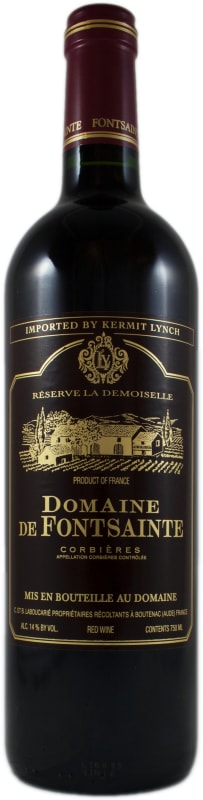


Winemaker Notes
Limpid and garnet-coloured, darkened by purple tints. The colored legs run slowly and cling to the glass. The penetrating bouquet offers up a festival of aromas including jammy red fruits, vanilla pods, pepper and freshly-milled nutmeg. Emblematic notes of the garrigue heath mingle with this supremely harmonious ensemble. A magnificent balance is achieved between the superb and savoury tannins and the fatness and elegance of the mouth. The wine explodes on the palate and finishes at length with notes of crushed almonds.
Professional Ratings
-
Wine & Spirits
The Laboucarié family has been making wine in Boutenac since the 1600s; more recently, Bruno Laboucarié has been shepherding his oldest parcel, La Demoiselle, into its 115th year. Those ancient carignan vines put out a quietly powerful red in 2016, savory to the extreme. There’s a lovely red juiciness in the center, thanks to Laboucarié’s practice of carbonic fermentation for the carignan, and the addition of a little younger-vine, cement-fermented grenache and mourvèdre. The lean, tense structure adds to the wine’s appeal, carrying notes of coffee and walnuts, bay leaves and warm stones. It tastes like a wine from one of the sunniest places in Corbières, vibrant and alive, radiating flavor without weight. Best Buy
-
Robert Parker's Wine Advocate
The medium to full-bodied 2016 Reserve la Demoiselle is a blend of 60% Carignan, 30% Grenache and 10% Mourvèdre, aged six months in French oak. Hints of tar show up on the nose, but there's plenty of cherry fruit, even a hint of raspberry, plus ample spice.


With bold fruit flavors and accents of sweet spice, Grenache, Syrah and Mourvèdre form the base of the classic Rhône Red Blend, while Carignan, Cinsault and Counoise often come in to play. Though they originated from France’s southern Rhône Valley, with some creative interpretation, Rhône blends have also become popular in other countries. Somm Secret—Putting their own local spin on the Rhône Red Blend, those from Priorat often include Merlot and Cabernet Sauvignon. In California, it is not uncommon to see Petite Sirah make an appearance.

The Corbières AOC, established in 1985, is the largest in the Languedoc, and represents the South of France in transition. Though viticulture here dates back to the Romans, only within the last twenty years have Corbières wines begun to reclaim their reputation. Approved for reds, rosés, and whites, the region's vineyards cover a wide variety of elevations, soil types, and exposures. Hilly terrain and the Atlantic Cers wind moderate the Mediterranean heat, giving the wines balance and complexity; the best will go ten years or more in the cellar.
Reds represent 88% of the AOC’s production and are an assemblage of the sun-loving grapes of southern France. Carignan’s briars, Grenache’s berries, Syrah’s cherries and Mourvèdre’s plums allow for a wide range of styles, which are often influenced by the wild herbs of the garrigue. Corbières rosés, though only 9% of production, are serious wines and the small production of Rhône-variety whites are fresh and sea-influenced.
With eleven sub-appellations, Corbières is an AOC in the process of refinement. Corbières-Boutenac attained Cru status in 2005, one of only five in the Languedoc to achieve this highest ranking.