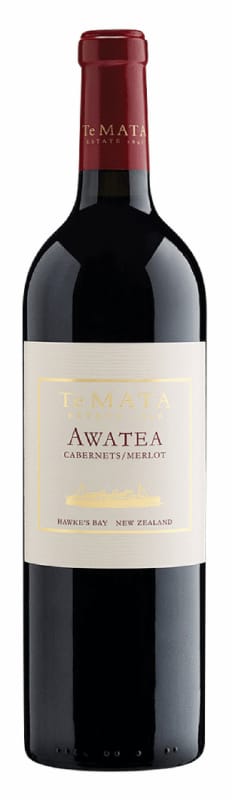


Winemaker Notes
The 2022 Awatea Cabernets/Merlot displays deep red color and blackberry, bay leaf, and currant aromas. The palate features red and dark fruits, floral notes, and hints of chocolate, olive, and cedar. Bright acidity and fine tannins provide structure, while showing excellent length and aging potential.
Blend: 42% Cabernet Sauvignon, 44% Merlot, 14% Cabernet Franc
Professional Ratings
-
Robert Parker's Wine Advocate
The 2022 Awatea Cabernets Merlot is floral and layered with cassis and raspberry, chalk and tobacco, paprika dolce and pink peppercorns. This is modern claret at its finest, and I find it to be beguiling in that way. It's softer and a little less structural than the 2021 but with so much cushioning and fruit. The tannins are firm through the finish, and I feel that balances the sweet fruit well. Yes.
-
Vinous
The 2022 Awatea has a hard act to follow after three stellar vintages, and it's certainly not as dense nor impressive. It does provide a more classical example. Aromatically, it's very attractive with classic Bordeaux blend aromas of blackcurrant, plum, blackcurrant leaf, balsamic and spices of oak and pencil lead. It's a mid-weight, more restrained style with a moderate, finely textured tannin and a sense of old-world dark chocolate bitterness, which is a nice twist.




One of the world’s most classic and popular styles of red wine, Bordeaux-inspired blends have spread from their homeland in France to nearly every corner of the New World. Typically based on either Cabernet Sauvignon or Merlot and supported by Cabernet Franc, Malbec and Petit Verdot, the best of these are densely hued, fragrant, full of fruit and boast a structure that begs for cellar time. Somm Secret—Blends from Bordeaux are generally earthier compared to those from the New World, which tend to be fruit-dominant.

An eclectic region on the east coast of the North Island, Hawkes Bay extends from wide, fertile, coastal plains, inland, to the coast range, whose peaks reach as high as 5,300 feet. While the flatter areas were historically more popular because they are easier to cultivate, their alluvial soils can be too fertile for vines. In the late 20th century, the drive for quality led growers to the hills where soils are free-draining, limestone-rich and more suited to producing high quality wines.
Over the passing of time, the old Ngaruroro River laid down deep, gravelly beds, which were subsequently exposed after a huge flood in the 1860’s. In the 1980s growers identified this stretch, which continues for approximately 800 ha, and named it the Gimblett Gravels. The zone has proven to be ideal for the production of excellent red wines, particularly Cabernet Sauvignon, Merlot and Syrah.
Today the area takes well-earned recognition for its Bordeaux blends and other reds. Expressive of intense stewed red and black berry with gentle herbaceous characters, Gimblett Gravels wines are suggestive of their cool climate origin, and on par with other top-notch Bordeaux blends around the globe.
Chardonnay is the top white grape in Hawkes Bay, making elegant wines, strong in stone fruit character. Sauvignon blanc comes in close behind, notable for its tropical, fruit forward qualities.