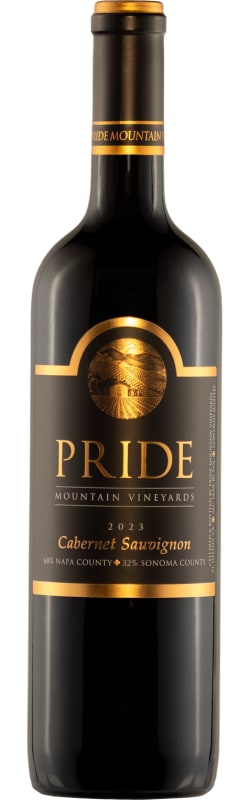


Winemaker Notes
Blend: 91% Cabernet Sauvignon, 6% Petit Verdot, 2% Merlot, 1% Cabernet Franc
Professional Ratings
-
James Suckling
This is a finely made mountain cabernet sauvignon from a cool, refined vintage. Expressive aromas of black currants, bay laurel, graphite, black olives and violets. The palate is finely constructed, with firm yet focused tannins and bright acidity that leads to a dark-fruited, savory finish with no hard edges. Cabernet sauvignon with touches of petit verdot, merlot and cabernet franc.
-
Wine Spectator
Includes 1% Cabernet Franc. Fermented in stainless steel and aged for up to 18 months in 50% new French oak. This Cabernet is a blend of fruit from across the entire property and represents the estate’s largest production, making it the most widely available in the marketplace. It leaps from the glass with pretty herbal notes of bay laurel, sage, and a hint of mint, alongside subtle dark chocolate tones. Medium-bodied yet richly textured, it shows cassis and cola nut flavours, with tannins that build through to a medium- to full-bodied finish.


A noble variety bestowed with both power and concentration, Cabernet Sauvignon enjoys success all over the globe, its best examples showing potential to age beautifully for decades. Cabernet Sauvignon flourishes in Bordeaux's Medoc where it is often blended with Merlot and smaller amounts of some combination of Cabernet Franc, Malbecand Petit Verdot. In the Napa Valley, ‘Cab’ is responsible for some of the world’s most prestigious, age-worthy and sought-after “cult” wines. Somm Secret—DNA profiling in 1997 revealed that Cabernet Sauvignon was born from a spontaneous crossing of Cabernet Franc and Sauvignon Blanc in 17th century southwest France.

Reaching up California's coastline and into its valleys north of San Francisco, the North Coast AVA includes six counties: Marin, Solano, Napa, Sonoma, Mendocino and Lake. While Napa and Sonoma enjoy most of the glory, the rest produce no shortage of quality wines in an intriguing and diverse range of styles.
Climbing up the state's rugged coastline, the chilly Marin County, just above the City and most of Sonoma County, as well as Mendocino County on the far north end of the North Coast successfully grow cool-climate varieties like Pinot Noir, Chardonnay and in some spots, Riesling. Inland Lake County, on the other hand, is considerably warmer, and Cabernet Sauvignon, Zinfandel and Sauvignon Blanc produce some impressive wines with affordable price tags.