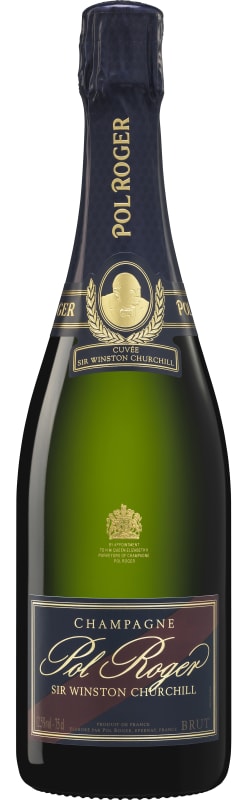


Winemaker Notes
The weight, balance and mineral freshness means that this champagne could be served with Parmigano Reggiano matured for 18 months, a stuffed capon façon demi-deuil or sweetbreads cooked with morels.
Professional Ratings
-
Wine Spectator
Like a finely tailored suit, this exhibits impeccable harmony, class and attention to detail. Integrates a firmly structured spine of acidity with flavors of ripe plum, candied lemon peel, lightly toasted hazelnut, brioche and chamomile, caressing the palate with the plush, creamy mousse. Long on the finish, with mineral, graphite and spice hints, this is hard to stop sipping now but should reward those who wait with even greater expression in years to come. Pinot Noir and Chardonnay. Drink now through 2045.
-
James Suckling
This has complex aromas of croissant, acacia flowers, raw walnuts, flint and oyster shells. Very sleek, tight and structured on the palate, showing elegance and chalky minerality underneath. Seamless, classy finish with a deliciously dry, lightly phenolic citrus pith character coming through. Grand cru pinot noir with some chardonnay. Disgorged June 2024. Drink now or hold.
-
Decanter
After the 2015, the 2018 Sir Winston Churchill represents a notable return to form for this cuvée, finding an impressive level of depth and savour in a vintage sometimes marked by lack of intensity. The polish of ripe grand cru Pinot Noir shines through here, with plenty of black plum, blackberry and dark honey aromas, with brown butter and pastry richness lurking. There's certainly some fruit maturity here, and this may be a Sir Winston with a little more early-drinking charm than some, but it's a fine and true rendition of this cuvée's generous spirit.
-
Robert Parker's Wine Advocate
Disgorged in June 2024 with a dosage of seven grams per liter, Pol Roger’s 2018 Cuvée Sir Winston Churchill introduces itself with aromas of ripe pear, candied tangerine peel and peach mingling with dried fruit. On the palate, it is full-bodied, vinous and broad-shouldered, with a rich core of fruit and an ample, textural mid-palate, underpinned by ripe yet vibrant acidity. The wine concludes with a long, enveloping finish. Reflective of the warm growing season with a late-August harvest, this is a giving Sir Winston Churchill—undeniably in the more muscular register, with ample gourmand flesh and a presently blocky density that will reward some patience.


Representing the topmost expression of a Champagne house, a vintage Champagne is one made from the produce of a single, superior harvest year. Vintage Champagnes account for a mere 5% of total Champagne production and are produced about three times in a decade. Champagne is typically made as a blend of multiple years in order to preserve the house style; these will have non-vintage, or simply, NV on the label. The term, "vintage," as it applies to all wine, simply means a single harvest year.

Associated with luxury, celebration, and romance, the region, Champagne, is home to the world’s most prized sparkling wine. In order to bear the label, ‘Champagne’, a sparkling wine must originate from this northeastern region of France—called Champagne—and adhere to strict quality standards. Made up of the three towns Reims, Épernay, and Aÿ, it was here that the traditional method of sparkling wine production was both invented and perfected, birthing a winemaking technique as well as a flavor profile that is now emulated worldwide.
Well-drained, limestone and chalky soil defines much of the region, which lend a mineral component to its wines. Champagne’s cold, continental climate promotes ample acidity in its grapes but weather differences from year to year can create significant variation between vintages. While vintage Champagnes are produced in exceptional years, non-vintage cuvées are produced annually from a blend of several years in order to produce Champagnes that maintain a consistent house style.
With nearly negligible exceptions, . These can be blended together or bottled as individual varietal Champagnes, depending on the final style of wine desired. Chardonnay, the only white variety, contributes freshness, elegance, lively acidity and notes of citrus, orchard fruit and white flowers. Pinot Noir and its relative Pinot Meunier, provide the backbone to many blends, adding structure, body and supple red fruit flavors. Wines with a large proportion of Pinot Meunier will be ready to drink earlier, while Pinot Noir contributes to longevity. Whether it is white or rosé, most Champagne is made from a blend of red and white grapes—and uniquely, rosé is often produce by blending together red and white wine. A Champagne made exclusively from Chardonnay will be labeled as ‘blanc de blancs,’ while ones comprised of only red grapes are called ‘blanc de noirs.’