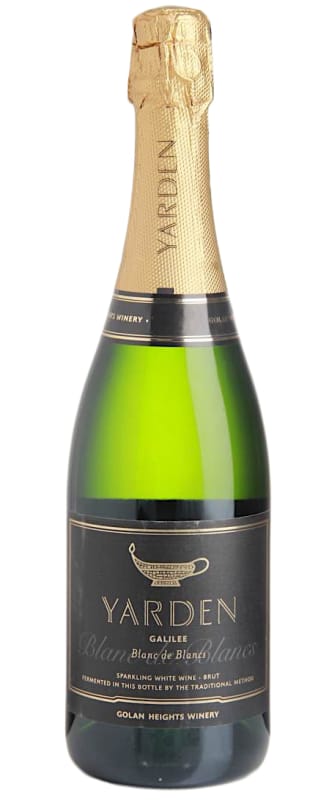


Winemaker Notes
Yarden Blanc de Blancs sparkling wine possesses a delicate, yet complex mixture of characteristics, including lemon, apple and floral notes, all layered with a hint of rich toast. The wine's generous acidity leads into a tasty and fresh finish. While ready to drink now, Yarden Blanc de Blancs will also age gracefully over several years. The wine makes an excellent and festive aperitif, and pairs well with canapes on the rich and/or salty side, such as caviar or pate. Yarden Blanc de Blancs is also a good accompaniment with delicately flavored foods, such as sushi or pan fried chicken breasts finished with a splash of wine - try the Blanc de Blancs as part of the recipe.


Representing the topmost expression of a Champagne house, a vintage Champagne is one made from the produce of a single, superior harvest year. Vintage Champagnes account for a mere 5% of total Champagne production and are produced about three times in a decade. Champagne is typically made as a blend of multiple years in order to preserve the house style; these will have non-vintage, or simply, NV on the label. The term, "vintage," as it applies to all wine, simply means a single harvest year.

With a rich history of wine production dating back to biblical times, Israel is a part of the cradle of wine civilization. Here, wine was commonly used for religious ceremonies as well as for general consumption. During Roman times, it was a popular export, but during Islamic rule around 1300, production was virtually extinguished. The modern era of Israeli winemaking began in the late 19th century with help from Bordeaux’s Rothschild family. Accordingly, most grapes grown in Israel today are made from native French varieties. Indigenous varieties are all but extinct, though oenologists have made recent attempts to rediscover ancient varieties such as Marawi for commercial wine production.
In Israel’s Mediterranean climate, humidity and drought can be problematic, concentrating much of the country’s grape growing in the north near Galilee, Samaria near the coast and at higher elevations in the east. The most successful red varieties are Cabernet Sauvignon, Merlot, and Syrah, while the best whites are made from Chardonnay and Sauvignon Blanc. Many, though by no means all, Israeli wines are certified Kosher.