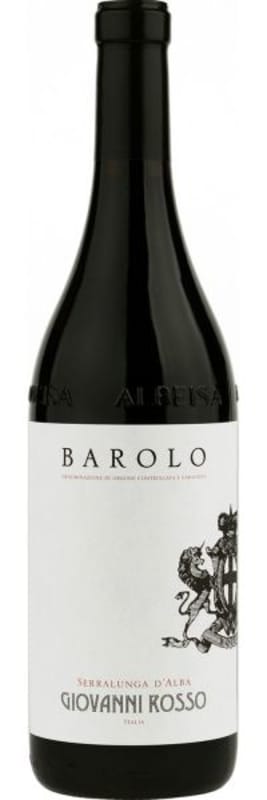


Winemaker Notes
Sharp, floral notes. Cherry in alcohol, star anise and raspberry hints. Fine and elegant body, neat tannins and long finish.
Pair with fresh pasta dishes, grilled fish with sauces, lamb skewers, red
and white meats.
Professional Ratings
-
James Suckling
Bright ruby in color, this is a restrained Barolo with wild strawberry, Parma violet, cinnamon and orange peel aromas. The palate is crisp, with dusty tannins, a medium body, good concentration of blood orange flavors, a tight-knit structure and a polished finish. Approachable now due to the balance, but will improve with time. Drink after 2029.
-
Wine Spectator
Aromas and flavors of raspberry, cherry, rose, spices and tar highlight this light-bodied yet firmly structured red. Elegant, with a solid line of chalky tannins informing the mouthwatering finish. Best from 2027 through 2043.
-
Jeb Dunnuck
The 2020 Barolo is a bright red/ruby color and is fresh with aromas of incense, red cherries, a hint of polished sweet leather, and a classic, fresh herbal profile. Medium-bodied, elegant, and weightless, it has a very similar feel to the 2018 vintage, but with a bit more ripeness on the palate and a bit of darker savory earth on the finish. It will show its best in another 6-12 months. Drink 2025-2035.
-
Vinous
The 2020 Barolo is a pretty, delicate wine. Crushed red berry fruit, cinnamon, mint, cedar and a kick of orange peel waft from the glass in a translucent, mid-weight Barolo that is pure charm. The 2020 is a fine choice for drinking now and over the next handful of years. Lovely.


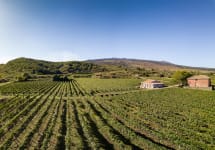
We are a small, family-owned producer in the heart of the Barolo commune of Serralunga d'Alba. We make only red wines, and our passion is for Barolo and its great grape, Nebbiolo.
Since the 1890's the Rosso family has farmed vineyards in Serralunga d'Alba, notably the Crus of Cerretta, La Serra, Broglio, Meriame, Sorano, Costa Bella, Lirano & Damiano. During the early 1980's Giovanni Rosso restructured the vineyards with the aim of growing the best fruit.
Giovanni's son, Davide, studied Oenology and gained invaluable experience in France. In 2001 Davide, then 27 years old, took charge of the vinification & affinamento/elevage of the wines with one goal in mind: "Wine should be a perfect copy of its terroir"... in this case from the slopes of Serralunga d'Alba, among the finest soils in the world.
The Giovanni Rosso cantina (winery) is located in the hamlet of Baudana, just a couple of kilometres north of Serralunga d'Alba village. A traditional family cascina, or farmhouse, it houses the fermentation, ageing, bottling and labeling facilities as well as the offices.

Responsible for some of the most elegant and age-worthy wines in the world, Nebbiolo, named for the ubiquitous autumnal fog (called nebbia in Italian), is the star variety of northern Italy’s Piedmont region. Grown throughout the area, as well as in the neighboring Valle d’Aosta and Valtellina, it reaches its highest potential in the Piedmontese villages of Barolo, Barbaresco and Roero. Outside of Italy, growers are still very much in the experimentation stage but some success has been achieved in parts of California. Somm Secret—If you’re new to Nebbiolo, start with a charming, wallet-friendly, early-drinking Langhe Nebbiolo or Nebbiolo d'Alba.

The center of the production of the world’s most exclusive and age-worthy red wines made from Nebbiolo, the Barolo wine region includes five core townships: La Morra, Monforte d’Alba, Serralunga d’Alba, Castiglione Falletto and the Barolo village itself, as well as a few outlying villages. The landscape of Barolo, characterized by prominent and castle-topped hills, is full of history and romance centered on the Nebbiolo grape. Its wines, with the signature “tar and roses” aromas, have a deceptively light garnet color but full presence on the palate and plenty of tannins and acidity. In a well-made Barolo wine, one can expect to find complexity and good evolution with notes of, for example, strawberry, cherry, plum, leather, truffle, anise, fresh and dried herbs, tobacco and violets.
There are two predominant soil types here, which distinguish Barolo from the lesser surrounding areas. Compact and fertile Tortonian sandy marls define the vineyards farthest west and at higher elevations. Typically the Barolo wines coming from this side, from La Morra and Barolo, can be approachable relatively early on in their evolution and represent the “feminine” side of Barolo, often closer in style to Barbaresco with elegant perfume and fresh fruit.
On the eastern side of the Barolo wine region, Helvetian soils of compressed sandstone and chalks are less fertile, producing wines with intense body, power and structured tannins. This more “masculine” style comes from Monforte d’Alba and Serralunga d’Alba. The township of Castiglione Falletto covers a spine with both soil types.
The best Barolo wines need 10-15 years before they are ready to drink, and can further age for several decades.