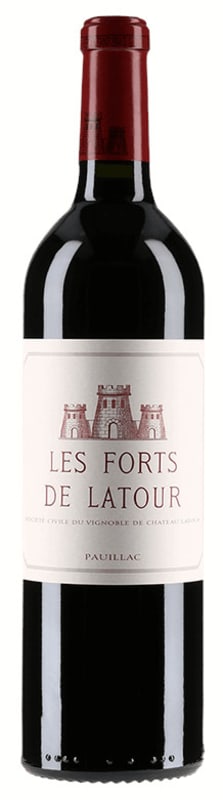


Winemaker Notes
Intense violet hue. A plethora of black fruits on the nose such as pure cassis, damson and crunchy black cherry. A touch of cedarwood, smoke and tobacco complete this highly complex wine. Whilst very charming and supple, it has a fine tannic backbone and a sappy freshness. The finale is very harmonious and long.
Blend: 66% Cabernet Sauvignon, 32% Merlot, 2% Petit Verdot
Professional Ratings
-
James Suckling
Exquisite aromas of lavender, cigar ash and Spanish cedar with dried citrus follow through to a medium body and a solid palate with powerful, ultrafine and linear tannins. The muscle and long finish are so beautiful. Give it two or three years but already a solid wine. Drink after 2028.
-
Decanter
A captivating nose of milk chocolate, cola, cherries, and violets, offering a soft and inviting bouquet. The palate is fully textured, opening gradually to coat the cheeks and tongue in a fine layer of chalky tannins. Juicy and succulent through the mid-palate, it bursts with citrus zest, orange and lemon pith, cranberries, and red cherries. There’s a beautiful interplay of bite and tension, with a sapdi freshness and a mineral core of crushed stones and iron. The finish ends bright, minty, and herbal, delivering great drive and persistence. 3.60pH.
-
Robert Parker's Wine Advocate
The 2019 Les Forts de Latour appears to have tightened up a little since I last tasted it a few years ago. Unwinding in the glass with aromas of sweet cassis fruit mingled with hints of cedar, iris, orange zest and new oak, it's medium to full-bodied, lively and nicely concentrated, with a ripe core of fruit underpinned by chalky structuring tannins. While it's approachable after a decant, it certainly merits additional patience. As readers will remember, this bottling mostly derives from dedicated parcels located further inland from Latour's famous "Enclos," next to Château Haut-Batailley.
Rating: 94+ -
Vinous
The 2019 Les Forts de Latour has an open nose, strangely perhaps a little more expressive than the 2020 Pauillac de Latour at the moment. Scents of blackberry, cassis and iris flower unfold in the glass. The palate is medium-bodied with crushed stone infusing the black fruit.
-
Jeb Dunnuck
The 2019 Les Forts De Latour is more open, expressive, and complex, with a medium to full-bodied style as well as terrific aromatics of ripe currants, leather, graphite, and cedary spice. I love its overall purity, and it has fabulous balance and outstanding length. Coming from slightly less ideal parcels (those farther from the Gironde estuary), it doesn't have the density of the 2020 or 2022 but shines for its overall equilibrium and elegance, while still bringing some solid Pauillac power.
Rating: 93+


One of the world’s most classic and popular styles of red wine, Bordeaux-inspired blends have spread from their homeland in France to nearly every corner of the New World. Typically based on either Cabernet Sauvignon or Merlot and supported by Cabernet Franc, Malbec and Petit Verdot, the best of these are densely hued, fragrant, full of fruit and boast a structure that begs for cellar time. Somm Secret—Blends from Bordeaux are generally earthier compared to those from the New World, which tend to be fruit-dominant.

The leader on the Left Bank in number of first growth classified producers within its boundaries, Pauillac has more than any of the other appellations, at three of the five. Chateau Lafite Rothschild and Mouton Rothschild border St. Estephe on its northern end and Chateau Latour is at Pauillac’s southern end, bordering St. Julien.
While the first growths are certainly some of the better producers of the Left Bank, today they often compete with some of the “lower ranked” producers (second, third, fourth, fifth growth) in quality and value. The Left Bank of Bordeaux subscribes to an arguably outdated method of classification that goes back to 1855. The finest chateaux in that year were judged on the basis of reputation and trading price; changes in rank since then have been miniscule at best. Today producers such as Chateau Pontet-Canet, Chateau Grand Puy-Lacoste, Chateau Lynch-Bages, among others (all fifth growth) offer some of the most outstanding wines in all of Bordeaux.
Defining characteristics of fine wines from Pauillac (i.e. Cabernet-based Bordeaux Blends) include inky and juicy blackcurrant, cedar or cigar box and plush or chalky tannins.
Layers of gravel in the Pauillac region are key to its wines’ character and quality. The layers offer excellent drainage in the relatively flat topography of the region allowing water to run off into “jalles” or streams, which subsequently flow off into the Gironde.