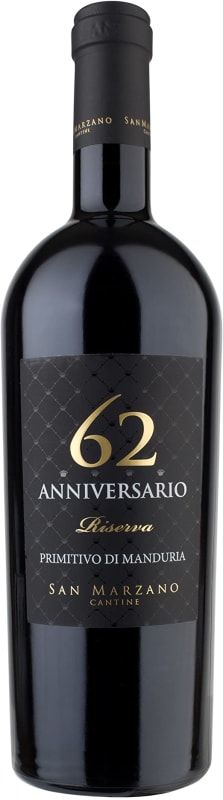


Winemaker Notes
Intense ruby red color; wide and complex to the nose, fruity with prune and cherry jam aroma, notes of tobacco and slightly spicy. A full-bodied wine, soft and rich in fine tannins, with notes of cocoa, coffee and vanilla in the end.
Professional Ratings
-
Wilfred Wong of Wine.com
Wine drinkers are sometimes confused about the early-maturing Primitivo and how similar it is to the genetically identical American Zinfandel and Croatian Crljenak Kastelanski. While the 2019 San Marzano Primitivo di Manduria doesn't clarify the issue, it is quite a fine wine. This wine offers aromas and flavors of fragrant spices, dried herbs, and hints of oak. Try it with grilled pork kebabs. (Tasted: April 22, 2025, San Francisco, CA)
-
James Suckling
A spiced nose of dark berries, smoked herbs and hints of mushrooms and moist earth. Full-bodied, dense and plush, with firm tannins and rich, almost sweet berry character.


Loved for its inky, brambly, fruit-driven wines, the Primitivo grape actually has Croatian origin. Primitivo landed in Italy in the late 1800s and became an important variety in the hot, dry, southern region of Puglia. Here it was named from the Latin word, primativus, meaning "first to ripen." Somm Secret—No one knew Primitivo and Zinfandel were the same until 1994 when DNA profiling at UC Davis finally revealed the link. The grape goes by the name of Tribidrag in Croatia and is a parent to Plavac Mali.

Well-suited to the production of concentrated, fruity and spicy red varieties, Puglia is one of Italy’s warmest, most southerly regions. Its entire eastern side is one long coastline bordering the Adriatic Sea. About half way down, the region becomes the Salento Peninsula. This peninsula, bordered by water on three sides, receives moist, nighttime, sea breezes that bring a welcome cooling effect to the region, where little rain creates a challenging environment for its vines. In fact, the region is named for the Italian expression, “a pluvia,” meaning “lack of rain.”
Puglia’s Mediterranean climate and iron-rich, calcareous soils support the indigenous Primitivo, Negroamaro and Nero di Troia. Primitivo produces an inky, spicy, brambly and ripe red wine whose best expression comes from Manduria. Nero di Troia produces tannic, rustic reds from Castel del Monte DOC while Negroamaro, typically blended with Malvasia nera, plays a large part in may blends made throughout the peninsula.
Puglia produces a small amount of white wines as well, predominantly made of the fruity, Trebbiano Toscano, or light, Bombino bianco grapes.