An Italian wine label shows the wine's quality category, DOCG, DOC or IGT (or the EU equivalents DOP and IGP), plus mandatory items: the product name, the denomination, the bottler and its headquarters, alcohol by volume, volume, the batch and "contains sulfites". Terms like Classico, Riserva and Superiore tell you even more.
At a glance
- Italy's categories: DOCG, DOC and IGT (table wine below them)
- EU categories since 2008: DOP (PDO) covers DOC and DOCG; IGP (PGI) covers IGT
- Always on the label: name, denomination, category, bottler, alcohol, volume, batch, sulfites
- Classico: the historic heart of the production area
- Riserva: at least two years of aging for reds, one for whites
Shop Italian red wine or Chianti Classico.
1. Italy's Wine Categories: DOCG, DOC and IGT
Italy, like many other countries, has specific rules about what is printed on its wine labels. Some items are mandatory and others are optional. Before the details, a little history.
In 1963, Decree 930 divided wines between table wines and wines of greater value. A later decree divided Italian wines into three categories:
- Table wines: Vino da Tavola (VdT)
- Wines with a Typical Geographical Indication: Indicazione Geografica Tipica (IGT)
- Quality wine produced in a specified region, which is subdivided into:
- DOC: Denominazione di Origine Controllata, wines of controlled denomination of origin
- DOCG: Denominazione di Origine Controllata e Garantita, wines of controlled and guaranteed denomination of origin
2. The EU Categories: DOP and IGP
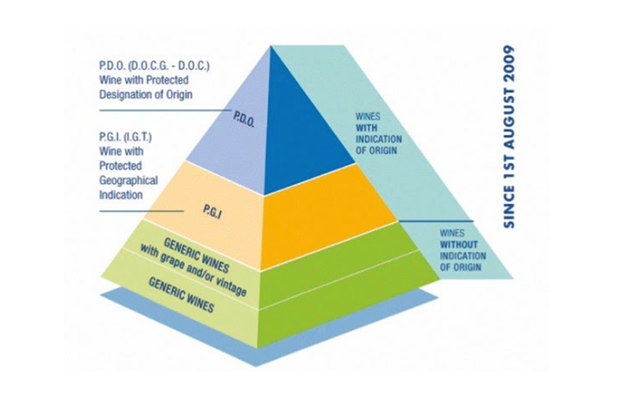
In 2008, the European Union, of which Italy is a member, divided all wines into new categories.
- Rather than three categories, the EU uses two: Protected Designation of Origin (PDO, or DOP in Italian) and Protected Geographical Indication (PGI, or IGP in Italian).
- PDO includes both DOC and DOCG wines, and PGI includes Italy's IGT wines.
- The EU also did away with the Vino da Tavola category.
- Italian producers can still print DOC and DOCG on their labels instead of PDO if they choose to, and many do.
3. What Every Italian Wine Label Must Show
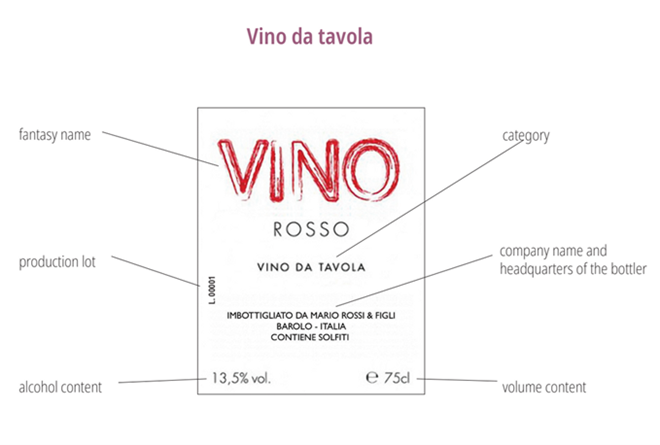
- The product's name. Every PDO or PGI Italian wine label must show it.
- The denomination. If the wine comes from a denomination of origin or typical geographical indication area, that name must appear.
- The category. The words "Denominazione di Origine Controllata" or "Indicazione Geografica Tipica", or the abbreviations DOC, DOCG or IGT. The European versions (DOP or IGP) can be used instead.
- The bottler. The name and company name of the bottler and its headquarters.
- The alcohol content, as a percentage of volume.
- The volume, in liters, centiliters or milliliters.
- The batch (lot) number.
- "Contains sulfites" for any wine with more than 10 mg per liter of sulfur dioxide.
You may also see terms such as Classico, Riserva and Superiore, explained in section 5.
4. Optional Items You Might Find on the Label
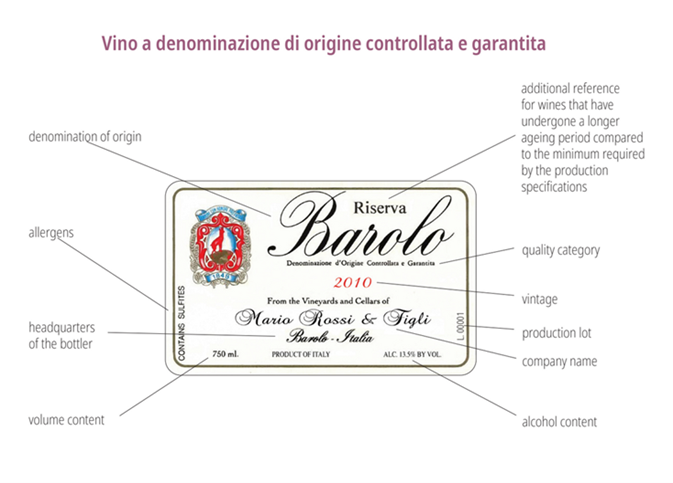
Other items on an Italian wine label are optional. They can include:
- A fantasy name for the wine and/or the producer's brand
- The product category (wine, sparkling wine, semi-sparkling wine and so on)
- Vintage dates for PGI wines
- The color (red, white, rosé)
- The European Community logo indicating the presence of allergens
- The blend
- Vinification and aging methods
- The European Community PDO/PGI symbols
- Sub-denominations, a specific vineyard or similar
- Sensory characteristics
- Food pairings and serving temperature
- Cellaring advice
- Others, such as certifications or a QR code
5. What Classico, Riserva and Superiore Mean
- Classico means the wine comes from the original, historical production area, now part of a larger delimited area for that wine. Classico areas include Chianti, Valpolicella and Castelli di Jesi.
- Riserva means the wine has aged for at least two years for reds and one year for whites. Individual denominations can require longer.
- Superiore means the wine was made under stricter rules: its minimum alcohol must be 0.5% higher, and its yield per hectare at least 10% lower, than wines of the same denomination without the Superiore designation.
Italian may not be your language yet, but with these tips you can speak wine-label Italian.
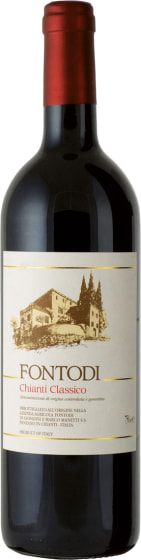
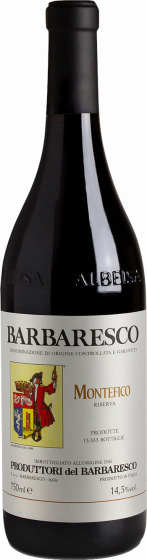
Below: a Chianti Classico from Fontodi and a Barbaresco Riserva from Produttori del Barbaresco.
Sources: extraordinaryitalianwine.us; ice.it (Italian Trade Agency); federdoc.com; ceev.eu.
-
Chianti Classico, Chianti, Tuscany, Italy ● Sangiovese
-
93 Decanter
-
93 James
Suckling -
93 Robert
Parker -
93 Wine
Spectator -
91 Vinous
-
Barbaresco, Piedmont, Italy ● Nebbiolo
-
97 Jeb
Dunnuck -
97 Robert
Parker -
97 Wine
Spectator -
96 James
Suckling
Italian Wine Label Questions, Answered
What is the difference between DOC and DOCG?
Both are Italy's top quality categories. DOC is Denominazione di Origine Controllata; DOCG adds "e Garantita" (guaranteed).
What does IGT mean on an Italian wine label?
Indicazione Geografica Tipica, a wine with a typical geographical indication. Under EU rules it falls under PGI (IGP in Italian).
What are DOP and IGP?
The EU categories introduced in 2008: DOP (PDO) covers DOC and DOCG wines and IGP (PGI) covers IGT wines. Producers may still print DOC or DOCG instead.
What do Classico, Riserva and Superiore mean?
Classico means the wine comes from the original, historical part of its production area. Riserva means extra aging: at least two years for reds and one for whites. Superiore means stricter rules, including higher minimum alcohol and lower yields.
More guides: 10 Things to Know When Tasting Italian Wines · The Essential Italian Red Wine Guide · How to Read a Champagne Label · Brunello vs. Barolo · Italian Sparkling Wines from Around the Boot
Related Guides