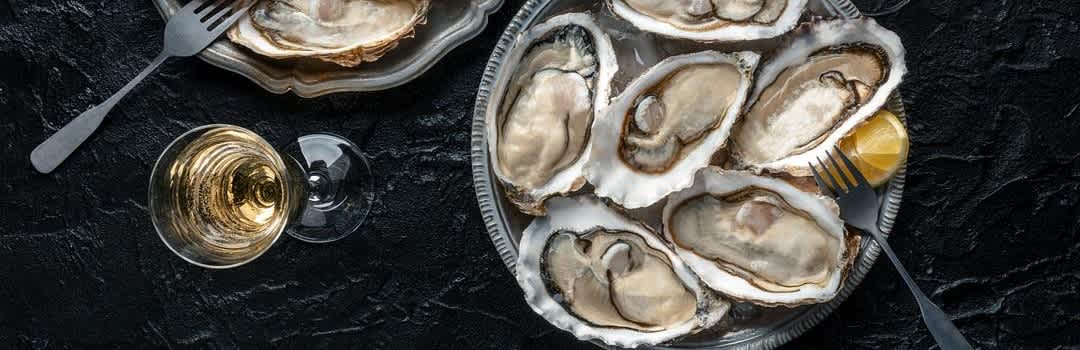
For centuries along France's Atlantic coast, Muscadet and Chablis have been the default pour alongside platters of raw oysters. That tradition holds for a reason: the same geological forces that shaped the oyster beds also shaped the vineyards. The pairing has since expanded well beyond those two classics, with still whites, sparkling wines, and coastal varietals from Spain to New Zealand all earning their place at the raw bar.
Why White Wine and Oysters Work Together
Acidity is the engine of any great oyster pairing. A wine with bright, natural acidity functions the way a squeeze of lemon does on a raw oyster: it lifts the brininess, sharpens the salinity, and leaves the palate clean for the next bite. Low-tannin whites avoid the metallic, bitter clash that red wines can produce alongside raw shellfish.
Minerality plays an equally important role. Wines grown on limestone, granite, or slate soils often carry a flinty, saline quality that mirrors the ocean salinity in the oyster itself. Chablis offers the most famous example: its Kimmeridgian limestone is composed of prehistoric fossilized oyster shells. The geological connection between vineyard and oyster bed is not metaphorical. It is literal, and you can taste it in the chalky, mineral finish that Chablis delivers alongside a briny Wellfleet or Belon.
Body matters too. Oysters are delicate, and a wine with too much weight or oak will smother them. The best oyster whites tend to be lean, unoaked, and fermented in stainless steel or neutral vessels. They let the oyster's own flavor stay in focus.
The Best White Wines for Oysters by Style
A bone-dry Muscadet from the Loire Valley and a citrus-driven Sauvignon Blanc from Marlborough approach the same oyster from completely different angles. One relies on saline restraint, the other on aromatic intensity. Both work, and the choice depends on the oyster, the occasion, and your own preference.
1. Muscadet (Loire Valley)
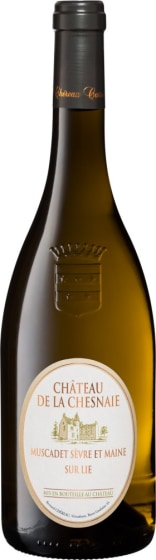
Made from the Melon de Bourgogne grape (often shortened to just Melon), Muscadet is the wine most sommeliers reach for first when oysters hit the table. The best bottlings carry the sur lie designation, meaning the wine spent several months resting on its yeast lees after fermentation. That lees contact adds a subtle richness and a faint, refreshing spritz to what is otherwise a bone-dry, razor-lean white. The flavor profile runs toward sea spray, wet stone, and tart green apple, with acidity that practically demands shellfish. Coastal terroir in the western Loire Valley gives the wine a natural salinity that mirrors the brininess of East Coast oysters.
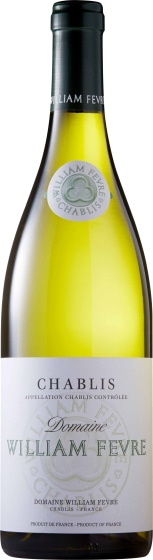
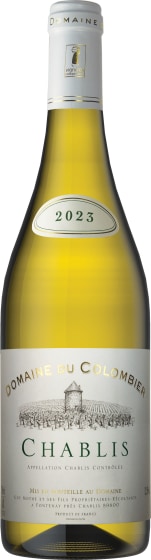
Chablis is unoaked Chardonnay at its most pure. Grown on Kimmeridgian clay-limestone in northern Burgundy, the wine picks up a flinty, almost steely minerality that sets it apart from the richer, oak-aged Chardonnays of the Côte d'Or or California. Expect green apple, white chalk, and a finish that lingers with a clean, citrus edge. The geological link is direct: the Kimmeridgian formation is a band of ancient oyster-shell fossils that stretches from Chablis across the English Channel to Dorset, England. A glass of village-level Chablis alongside raw oysters with mignonette is one of the most time-tested pairings in French gastronomy.
Sauvignon Blanc brings a different energy to the oyster table. Where Muscadet and Chablis are quiet and mineral, Sauvignon Blanc is loud and aromatic, driven by grapefruit, lime zest, and fresh-cut grass. Loire Valley expressions (Sancerre, Pouilly-Fumé) tend toward the mineral end of the spectrum, with chalky acidity and a restrained herbal note. New Zealand bottlings from Marlborough lean into tropical fruit and passion fruit intensity. California versions split the difference. The high acidity across all styles acts the way citrus garnish does on a raw oyster, making Sauvignon Blanc a natural pick when you are serving oysters on the half shell with lemon wedges.
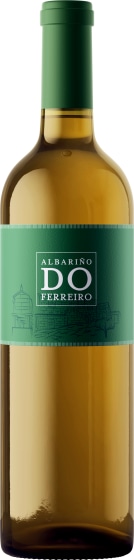
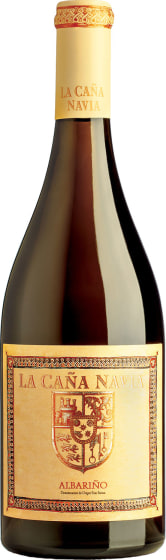
Known as Alvarinho across the border in Portugal, Albariño is the Atlantic coast's answer to the oyster pairing question. Grown in Galicia's Rías Baixas region, where fjord-like estuaries cut into the coastline, the grape produces wines with stone fruit, white peach, and a distinctive saline finish. The texture tends to be slightly richer than Muscadet, with a gentle weight that works well alongside sweeter, creamier West Coast oysters like Kumamotos and Pacifics. The coastal terroir gives Albariño a natural affinity for seafood, and its moderate acidity keeps the pairing balanced without overwhelming the oyster.
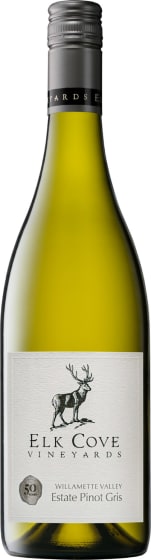
The same grape goes by two names depending on where it is grown: Pinot Grigio in Italy and Pinot Gris in Alsace, Oregon, and parts of the New World. Italian-style Pinot Grigio is clean, light, and citrus-forward, with a neutral profile that lets the oyster do the talking. Alsatian and Oregon Pinot Gris bottlings tend to carry more body, with pear and honeysuckle notes and a richer mouthfeel. For oysters, the Italian style is the safer bet. Its light body and crisp acidity stay out of the way, making it a strong choice for mixed shellfish platters or for anyone new to pairing wine with oysters.
Effervescence does something no still wine can replicate at the oyster table. The steady stream of bubbles refreshes the palate between bites, so each oyster tastes as clean as the first. Brut-style sparkling wines also tend to carry the high acidity and low residual sugar that keep brininess in focus.
1. Champagne and Blanc de Blancs
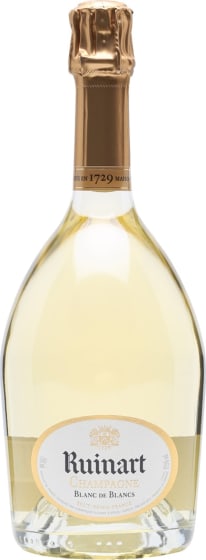
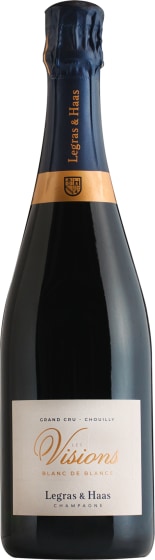
Champagne is the celebratory oyster pairing, and Blanc de Blancs, made entirely from Chardonnay, is its most elegant expression for this purpose. Extended lees aging gives the wine toasty, biscuit-like complexity that adds a savory layer without overpowering the oyster. The fine mousse enhances the textural contrast, and the acidity cleanses the palate between bites. Dosage level matters here. Brut Nature (zero added sugar) and Extra Brut styles let the oyster's natural salinity come through unaltered. A Demi-Sec, by contrast, carries enough sweetness to muddy the pairing. Stick with the driest styles for raw oysters.
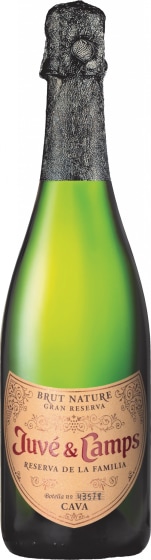
Crémant wines from France (Crémant d'Alsace, Crémant de Bourgogne, Crémant de Loire) are made using the same traditional method as Champagne, with a second fermentation in the bottle creating the bubbles. The result is a sparkling wine with similar acidity, fine mousse, and food-pairing versatility at a fraction of the price. Spanish Cava, produced primarily in Catalonia's Penedès region from Macabeo, Parellada, and Xarel-lo grapes, brings an earthy, citrus-driven character to the table. Catalonia has been making traditional-method sparkling wines for more than 160 years, and Cava offers some of the best value in the sparkling wine world. Both Crémant and Cava pair naturally with oysters, delivering the palate-cleansing effervescence and acidity that the pairing demands.
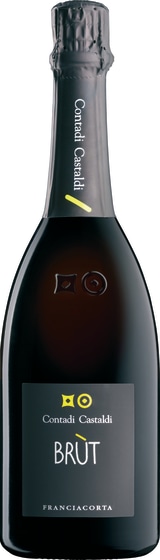
California and Oregon produce traditional-method sparkling wines that have closed the quality gap with Champagne significantly over the past few decades. The best domestic examples offer a tension between creaminess and acidity that pairs beautifully with oysters, often at a more accessible price point than Champagne. Italian Franciacorta, from Lombardy, uses the same traditional method and the same core grapes (Chardonnay, Pinot Noir, Pinot Blanc) to produce sparkling wines with bright fruit, refined bubbles, and a clean finish. Franciacorta Brut is a strong option when you want the elegance of traditional-method sparkling wine with a distinctly Italian sense of freshness.
How you prepare and serve oysters changes the pairing calculus. A raw oyster on the half shell is a completely different flavor experience from a charbroiled oyster dripping with garlic butter. Matching the wine to the preparation style ensures neither the food nor the drink overwhelms the other.
Raw oysters on the half shell: Muscadet, Chablis, or Blanc de Blancs Champagne are the classic picks here, where acidity and minerality complement the clean, briny flavor without competing
Oysters with mignonette or citrus: Sauvignon Blanc or Crémant echo the bright, citrus-forward garnish and let the acidity of both the wine and the dressing reinforce each other
Grilled or charbroiled oysters: Albariño or unoaked Chardonnay bring enough body to stand up to the smoky char and richer texture that grilling produces
Oysters Rockefeller: Pinot Gris (the richer Alsatian or Oregon style) or aged Champagne pair well here because the creamed spinach and butter need a wine with more weight and complexity
Fried oysters: A sparkling wine like Cava or Crémant is the best match, as the effervescence cuts cleanly through the breading and keeps the palate from feeling heavy
Quick Answers on White Wine and Oysters
What Do the French Traditionally Drink with Oysters?
Muscadet and Chablis are the two wines most closely associated with the French oyster tradition. Along the Atlantic coast, Muscadet has been the everyday companion to platters of raw oysters for generations, prized for its lean, saline character and modest price. Farther inland, Chablis has played the same role, with its Kimmeridgian limestone soils creating a geological echo of the ancient oyster beds. Champagne joins the table for celebrations and holidays, particularly during the winter oyster season, when platters of Belons and fines de claires are a fixture of French dining.
Can You Pair Red Wine with Oysters?
Red wine and oysters are generally a poor match. The tannins in most reds create a metallic, bitter taste alongside raw oysters that overwhelms the oyster's delicate flavor. The heavier body and oak influence common in red wines also tend to smother the brininess rather than complement it. A very light, slightly chilled red like Beaujolais (made from Gamay) could work in rare situations, particularly with cooked oyster preparations where smoke or butter tempers the mineral intensity. For raw oysters, though, a crisp white or sparkling wine will consistently deliver a better result.
Should I Choose Champagne or Muscadet for Oysters?
Both are classic, and the choice depends more on the occasion than on the oyster itself. Muscadet is the purist's pick for a focused raw oyster experience: its lean, mineral profile stays completely out of the way and lets the oyster shine. Champagne brings celebration and complexity to the table, with lees-aged richness and effervescence that add a textural dimension Muscadet does not offer. For a casual weeknight oyster platter, Muscadet is the practical choice. For a dinner party or holiday raw bar, Blanc de Blancs Champagne elevates the moment.
Does the Type of Oyster Affect the Wine Pairing?
Yes, and the distinction matters more than most pairing guides acknowledge. Briny, mineral-forward East Coast oysters (Wellfleet, Blue Point, Malpeque) pair best with leaner, high-acid wines like Muscadet and Chablis, which match the oyster's sharp salinity. Sweeter, creamier West Coast oysters (Kumamoto, Pacific, Shigoku) are better served by wines with a touch more body and fruit, like Albariño or New Zealand Sauvignon Blanc. The concept of "merroir," the idea that an oyster's flavor reflects its growing waters the way a wine's flavor reflects its terroir, is the guiding principle here. Match the intensity of the oyster to the weight of the wine.
What Temperature Should White Wine Be When Serving with Oysters?
Serve still white wines at 45–50 degrees F (7–10 degrees C) for the best pairing experience. At this temperature, the wine's acidity and minerality are at their most expressive without losing the aromatic complexity that makes each varietal distinctive. Sparkling wines should be slightly colder, around 40–45 degrees F (4–7 degrees C), which keeps the mousse fine and persistent. A wine that is too warm loses the crispness that makes the oyster pairing work, and a wine that is too cold mutes the very flavors you are trying to pair with.
Your Next Bottle of White Wine for Oysters
A raw bar at home with a bottle of Muscadet, a celebratory dinner anchored by Blanc de Blancs Champagne, a summer afternoon of grilled oysters with Albariño: each occasion calls for a different wine, and getting the match right makes both the oyster and the wine better. Knowing how oyster preparation changes the pairing, and how East Coast brininess differs from West Coast sweetness, gives you a practical framework for choosing confidently every time.
The range of wines that pair well with oysters is broader than the classic Chablis-and-Champagne tradition suggests. If Muscadet is your default, try a Sauvignon Blanc from Marlborough for the aromatic contrast. If you always reach for Champagne, a Crémant d'Alsace or a Brut Cava will deliver the same effervescence and food-pairing acidity at a different price point. Exploration across styles is how you find the combinations that suit your palate best.