Ice Wine, Explained: Styles, Serving, and What to Buy
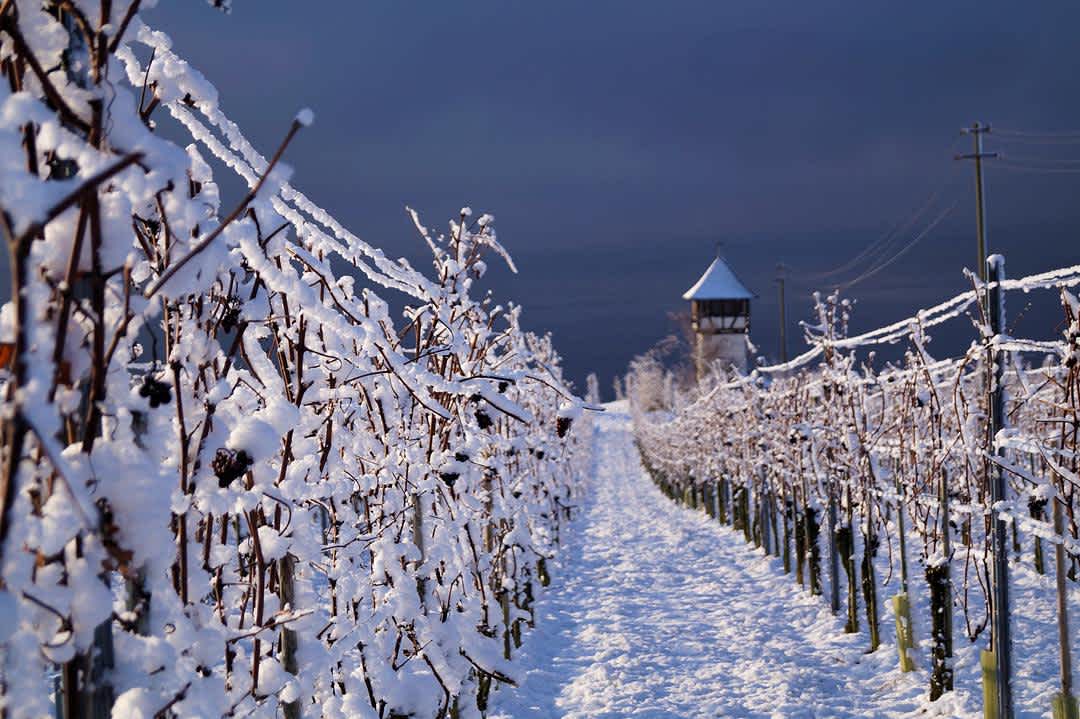
Ice wine is a rare, intensely sweet dessert wine made from grapes left to freeze on the vine, which packs their sugar and flavor into a tiny amount of juice. That freezing step is the whole secret, and it turns an ordinary grape into something concentrated and jewel-bright. The style ranges from tropical Vidal and elegant Riesling out of Canada and Germany to a pink, berry-driven Cabernet Franc.
Ice Wine at a Glance
A single vine can be picked all autumn and left standing, and by the time ice wine grapes come off, they may yield only enough juice for one small glass. That scarcity is built into how the wine is made. Growers leave the fruit hanging into winter and harvest only when the air drops to about −8°C (17.6°F). The grapes are then pressed while still frozen, so only the thick, sugary juice runs out and the water stays behind as ice.
You will often see this wine called "Eiswein," which is simply the German name for the same thing. Ice wine is rare for a few plain reasons: the weather has to cooperate, the yields are tiny, and the harvest happens by hand in the freezing hours before dawn. It is easy to confuse with two other styles, so here is the line that separates them: real ice wine must freeze naturally on the vine. "Late harvest" wines come from grapes picked late but never frozen, and "cryoextraction" wines use grapes frozen in a machine after picking. The high sugar that stays in the finished wine is called residual sugar, meaning the natural grape sugar left over after fermentation. Explore our dessert wine guides if you want the wider family of sweet styles.
How the Grapes Freeze (and Why That Matters)
The process runs in three steps: freeze, press, and ferment. First the grapes freeze solid on the vine, which locks up their water as ice. Then they go straight to the press while frozen, so the crush squeezes out only a syrupy trickle of concentrated juice. To qualify, that juice must reach a natural sugar level of at least about 35°Brix, roughly twice what a normal grape harvest gives you. Brix is just a simple scale for how much sugar sits in the grape juice. When you pay more for a bottle of ice wine, this is what your money covers: a punishing harvest, a fraction of the usual juice, and fruit that took the whole winter to earn.
How Ice Wine Tastes
Ice wine tastes sweet, but it does not taste heavy. The sweetness arrives first, then a bright, crisp acidity pulls the whole thing back into balance. Expect flavors of honey and tropical fruit, with mango, apricot, and peach showing up often, plus citrus and sometimes a note of stone fruit or berry depending on the grape. That acidity is the reason the wine feels refreshing instead of syrupy, so a small pour finishes clean and light. The alcohol usually lands between 9–13% ABV, lower than most table wines, which makes it easy to enjoy in a small glass after dinner. The sweetness is the whole point of the category, not a flaw to apologize for.
Ice Wine Styles by Grape
Ice wine changes character with the grape behind it. Three varieties make up most of what you will find on a shelf, and each one carries a clearly different flavor. Match the grape to what you already like, and the choice gets simple.
1. Vidal Blanc
Vidal Blanc is Canada's workhorse ice wine grape, a French hybrid bred to be thick-skinned, cold-hardy, and winter-hardy. Those traits let it hang on the vine through hard frost without falling apart, which is exactly what ice wine demands. As ice wine it leans tropical, with mango, pineapple, apricot, and honey. It is usually the friendliest place to start. You will find it grown mostly in Ontario's Niagara Peninsula in Canada. If you like round, fruit-forward sweetness, try this one first.
Riesling is the classic Eiswein grape and Germany's benchmark for elegance. It brings higher acidity and a citrus-driven profile, with lime, green apple, peach, and a clean mineral edge. The sweetness is more restrained than Vidal, and that extra acidity gives the wine tension and a long finish. It grows for ice wine in Germany (Rheinhessen, Pfalz, and Mosel) and in Canada, where it carries the same name worldwide. If you like something bright and lively, reach for this grape.
3. Cabernet Franc
Cabernet Franc is the red one, rarer than the whites and striking to look at, ranging from pink to light ruby in the glass. Its flavor runs to strawberry, red cherry, and cranberry with a hint of tropical sweetness underneath. It makes a genuine conversation piece, an unexpected style worth trying when you want to surprise the table. It grows mostly in Ontario, Canada, where wineries pioneered red ice wine. Getting an elegant ice wine from a grape with tannin, the drying, grippy compound in red wine, is hard, which is part of what makes the style stand out. If you like a berry-driven Cabernet Franc with a twist, this is the bottle.
Two countries dominate the world's ice wine, and their styles reflect different traditions. Canada leans richer and more tropical, while Germany leans tighter and more acidic. Knowing which is which helps you pick a bottle that suits your taste.
1. Canada (Niagara Peninsula and Okanagan Valley)
Canada is the world's largest ice wine producer, though the wine is a small slice of the picture: ice wine makes up about 5% of Canada's total wine, and more than 95% of it comes from Ontario. The country's quality seal, the VQA (Vintners Quality Alliance), sets firm rules for what can carry the name. Grapes must freeze naturally at −8°C (17.6°F) or below, and the juice must hit a minimum sugar of about 35°Brix before pressing. Vidal and Riesling are the dominant grapes here, and the house style skews richer and more tropical. Inniskillin, the institution that helped pioneer Canadian red ice wine and popularized the tall, slender ice wine bottle, remains the name most newcomers meet first.
2. Germany (Eiswein)
Germany is where the style began, and its name for the wine, Eiswein, is the one the rest of the world borrowed. German Eiswein leans toward higher acidity and more restrained sweetness than the Canadian style, and Riesling is the grape that defines it. Riesling Eiswein sits among the highest-acid and highest-priced German wines, prized for the way its sharpness offsets all that sugar. There is a catch worth knowing: warming winters make the deep frost less reliable each year. Authentic Eiswein is getting scarcer as a result, and some producers now go years between vintages while they wait for a cold enough night.
What to Eat with Ice Wine
Serving ice wine well takes almost no effort, and a few small choices make a big difference. Chill the bottle thoroughly and serve it at 45–50°F (7–10°C), cold enough to feel crisp but not so cold that the aromas disappear. Use a standard white wine glass rather than a tiny cordial glass, so you have room to swirl and smell what is in there. Pour just 2–3 oz per person, since a little goes a long way with something this concentrated. The one rule that never fails: the food should be less sweet than the wine, or the wine will taste flat next to it.
Rich and savory: blue cheese like Roquefort or Stilton, foie gras, aged cheddar, pâté
Fruit desserts: tarts, crème brûlée, cheesecake, panna cotta
Spicy dishes: Thai curries and Indian dishes, where the sweetness and chill tame the heat
On its own: ice wine works as dessert by itself, no food required
Ice wine suits the moments that already feel a little special: holidays, the last course of a dinner party, a celebration toast, or a thoughtful gift. Pouring it is a simple gesture that reads as generous, and it asks nothing of you beyond a cold bottle and small glasses. You do not need a reason more elaborate than wanting to end the night on something memorable.
Ice Wine Questions, Answered
Why Is Ice Wine So Expensive?
The price comes down to how little wine each harvest produces. Freezing on the vine costs growers most of their juice, so a bottle represents a fraction of a normal grape harvest. Add the weather risk, since a warm winter can wipe out a whole crop, and the labor of hand-picking in freezing pre-dawn temperatures. What you are paying for is genuine scarcity, not a markup for its own sake.
How Is Ice Wine Different from Late Harvest Wine?
Late harvest grapes are picked late in the season but never frozen, so they concentrate slowly on the vine without the freeze. Ice wine grapes have to freeze solid before pressing, which makes the finished wine more concentrated, higher in acidity, and usually sweeter. Both belong to the wider world of sweet wines, but they get there by different routes. Two other famous dessert wines, Sauternes and Tokaji, use a third path called botrytis, or "noble rot," a helpful mold that shrivels the grapes and concentrates them.
How Long Does Ice Wine Last After Opening?
An opened bottle keeps for 3–5 days in the refrigerator with the cork replaced. The high sugar and acidity act as natural preservatives, so it holds up far better than a dry wine would. Unopened bottles can age 10 or more years when stored cool, dark, and on their side. That makes a spare bottle an easy thing to keep on hand for a future occasion.
Can I Use Ice Wine in Cocktails?
Yes, and it shines as a modifier used in small amounts rather than as the base. Try an ice wine spritz topped with sparkling water for something light, or float a little over a scoop of sorbet for an instant dessert. Because it is a premium ingredient, a small measure carries plenty of flavor. A little goes a long way, so pour with a light hand.
Where to Start with Ice Wine
Let your taste point the way. If you want tropical richness, start with a Vidal; if you lean toward bright acidity, try a Riesling; and if you want something unexpected, reach for a Cabernet Franc ice wine. You do not need a special occasion to open one, and a quiet Tuesday is reason enough. Keep those three matches in mind and you can shop the whole category with confidence.
Wine.com carries ice wines from both Canada and Germany, spanning all three of the major grape styles covered here. Browse our ice wine collection to see the range side by side. That selection makes it easy to compare a lush Vidal against a taut Riesling before you commit.
Pick the style that matches what you are craving tonight, and pour a small glass to see how it lands. A half bottle is plenty for two people after dinner, so you can try one without overcommitting. Browse Ice Wine at Wine.com