Collectible red wine separates itself from the merely expensive through a specific set of qualities: structural longevity, documented provenance, limited production, and a track record of secondary-market demand. A bottle that costs $200 at release and drinks well tonight is not necessarily collectible. A bottle that costs $45, ages for 15 years, and becomes something altogether different in the glass often is. The distinction matters, and this guide covers how to recognize it, where to find it, and which bottles are worth seeking out for your cellar.
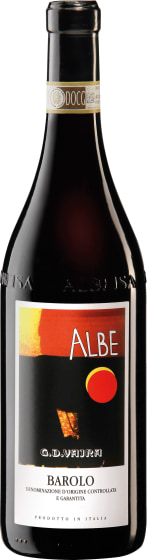
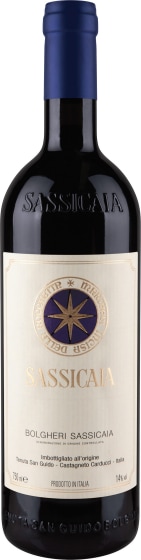
For collectors looking for a unique red worth adding, three wines stand out across different price points: the G.D. Vajra Barolo Albe 2021 (around $45) for its structured Nebbiolo aging potential from one of Piedmont's most respected estates, the Marchesi Antinori Tignanello 2022 (around $180) for its iconic status as the wine that launched the Super Tuscan movement, and the Tenuta San Guido Sassicaia 2023 (around $285) for its Bordeaux-caliber structure from Bolgheri's most celebrated vineyard.
What Makes Collectible Red Wine Distinctive
Collectibility is not a single trait. It is the intersection of three factors, each reinforcing the others. A wine that scores well on all three is a genuine collectible. A wine that meets one criterion is age-worthy or prestigious, but those are different categories.
1. Aging Potential and Structure
Tannin and acidity are the structural backbone of any wine built to age. High-tannin, high-acid reds such as Barolo, top Bordeaux, and structured Napa Cabernet can develop over decades, transforming from tight, reserved bottlings into layered wines with dried fruit, earth, and tertiary spice. In the bottle, tannins interact with pigments and acids to form new compounds and larger molecules, eventually precipitating as sediment. That process softens the wine's texture while revealing secondary and tertiary flavors that were locked up at release. A collectible red needs enough tannin and acid to fuel this transformation, and enough fruit concentration to remain balanced as the structure evolves.
2. Provenance and Producer Reputation
Provenance covers two things: how the wine was made and how it has been stored since bottling. Estate-grown fruit from a single vineyard carries a premium because it traces the wine's flavor and structure to a single site's soil type, drainage, and microclimate rather than blending across multiple sources. The winery bears the full farming cost and risk, and the wine tells a story traceable to a particular site and vintage. On the storage side, documented temperature history matters enormously. A wine that has moved through three warehouses with no records is a gamble, regardless of the label. Collectors pay for certainty, and that certainty starts with the producer's reputation for consistency across vintages.
3. Scarcity and Allocation
Production scale drives collectibility in direct, measurable ways. Ultra-premium wines produce fewer than 1,000 cases annually. At that volume, demand exceeds supply, and price reflects scarcity rather than production cost alone. Cult Napa wines sold through direct mailing lists illustrate this clearly: retail prices, when bottles surface outside the list, routinely dwarf the original offering price. Large-format bottles (magnums, double magnums) add another scarcity layer. Producers bottle a tiny fraction of their output in large format, and these bottles age more slowly due to the lower ratio of oxygen to wine. For collectors, a magnum of a top vintage is both rarer and longer-lived than its standard-size counterpart.
The Collectible Red Wine Map: Regions Worth Knowing
Five regions anchor the collectible red wine market. Each has distinct characteristics, different price entry points, and a different relationship between reputation and value.
1. Bordeaux, France
Bordeaux remains the foundation of wine collecting, and for good reason: it is long-lived, produced in sufficient volume to trade actively, and classified in a way that makes comparative valuation possible. The Left Bank appellations of Pauillac, Saint-Julien, Margaux, and Saint-Estèphe produce Cabernet Sauvignon-dominant blends, typically 60–70% Cabernet Sauvignon with 25–30% Merlot and the balance in Cabernet Franc and Petit Verdot. These wines deliver firm tannin structure, cassis intensity, and cedar-lined aging curves that can stretch for decades in strong vintages. The Right Bank, centered on Saint-Émilion and Pomerol, favors Merlot-dominant blends with Cabernet Franc. The wines are rounder earlier but no less age-worthy at the top tier. Château Pavie and Pétrus command prices that rival or exceed Left Bank First Growths. For collectors, Bordeaux offers the deepest secondary market and the most transparent pricing history of any region.
2. Piedmont, Italy
Barolo and Barbaresco, both made from Nebbiolo, are Piedmont's collectible anchors. Nebbiolo's high tannin, high acidity, and pale color belie a wine that can age for decades, developing rose petal, tar, dried cherry, and truffle notes that no other grape replicates. Piedmont's cru system (the MGA, or Menzioni Geografiche Aggiuntive) designates individual vineyard sites within each commune. A Barolo from Serralunga d'Alba tastes different from one produced in La Morra: the former is more structured and age-demanding, the latter more perfumed and earlier-drinking. This vineyard-level specificity gives collectors granular choices. Producers like Giacomo Conterno and Bruno Giacosa have decades of provenance behind them, but emerging estates in top cru sites offer compelling entry points.
3. Napa Valley, California
Napa's sub-appellations produce Cabernet Sauvignon with distinct profiles, and treating the valley as a single entity misses the point for collectors. Oakville sits at the valley's midpoint, where cool breezes from the south and well-drained benchland soils produce Cabernets that are structured yet fine-boned. Rutherford, just to the north, is warmer, and its alluvial gravel fans yield wines with a characteristic dusty, mineral-laced intensity sometimes called "Rutherford dust." Stags Leap District, tucked against the eastern hillsides, delivers Cabernets with supple tannins and a silky mid-palate that distinguishes them from the bigger-framed wines farther north. Howell Mountain, at elevation above the fog line, produces the most tannic, age-demanding wines in the valley. Each sub-appellation represents a different collecting proposition, from the relative accessibility of Stags Leap District to the long-haul cellaring demands of Howell Mountain.
4. Burgundy, France
Grand Cru Pinot Noir from the Côte de Nuits is the collector's most coveted and most frustrating category. Production is microscopic: the most sought-after domaines measure their output in hundreds of cases, not thousands, and Domaine Leroy makes only marginally more than Romanée-Conti. The combination of tiny volumes, global demand, and extraordinary aging potential has pushed prices to levels that dwarf most Bordeaux. For collectors who can access allocations, Burgundy offers wines of singular intensity, with a transparency of fruit and terroir that Pinot Noir achieves nowhere else at this level.
5. Emerging Collectible Regions
Four more regions are producing wines with proven aging potential and collector interest, but at price points well below the established benchmarks. Northern Rhône Syrah from Hermitage and Côte-Rôtie delivers the structural depth of a top Bordeaux with a distinctive peppery, smoky character. Ribera del Duero Tempranillo, aged in French and American oak, combines power with fine-grained tannin in wines built for long-term cellaring. Priorat, in northeastern Spain, produces Garnacha and Cariñena from ancient hillside vines on llicorella (slate) soils, yielding wines of remarkable concentration. Oregon's Willamette Valley is building a reputation for Pinot Noir that ages with a precision and site specificity reminiscent of Burgundy, at a fraction of the price. These regions represent value inflection points where terroir quality is comparable to established appellations, but pricing has not yet caught up to reputation.
Collectible Red Wine by Price: What to Expect at Every Level
Price tiers in collectible wine reflect concrete production factors, not just marketing. Understanding what you get at each level helps separate genuine value from premium packaging.
1. Entry-Level Collectibles ($30–$100)
Gateway collectibles occupy a sweet spot: wines with 10–15 year aging windows from respected producers in serious appellations, priced accessibly because of larger production volumes, less new oak, or younger vine age. These are not compromised wines. They are wines where the producer has chosen to deliver quality at scale rather than at scarcity. The cost savings come from specific decisions: neutral oak instead of 100% new barrels, estate fruit from younger plantings that have not yet reached the concentration of 40-year-old vines, and fermentation programs that prioritize drinkability alongside structure.
The G.D. Vajra Barolo Albe 2021, in the $45 range, is a structured, age-worthy Nebbiolo from one of Piedmont's most respected family estates. Vajra farms across several Barolo communes, and the Albe bottling blends sites to deliver the tannic architecture and acidity that Barolo collectors prize at an accessible price point. The drinking window extends well beyond a decade, and the price reflects Piedmont's value advantage over comparable wines from Burgundy or Napa.
The Ciacci Piccolomini d'Aragona Brunello di Montalcino Pianrosso 2021, in the $80 range, is a single-vineyard Sangiovese from one of Montalcino's most celebrated sites. Brunello's mandatory aging requirements (two years in oak, four months in bottle before release) build structure into every bottling, and the Pianrosso vineyard adds concentration and site-specific intensity. This is a wine built for 15 years of cellaring from a producer with a strong track record across vintages.
This tier is the collector's sweet spot: single-vineyard wines, classified Bordeaux, and named Barolo crus. The price premium over entry-level reflects measurable production investments. Premium red wines at this level typically age in new French oak barrels costing $900–$1,200 each. Each barrel holds approximately 300 bottles, adding $3–$4 per bottle in oak cost alone. Multiply that by an extended barrel aging program in predominantly new French oak, add hand sorting, yield restriction, and the capital cost of holding inventory in barrel rather than selling it young, and the price tier starts to make concrete sense.
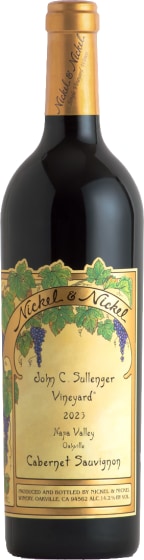
The Nickel and Nickel John C. Sullenger Vineyard Cabernet Sauvignon 2023, in the $100 range, is a named Oakville vineyard designation from an established single-vineyard specialist. Oakville's benchland soils and cool afternoon breezes produce Cabernets with structure and freshness, and a named vineyard bottling signals that the producer considers this site distinctive enough to stand on its own. The single-vineyard designation here is not decorative: it means the wine's structure and flavor profile trace directly to Oakville's benchland characteristics rather than being blended for a house style.
The Marchesi Antinori Tignanello 2022, in the $180 range, is the wine that created the Super Tuscan category. A blend of Sangiovese with Cabernet Sauvignon and Cabernet Franc from Antinori's estate vineyards in the Chianti Classico hills, Tignanello broke with Italian wine law in the 1970s to pursue a style that matched Bordeaux's structure with Tuscany's fruit intensity. The 2022 vintage continues that legacy with firm tannins, dark fruit concentration, and the kind of secondary-market recognition that makes it one of the most actively traded Italian collectibles.
At the premium tier, scarcity becomes the dominant pricing factor. Production under 1,000 cases, allocation-only distribution, and generational aging potential combine to set prices that reflect rarity as much as quality. These are wines where demand permanently exceeds supply, and secondary-market prices confirm it.
The Tenuta San Guido Sassicaia 2023, in the $285 range, is the original Super Tuscan and one of Italy's most collected wines. A Cabernet Sauvignon-dominant blend from Bolgheri on Tuscany's coast, Sassicaia was modeled on Bordeaux's classified growths and eventually earned its own DOC classification. The 2023 vintage received a perfect score from Robert Parker's Wine Advocate. For collectors, Sassicaia offers first-growth Bordeaux structure at roughly half the price of a comparable Left Bank wine, with a proven secondary-market trajectory spanning five decades.
Opus One 2022, in the $460 range, is the Oakville joint venture between Robert Mondavi and Baron Philippe de Rothschild that defined Napa's premium tier. A Cabernet Sauvignon-dominant Bordeaux blend from estate vineyards on the Oakville benchland, Opus One combines Left Bank discipline with Napa fruit concentration. Production is tightly controlled, and the wine trades actively on the secondary market with consistent demand across vintages. The 2022 delivers the estate's signature balance of power and polish.
Building a wine collection does not require a basement cellar or a five-figure budget. It does require attention to storage and a plan for what you are buying and why.
Storage is non-negotiable. Proper cellaring at 55°F (13°C), 60–70% humidity, with minimal vibration and no UV exposure extends a wine's aging trajectory significantly. Poor storage compresses the drinking window and can ruin an otherwise collectible bottle within a few years. If you do not have a dedicated cellar, a temperature-controlled wine fridge is the most practical solution. Wine storage services and retailer storage programs offer alternatives for larger collections or for collectors in warm climates.
Start with two to three age-worthy bottles per year across different regions. A Barolo from Piedmont, a classified Bordeaux, and a Napa Cabernet from a specific sub-appellation give you three distinct aging profiles and three different windows to track over time. As your collection grows, the patterns become clearer: which regions and producers match your palate, and how your preferences evolve as wines develop. Wine.com's collectible category offers a curated selection organized by region and price tier, making discovery straightforward. For a broader look at what is available, see Wine.com's collector wine lists, which covers current allocations and featured collectible producers.
Common Questions About Collectible Red Wine
What Is the Difference Between Age-Worthy and Collectible Wine?
Every collectible wine is age-worthy, but the reverse is not true. Age-worthy means the wine has the structural components (tannin, acidity, concentration) to develop positively over years in the cellar. Collectible adds two further requirements: a secondary market where buyers actively seek the wine, and production volumes low enough to sustain that demand over time. A well-made Côtes du Rhône may age beautifully for eight years, but it is not collectible because production volumes are large and resale demand is limited. A Grand Cru Burgundy with 500 cases produced is both age-worthy and collectible.
How Much Does Collectible Red Wine Cost?
Entry-level collectibles start around $30–$50, covering wines from respected producers in serious appellations with 10–15 year aging windows. The mid-range runs $75–$200 and includes classified Bordeaux, named-vineyard Napa Cabernets, and cru Barolo. Premium collectibles above $200 are allocation-only wines, First Growth Bordeaux, Grand Cru Burgundy, and cult Napa bottlings. Ultra-premium wines above $500 are defined almost entirely by scarcity and secondary-market positioning.
Which Red Wine Regions Are Best for New Collectors?
Bordeaux offers the most transparent secondary market and the deepest pricing history, making it the easiest region to evaluate. Piedmont (Barolo and Barbaresco) delivers comparable aging potential at lower price points than Burgundy. Northern Rhône Syrah from Hermitage and Côte-Rôtie is an emerging collector category with strong upside. Napa Valley is the most familiar starting point for American collectors, with sub-appellation diversity that rewards exploration.
How Should I Store Collectible Red Wine?
The fundamentals are consistent temperature (55°F / 13°C), 60–70% humidity, horizontal bottle position, darkness, and minimal vibration. Temperature fluctuations are the most common storage failure: a wine stored at a steady temperature ages more gracefully than one swinging with the seasons. A dedicated wine fridge handles these requirements reliably for most collectors, from 12-bottle countertop units to 300-bottle freestanding cabinets. For larger collections, professional wine storage services offer climate-controlled warehousing with insurance and inventory tracking. Some retailers, including Wine.com, offer storage programs that hold purchased wine until you are ready to receive it. The key constraint is not space but temperature control.
Where to Start with Collectible Red Wine
The most productive first step is to pick two to three bottles across regions and price points, cellar them properly, and open one every year or two to track how the wine evolves. A G.D. Vajra Barolo at the entry level, a Tignanello or named-vineyard Napa Cabernet in the mid-range, and a Sassicaia or Opus One at the premium tier give you a cross-section of the collectible landscape. Pay attention to what develops in the glass over time, and let that guide your next purchases. Wine.com's collectible category spans Bordeaux classified growths, cru Barolo, sub-appellation Napa Cabernets, and emerging-region picks across every price tier covered in this guide.