

Winemaker Notes
This wine is great as aperitif and a perfect match for Asian food, fish dishes and fresh salads.
Professional Ratings
-
Robert Parker's Wine Advocate
The 2013 Zuccardi Serie A Torrontes was harvested early to keep the acidity, and the maceration was limited in order to not extract too much. This is unoaked, and the malolactic is blocked to keep the flowers (jasmine, orange blossom) and citric notes with some lychee aromas. The palate is fresh with clean, pungent flavors and good length. This should evolve in bottle.





A few years before 1950, Ing. Alberto Zuccardi reaches Mendoza from his homeland in Tucuman where their great-grandparents had settled upon arriving in the Italian region of AveIino. In 1963, Alberto implanted a vineyard in the region of Maipu not knowing that it would begin the great passion of his life, the wine industry. In 1990, his son, Jose Alberto Zuccardi, assumed the General Director of the company.
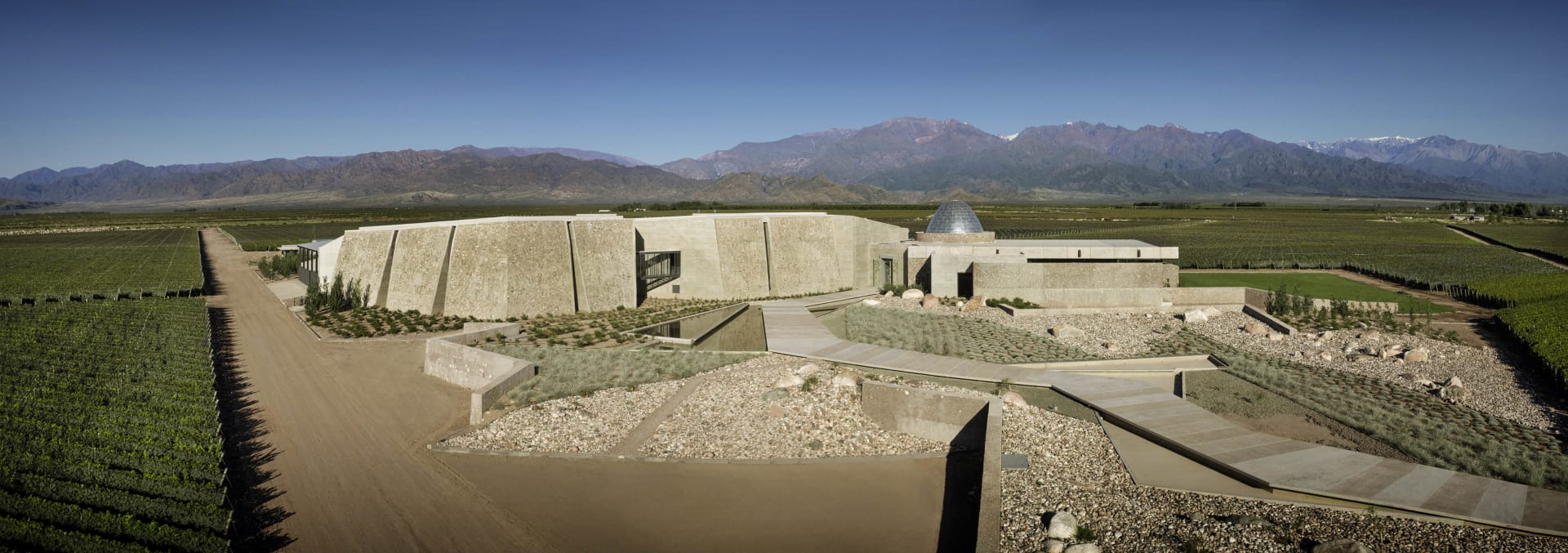
In 2005, Sebastian Zuccardi, third generation of the family, lead the development of the new stage of the wines of the winery expansion into the Uco Valley. On his initiative, since 2008 the winery has an area of Research and Development dedicated to the study of the terroir and the different variables that affect wine production. In 2013 the construction of the new Zuccardi winery in the Uco Valley began. It opened in March 2016 with the premise of producing wines with identity, through the continuous exploration of the different terroirs of the Uco Valley.
The Zuccardi family’s approach to sustainability starts with the environment and people before any product. They’re dedicated to producing the highest quality wines through sustainable practices such as a focus on nurturing biodiversity, organic farming, efficient irrigation practices, composting, water treatment, comprehensive waste and recycling efforts, and the use of solar energy. The winery itself is designed to be naturally energy efficient by maximizing natural light and minimizing electricity consumption. Its concrete walls fulfill the function of a thermal insulator, the movements of liquid are caused by gravity and the concrete-designed vessels allow for a natural control of the temperature of the wine. As a third generation family-owned winery, the Zuccardi’s take seriously their responsibility to protect the environment, support the land, the farmers and uplift the local community. Through building schools, offering free education, fostering equality, banning child labor, and subsidizing health care, they’re not only elevating their wines and the Uco Valley as a world class wine region, but also giving the people who have contributed to their success a path forward and upward mobility for their own families.

Unapologetically fun and distinctively fragrant, Torrontés is regarded as the signature white grape of Argentina. In many ways it bears a striking resemblance to Muscat (and in fact is an offspring of Muscat of Alexandria). Sommelier Secret—If you’re in search of a new summer sipper, look no further than Torrontés. These wines are always inexpensive, delightfully refreshing and are best enjoyed in the sunny outdoors at a picnic, poolside or on the porch.

The Salta region in northern Argentina is home to world’s highest vineyards. Near the town of Payogasta, the Colomé Altura Máxima vineyard is planted at 10,206 feet in elevation.
Salta is part of the Calchaquí Valley, which benefits from more than 300 days of sun per year, subjecting its vines to considerable ultraviolet radiation. The valley experiences strong high altitude winds, even in the “lower” vineyards, which are planted at 5,413 feet. Because of these elevations and resulting extreme conditions, vines produce lower yields and thicker-skinned grapes, resulting in concentrated, aromatic and well-structured wines.
In a truly unique region, the highly aromatic variety, Torrontes, thrives; intense sun exposure allows full ripening, while cooling winds maintain the grapes’ acidity levels and phenolic balance.
Malbec, Cabernet Sauvignon, Bonarda, Syrah, and, particularly, Tannat have the most potential among reds.
Upscale hotels, beautiful colonial architecture, a majestic Andean backdrop and impressive food and wine make the area attractive among tourists as well.
Salta is the fourth most important Argentine wine-producing region after Mendoza, San Juan, and La Rioja. Its oldest vineyards were planted in 1862.