


Winemaker Notes
Professional Ratings
-
Robert Parker's Wine Advocate
The 2012 Finca Los Membrillos the second vintage for this bottling is produced with grapes from a vineyard planted with quince trees (Membrillo), hence the name. The soils are calcareous rocks with a little bit of topsoil to keep some freshness and control the Cabernet tannins. The wine has the granular tannins of Cabernet, the only giveaway of the grapes used, as the sense of place seems to be more intense than the fruit. There is more ripeness in this 2012. This is a great expression of the calcareous soils through Cabernet Sauvignon. Drink 2015-2025.
-
James Suckling
This cabernet sauvignon shows intense, salty, savory and minerally character with a hot stone and iodine undertone. Full body, with ultra-fine tannins and a long, fresh finish. Lovely acidity and fruit balance.
-
Wine Enthusiast
A lightly charred, foresty nose includes aromas of blackberry, cassis, hard spices, licorice and leather. This is lively but balanced in terms of feel, with richness and raciness playing off each other. Flavors of baked black fruits, peppery spice and licorice finish dark, long and bright, with juicy acidity that will keep this healthy for years to come. Drink through 2024.
Cellar Selection -
Wine Spectator
A big, muscular red, with a fresh and vibrant mix of dried raspberry, cherry tart and plum pudding flavors, offering plenty of dried and savory spice notes. The long finish delivers plenty of mineral and forest floor accents. Cabernet Sauvignon. Drink now through 2019. 75 cases made.
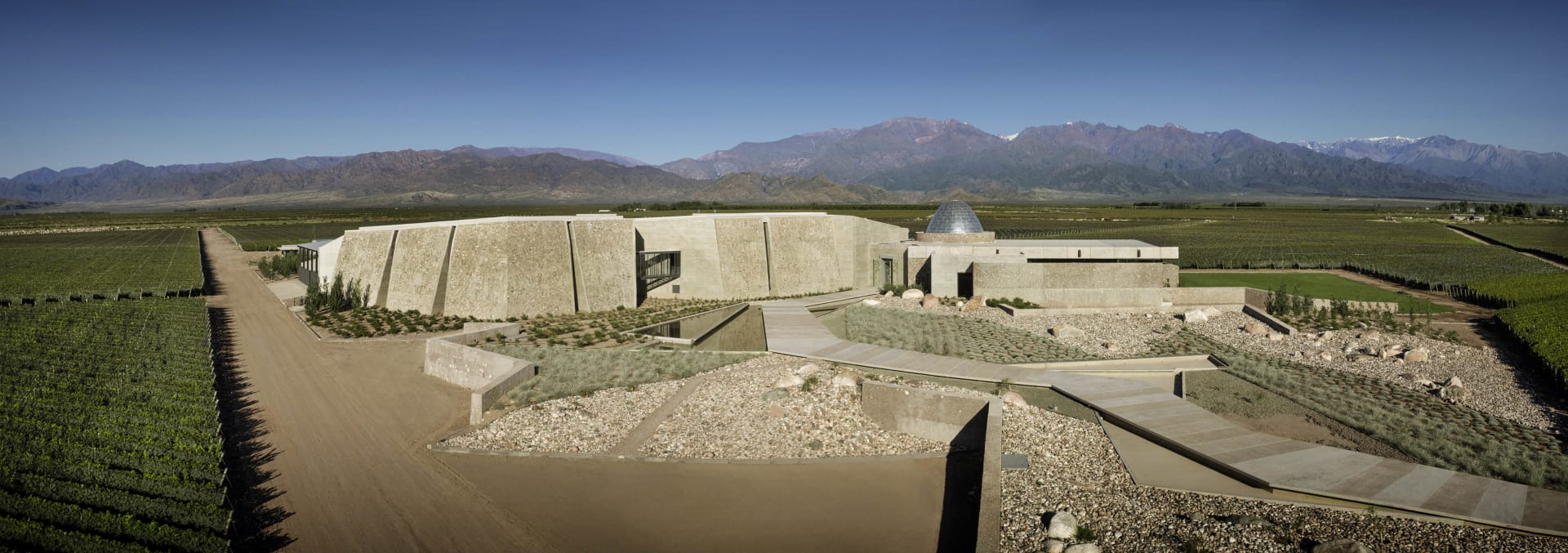





A few years before 1950, Ing. Alberto Zuccardi reaches Mendoza from his homeland in Tucuman where their great-grandparents had settled upon arriving in the Italian region of AveIino. In 1963, Alberto implanted a vineyard in the region of Maipu not knowing that it would begin the great passion of his life, the wine industry. In 1990, his son, Jose Alberto Zuccardi, assumed the General Director of the company.
In 2005, Sebastian Zuccardi, third generation of the family, lead the development of the new stage of the wines of the winery expansion into the Uco Valley. On his initiative, since 2008 the winery has an area of Research and Development dedicated to the study of the terroir and the different variables that affect wine production. In 2013 the construction of the new Zuccardi winery in the Uco Valley began. It opened in March 2016 with the premise of producing wines with identity, through the continuous exploration of the different terroirs of the Uco Valley.
The Zuccardi family’s approach to sustainability starts with the environment and people before any product. They’re dedicated to producing the highest quality wines through sustainable practices such as a focus on nurturing biodiversity, organic farming, efficient irrigation practices, composting, water treatment, comprehensive waste and recycling efforts, and the use of solar energy. The winery itself is designed to be naturally energy efficient by maximizing natural light and minimizing electricity consumption. Its concrete walls fulfill the function of a thermal insulator, the movements of liquid are caused by gravity and the concrete-designed vessels allow for a natural control of the temperature of the wine. As a third generation family-owned winery, the Zuccardi’s take seriously their responsibility to protect the environment, support the land, the farmers and uplift the local community. Through building schools, offering free education, fostering equality, banning child labor, and subsidizing health care, they’re not only elevating their wines and the Uco Valley as a world class wine region, but also giving the people who have contributed to their success a path forward and upward mobility for their own families.

A noble variety bestowed with both power and concentration, Cabernet Sauvignon enjoys success all over the globe, its best examples showing potential to age beautifully for decades. Cabernet Sauvignon flourishes in Bordeaux's Medoc where it is often blended with Merlot and smaller amounts of some combination of Cabernet Franc, Malbecand Petit Verdot. In the Napa Valley, ‘Cab’ is responsible for some of the world’s most prestigious, age-worthy and sought-after “cult” wines. Somm Secret—DNA profiling in 1997 revealed that Cabernet Sauvignon was born from a spontaneous crossing of Cabernet Franc and Sauvignon Blanc in 17th century southwest France.

With a winning combination of cool weather, high elevation and well-draining alluvial soils, it is no surprise that Mendoza’s Uco Valley is one of the most exciting up-and-coming wine regions in Argentina. Healthy, easy-to-manage vines produce low yields of high-quality fruit, which in turn create flavorful, full-bodied wines with generous acidity.
This is the source of some of the best Malbec in Mendoza, which can range from value-priced to ultra-premium. Cabernet Sauvignon, Cabernet Franc and Chardonnay also perform well here.