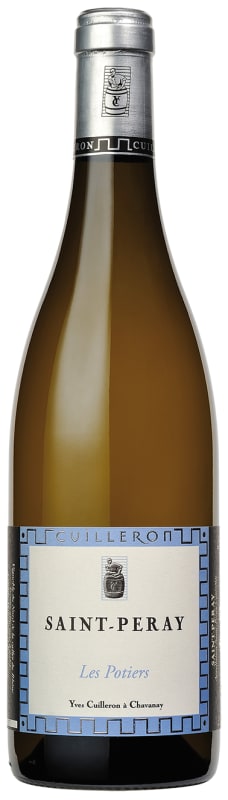


Winemaker Notes
It has a delicate, subtle aroma of fresh fruits: peach, Mirabelle, citrus, and lemon rind, along with a strong flint note. A well balanced palate with lovely tension due to the appellation’s mineral soil.
This would be a fine accompaniment to scallops, salmon or mussels as well as rich soups.
Professional Ratings
-
Vinous
The 2024 Saint-Péray Les Potiers presents upfront lemon flesh, yellow apple, fresh pear and whiffs of pastry. Honeysuckle adds more aromatic lift. Touching the mid-bodied palate with evident, vivid lift, the 2024 is a lively Saint-Péray bundling well-set inner energy all the way through to the bright finish.
-
Robert Parker's Wine Advocate
Matured for nine months in a combination of foudres and barrels, the 2024 Saint-Péray Les Potiers is perfumed and lively, revealing aromas of white peach, confit citrus, linden blossom and white flowers. Moderately weighted and round, it is built around a juicy core of fruit, beautifully balanced and enhanced by delicate acidity, concluding with a fresh, harmonious finish. It's a classic rendition.


Full-bodied and flavorful, white Rhône blends originate from France’s Rhône Valley. Today these blends are also becoming popular in other regions. Typically some combination of Grenache Blanc, Marsanne, Roussanne and Viognier form the basis of a white Rhône blend with varying degrees of flexibility depending on the exact appellation. Somm Secret—In the Northern Rhône, blends of Marsanne and Roussanne are common but the south retains more variety. Marsanne, Roussanne as well as Bourboulenc, Clairette, Picpoul and Ugni Blanc are typical.

A long and narrow valley producing flavorful red, white, and rosé wines, the Rhône is bisected by the river of the same name and split into two distinct sub-regions—north and south. While a handful of grape varieties span the entire length of the Rhône valley, there are significant differences between the two zones in climate and geography as well as the style and quantity of Rhône wines produced. The Northern Rhône, with its continental climate and steep hillside vineyards, is responsible for a mere 5% or less of the greater region’s total output. The Southern Rhône has a much more Mediterranean climate, the aggressive, chilly Mistral wind and plentiful fragrant wild herbs known collectively as ‘garrigue.’
In the Northern Rhône, the only permitted red variety is Syrah, which in the appellations of St.-Joseph, Crozes-Hermitage, Hermitage, Cornas and Côte-Rôtie, it produces velvety black-fruit driven, savory, peppery red wines often with telltale notes of olive, game and smoke. Full-bodied, perfumed whites are made from Viognier in Condrieu and Château-Grillet, while elsewhere only Marsanne and Roussanne are used, with the former providing body and texture and the latter lending nervy acidity. The wines of the Southern Rhône are typically blends, with the reds often based on Grenache and balanced by Syrah, Mourvèdre, and an assortment of other varieties. All three northern white varieties are used here, as well as Grenache Blanc, Clairette, Bourbelenc and more. The best known sub-regions of the Southern Rhône are the reliable, wallet-friendly Côtes du Rhône and the esteemed Châteauneuf-du-Pape. Others include Gigondas, Vacqueyras and the rosé-only appellation Tavel.