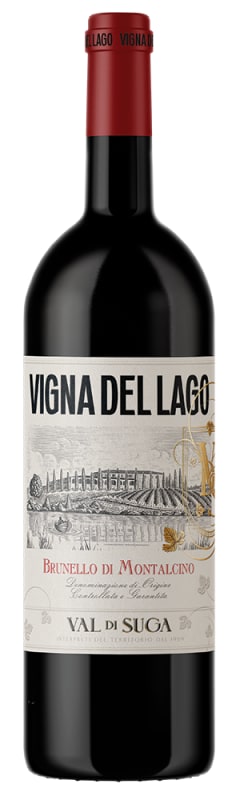


Winemaker Notes
Bright ruby in color, the nose starts reserved, then opens to balsamic notes of thyme and rosemary with dark floral hints. The palate is notably fresh, with elegant tannins and a refined, agile texture. True to form, Vigna del Lago remains measured and graceful, even in a more concentrated vintage
Professional Ratings
-
Jeb Dunnuck
With 13,000 bottles produced, the 2021 Brunello Di Montalcino Vigna Del Lago comes from the northeast in a slightly fresher, more continental pocket, and it pours a bright ruby hue. The nose is expressive, with crushed strawberries, herbes de Provence, incense, fennel, roses, and orange blossom. The palate is medium-bodied, elegant, and seamless, with fine tannins, balanced acidity, and a floral finish that keeps it lifted and graceful. It’s highly appealing out of the gate, yet it should have a wide drinking window.
-
Robert Parker's Wine Advocate
The Val di Suga 2021 Brunello di Montalcino Vigna del Lago offers added depth and texture thanks to fruit sourced from a warmer, lower-elevation site at 280 meters above sea level. The fruit profile leans toward the purple and blue spectrum, delivering a touch more heft and a velvety yet firm mouthfeel, with a tannic line at the back and a flash of hard minerality that keeps everything in check. Drawn from a 4.7-hectare vineyard with limestone clay soils, the wine is aged for 24 months in Slavonian oak casks followed by six months in cement and an additional year in bottle, a regimen that supports both structure and freshness.
-
Wine Spectator
Fruit and balsamic notes highlight this supple red. Black cherry, blackberry, mineral, tomato leaf, juniper and eucalyptus flavors ride the vibrant acidity, while dense, chalky tannins provide support. Shows fine harmony and length but needs a few years to integrate.
-
Decanter
The identities of Val di Suga’s three single-vineyard bottlings were well honed during Andrea Lonardi MW’s tenure. On cool clay soil in Montalcino’s continental northern stretch, Vigna del Lago is particularly evocative of place in 2021. This elegantly weighted beauty is all about tension and precision. Youthfully restrained, it suggests sorrel, heather and flint. The palate expresses itself vertically with blood orange and red cherry, hemmed in by tight, stony tannins. Alpine herbs lend savoury accents.
-
Vinous
Masses of crushed violet and lavender tones give way to pine shavings and cherry sauce as the 2021 Brunello di Montalcino Vigna Del Lago opens in the glass. This is a more lifted and graceful interpretation of Vigna Del Lago, featuring round textures and fresh wild berry fruits elevated by a core of tantalizing acidity. A cascade of inner florals lingers as the 2021 tapers off with edgy tannins, yet the palate remains refreshed.
-
James Suckling
Restrained wine with an earthy mineral edge to the balsamic, pomegranate and red-cherry aromas. Medium-bodied, it’s slightly stern on the palate with crisp acidity, firm and velvety tannins and a chalkier finish. Try from 2027.



Among Italy's elite red grape varieties, Sangiovese has the perfect intersection of bright red fruit and savory earthiness and is responsible for the best red wines of Tuscany. While it is best known as the chief component of Chianti, it is also the main grape in Vino Nobile di Montepulciano and reaches the height of its power and intensity in the complex, long-lived Brunello di Montalcino. Somm Secret—Sangiovese doubles under the alias, Nielluccio, on the French island of Corsica where it produces distinctly floral and refreshing reds and rosés.

Famous for its bold, layered and long-lived red, Brunello di Montalcino, the town of Montalcino is about 70 miles south of Florence, and has a warmer and drier climate than that of its neighbor, Chianti. The Sangiovese grape is king here, as it is in Chianti, but Montalcino has its own clone called Brunello.
The Brunello vineyards of Montalcino blanket the rolling hills surrounding the village and fan out at various elevations, creating the potential for Brunello wines expressing different styles. From the valleys, where deeper deposits of clay are found, come wines typically bolder, more concentrated and rich in opulent black fruit. The hillside vineyards produce wines more concentrated in red fruits and floral aromas; these sites reach up to over 1,600 feet and have shallow soils of rocks and shale.
Brunello di Montalcino by law must be aged a minimum of four years, including two years in barrel before realease and once released, typically needs more time in bottle for its drinking potential to be fully reached. The good news is that Montalcino makes a “baby brother” version. The wines called Rosso di Montalcino are often made from younger vines, aged for about a year before release, offer extraordinary values and are ready to drink young.