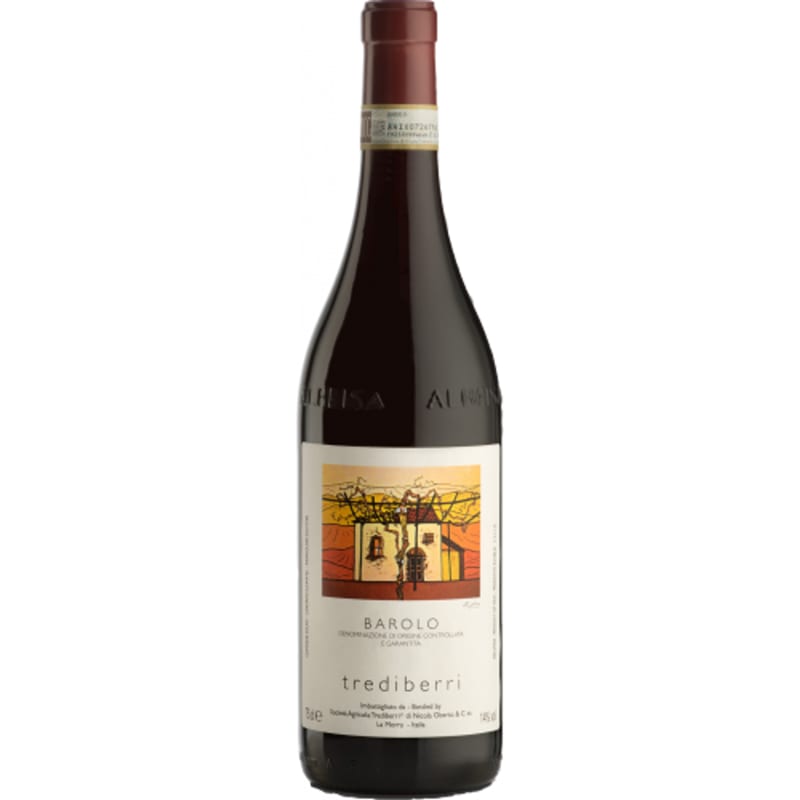


Winemaker Notes
Barolo Berri comes from a vineyard at the extreme west border of the Barolo area, with an altitude between 370 and 430 mts asl (1200 -1400 ft). Our Barolo Berri doesn’t want to stand out for complexity or longevity, but for drinkability and immediacy, due to its inner fruit profile, sweet ripeness and freshness. Like any Barolo, it is certainly suitable for long ageing but, in our opinion, this wine can be consumed right after the release with extreme pleasure.
Professional Ratings
-
Wine Enthusiast
This wine opens with aromas of dark cherries gently stewed in their own juice. This fruit core is subtly warmed by an infusion of mixed spices and the delicate astringency of tea leaves. Wildflowers weave through the profile, introducing a sweet, spicy floral aspect. The tannins are fine and well integrated, providing structure without overwhelming the palate.
-
Vinous
The 2020 Barolo Berri is the bomb. Rich, racy and explosive, the 2020 Berri remains one of the very best wines in this young estate's history. It has started to close down a bit, especially in its aromatics, but its purity of fruit.
-
Jeb Dunnuck
There is already a wonderful balance in the 2020 Barolo Berri, with both vertical drive and rounded fruits, including red berries and spiced red plums. It has ripe tannins and a generous feel, with a spine of fresh acidity raising it to another level. Drink 2026-2040.
-
James Suckling
Fresh and brambly nose with red berries, white pepper, stones and hibiscus. Medium body on the palate with tight, chalky tannins and an elegant, firm finish. Drink or hold.


Responsible for some of the most elegant and age-worthy wines in the world, Nebbiolo, named for the ubiquitous autumnal fog (called nebbia in Italian), is the star variety of northern Italy’s Piedmont region. Grown throughout the area, as well as in the neighboring Valle d’Aosta and Valtellina, it reaches its highest potential in the Piedmontese villages of Barolo, Barbaresco and Roero. Outside of Italy, growers are still very much in the experimentation stage but some success has been achieved in parts of California. Somm Secret—If you’re new to Nebbiolo, start with a charming, wallet-friendly, early-drinking Langhe Nebbiolo or Nebbiolo d'Alba.

The center of the production of the world’s most exclusive and age-worthy red wines made from Nebbiolo, the Barolo wine region includes five core townships: La Morra, Monforte d’Alba, Serralunga d’Alba, Castiglione Falletto and the Barolo village itself, as well as a few outlying villages. The landscape of Barolo, characterized by prominent and castle-topped hills, is full of history and romance centered on the Nebbiolo grape. Its wines, with the signature “tar and roses” aromas, have a deceptively light garnet color but full presence on the palate and plenty of tannins and acidity. In a well-made Barolo wine, one can expect to find complexity and good evolution with notes of, for example, strawberry, cherry, plum, leather, truffle, anise, fresh and dried herbs, tobacco and violets.
There are two predominant soil types here, which distinguish Barolo from the lesser surrounding areas. Compact and fertile Tortonian sandy marls define the vineyards farthest west and at higher elevations. Typically the Barolo wines coming from this side, from La Morra and Barolo, can be approachable relatively early on in their evolution and represent the “feminine” side of Barolo, often closer in style to Barbaresco with elegant perfume and fresh fruit.
On the eastern side of the Barolo wine region, Helvetian soils of compressed sandstone and chalks are less fertile, producing wines with intense body, power and structured tannins. This more “masculine” style comes from Monforte d’Alba and Serralunga d’Alba. The township of Castiglione Falletto covers a spine with both soil types.
The best Barolo wines need 10-15 years before they are ready to drink, and can further age for several decades.