
Winemaker Notes
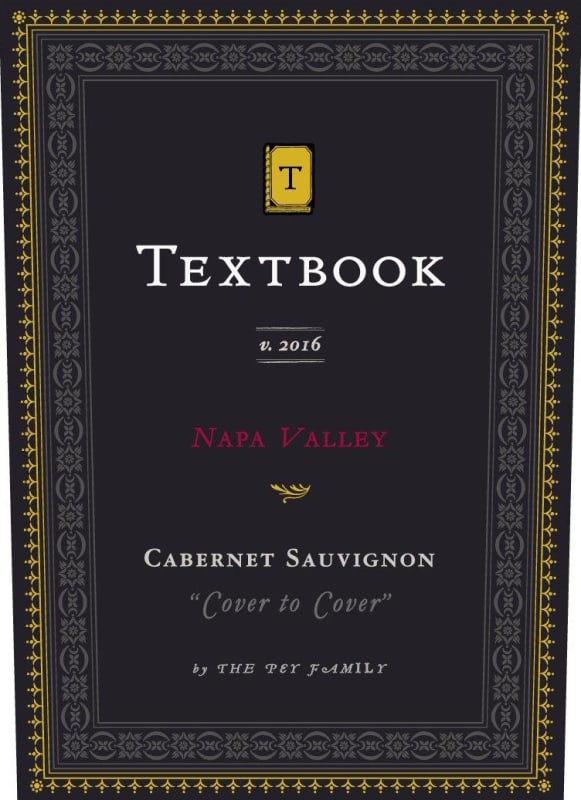
Like and irresistible book, select barrels of the 2016 vintage grabbed the winery's attention from start to finish. The grapes were hand harvested and hand-sorted from three superb vineyards and matured in small French oak barrels. "Cover to Cover" displays the textbook brilliance of Napa Valley Cabernet.
Professional Ratings
-
Wilfred Wong of Wine.com
COMMENTARY: The 2016 Textbook "Cover to Cover" Cabernet Sauvignon is nifty and well-balanced. TASTING NOTES: This wine is fresh, lively, and elegant. Its brisk aromas and flavors of bright red fruit and savory spices should pair well with a slow-braised lamb stew. (Tasted: December 5, 2019, San Francisco, CA)




Textbook was inspired by the Pey Family's travels in France and Italy, where they learned about wine and its place at the table. While abroad, they fell in love with European craftsmanship – wines made with structure, restraint, and revealing a 'sense of place.' For nearly two decades, they've fulfilled that vision – crafting exceptional, while approachable wines that truly represents the best a region has to offer.
Their high-caliber grower and producer partners provide them with superior lots, allowing them to consistently deliver complexity and quality vintage to vintage.
Winemaker Abigail "Abi" Horstman Estrada sources small lots from a range of climates and soils, providing a diverse palette of flavors and aromatics. She honed her winemaking chops in Italy, New Zealand, and Israel and worked for prestige brands like Markham, Domaine Chandon, and Robert Mondavi in Napa Valley. She crafts Textbook wines by keeping the lots separate, tasting them throughout the year, and then integrating the components to create balanced, complex wines that can be enjoyed independently or with various cuisines.

One of the most prestigious wines of the world capable of great power and grace, Napa Valley Cabernet is a leading force in the world of fine, famous, collectible red wine. Today the Napa Valley and Cabernet Sauvignon are so intrinsically linked that it is difficult to discuss one without the other. But it wasn’t until the 1970s that this marriage came to light; sudden international recognition rained upon Napa with the victory of the Stag’s Leap Wine Cellars 1973 Cabernet Sauvignon in the 1976 Judgement of Paris.
Cabernet Sauvignon undoubtedly dominates Napa Valley today, covering half of the land under vine, commanding the highest prices per ton and earning the most critical acclaim. Cabernet Sauvignon’s structure, acidity, capacity to thrive in multiple environs and ability to express nuances of vintage make it perfect for Napa Valley where incredible soil and geographical diversity are found and the climate is perfect for grape growing. Within the Napa Valley lie many smaller sub-AVAs that express specific characteristics based on situation, slope and soil—as a perfect example, Rutherford’s famous dust or Stags Leap District's tart cherry flavors.