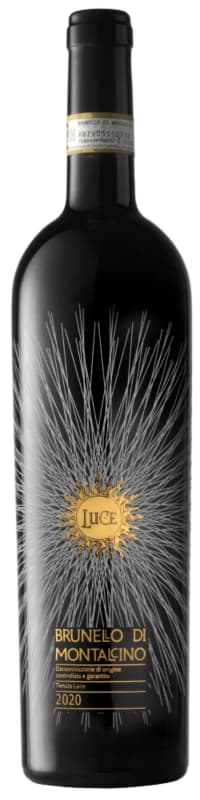


Winemaker Notes
The appearance is a shimmering ruby red. The bouquet is multifaceted and complex, with red berry fruit melding into sweet violets and smooth spices. It boasts a full bodied, vibrant palate, with a beautifully-crisp acidity and ripe, glossy tannins that complement delicious impressions of citrus and spices.
Professional Ratings
-
James Suckling
Beautifully perfumed aromas of violets, cedar and fresh raspberries with some strawberries, too. Full-bodied with firm, chewy tannins that add tension and focus, as well as a crunchy undertone. Needs three or four years to soften. Best after 2028.
-
Wine Spectator
Fruity and expressive, featuring flavors of macerated cherry, plum, sweet spices, menthol and earth. Dense, aggressive tannins take over, yet the fruit lurks underneath and returns on the succulent finish. Best from 2027 through 2043.
-
Jeb Dunnuck
Dark red/magenta in color, the 2020 Brunello Di Montalcino is sappy and perfumed with decadent aromas of blackberry compote, sweet cedar, polished leather, and crushed lavender. It is full-bodied but has a nice snap of tension through the mid-palate and finish, with mouthwatering acidity and a good deal of length. Robust upfront, with velvety tannins and a salty finish, it will benefit from another year in bottle and drink well over the following 10-12 years.





The history of tenuta Luce starts in the early Nieneties when Vittorio Frescobaldi and Robert mondavi chose Montalcino, a land known for its vocation for viticulture, and decided to join their experiences and start a visionary project: to make a wine that would go beyond the borders of tradition, but without denying it. Right from the start, they were supported by their respective sons, Lamberto and Tim, both young oenologists.
The experience acquired since the Seventies with the vineyards of Merlot planted in these plots, and the knowledge of their expressive uniqueness proved to be essential. Luce, the wine from which it all began, was concieved as the harmonious meeting point between the elegance and the structure of Sangiovese, the local native varietal, and the roundness of Merlot.
Luce’s first harversts, in 1993 and 1994, were presented together in 1997, immediately stimulating curiosity and interest.
The project continued to grow, developing over the years: two acquisitions between 2001 and 2016, new vineyards, new challenges. In 2005, when the join venture with Mondavi ended, Lamberto Frescobaldi took the helm, directing the production.Other wines, over the years, joined Luce: in 1998 Lucente was presented, the second wine of Tenuta Luce. In 2003 Luce Brunello was born. Finally, with the 2015 harvest, Lux Vitis came to life.
At the core of Tenuta Luce's philosophy is the idea that wine should be the most natural expression of the lands where it is produced and the grapes from which it is obtained: the result of a perfect balance between grape variety and territory. Each human intervention takes place in a minimal and non-invasive form, with the main objective of protecting this harmony.

Among Italy's elite red grape varieties, Sangiovese has the perfect intersection of bright red fruit and savory earthiness and is responsible for the best red wines of Tuscany. While it is best known as the chief component of Chianti, it is also the main grape in Vino Nobile di Montepulciano and reaches the height of its power and intensity in the complex, long-lived Brunello di Montalcino. Somm Secret—Sangiovese doubles under the alias, Nielluccio, on the French island of Corsica where it produces distinctly floral and refreshing reds and rosés.

Famous for its bold, layered and long-lived red, Brunello di Montalcino, the town of Montalcino is about 70 miles south of Florence, and has a warmer and drier climate than that of its neighbor, Chianti. The Sangiovese grape is king here, as it is in Chianti, but Montalcino has its own clone called Brunello.
The Brunello vineyards of Montalcino blanket the rolling hills surrounding the village and fan out at various elevations, creating the potential for Brunello wines expressing different styles. From the valleys, where deeper deposits of clay are found, come wines typically bolder, more concentrated and rich in opulent black fruit. The hillside vineyards produce wines more concentrated in red fruits and floral aromas; these sites reach up to over 1,600 feet and have shallow soils of rocks and shale.
Brunello di Montalcino by law must be aged a minimum of four years, including two years in barrel before realease and once released, typically needs more time in bottle for its drinking potential to be fully reached. The good news is that Montalcino makes a “baby brother” version. The wines called Rosso di Montalcino are often made from younger vines, aged for about a year before release, offer extraordinary values and are ready to drink young.