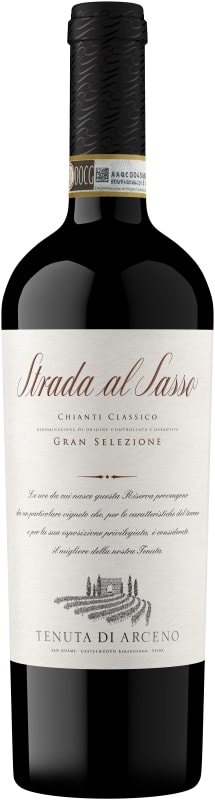


Winemaker Notes
Strada al Sasso is Tenuta di Arceno's flagship, single-vineyard, single-block Sangiovese. Planted in 1998, this exceptional micro-cru is located in a wind-swept corner of our estate. It features high-density spacing, careful matching of rootstocks and clones to the soils, and low yields. This is the most intense, brooding, concentrated, complex wine they produce at Tenuta di Arceno. The aromatics are saturated with dark fruit, dark-roasted coffee beans and violets. The palate is dense and commanding with dried plums, nutmeg, earth, wet slate, firm acids and fine tannins. While this wine drinks well in its youth, it is built to evolve and improve over the next decade or more.
Professional Ratings
-
James Suckling
This has aromas of cassis, plums, oranges, milk chocolate, bay leaves and clay. So juicy and succulent, with a medium body and firm, creamy tannins. Pretty hazelnut and chocolate character at the end. Long and elegant.
-
Robert Parker's Wine Advocate
The Tenuta di Arceno 2019 Chianti Classico Gran Selezione Strada al Sasso (made with 100% Sangiovese) is a balanced wine, and it also possesses great intensity with dark cherry, plum, light spice and sweet tobacco. The wine is supple and richly textured but not in a heavy or over-extracted manner. In fact, it feels silky throughout. This special wine reflects the warmth and sunshine of Castelnuovo Berardenga in Tuscany.
-
Wine Spectator
A solidly built red hallmarked by violet, black cherry and blackberry, with leather, earth and menthol accents that add interest. Ends with a firm grip of tannins. A potential match for steak or lamb, this needs a bit more time in the bottle. Best from 2025 through 2038. 1,000 cases made, 560 cases imported.


Among Italy's elite red grape varieties, Sangiovese has the perfect intersection of bright red fruit and savory earthiness and is responsible for the best red wines of Tuscany. While it is best known as the chief component of Chianti, it is also the main grape in Vino Nobile di Montepulciano and reaches the height of its power and intensity in the complex, long-lived Brunello di Montalcino. Somm Secret—Sangiovese doubles under the alias, Nielluccio, on the French island of Corsica where it produces distinctly floral and refreshing reds and rosés.

One of the first wine regions anywhere to be officially recognized and delimited, Chianti Classico is today what was originally defined simply as Chianti. Already identified by the early 18th century as a superior zone, the official name of Chianti was proclaimed upon the area surrounding the townships of Castellina, Radda and Gaiole, just north of Siena, by Cosimo III, Grand Duke of Tuscany in an official decree in 1716.
However, by the 1930s the Italian government had appended this historic zone with additonal land in order to capitalize on the Chianti name. It wasn’t until 1996 that Chianti Classico became autonomous once again when the government granted a separate DOCG (Denominazione di Origine Controllata e Garantita) to its borders. Ever since, Chianti Classico considers itself no longer a subzone of Chianti.
Many Classicos are today made of 100% Sangiovese but can include up to 20% of other approved varieties grown within the Classico borders. The best Classicos will have a bright acidity, supple tannins and be full-bodied with plenty of ripe fruit (plums, black cherry, blackberry). Also common among the best Classicos are expressive notes of cedar, dried herbs, fennel, balsamic or tobacco.