
Winemaker Notes
The Seven Springs Dijon clone Chardonnays have a Puligny-like character: sweet fruit and spice with great length. The Freedom Hill Dijon clone Chardonnays are more Mersault-like, darker fruit with a stony minerality and rich textures in the mouth.
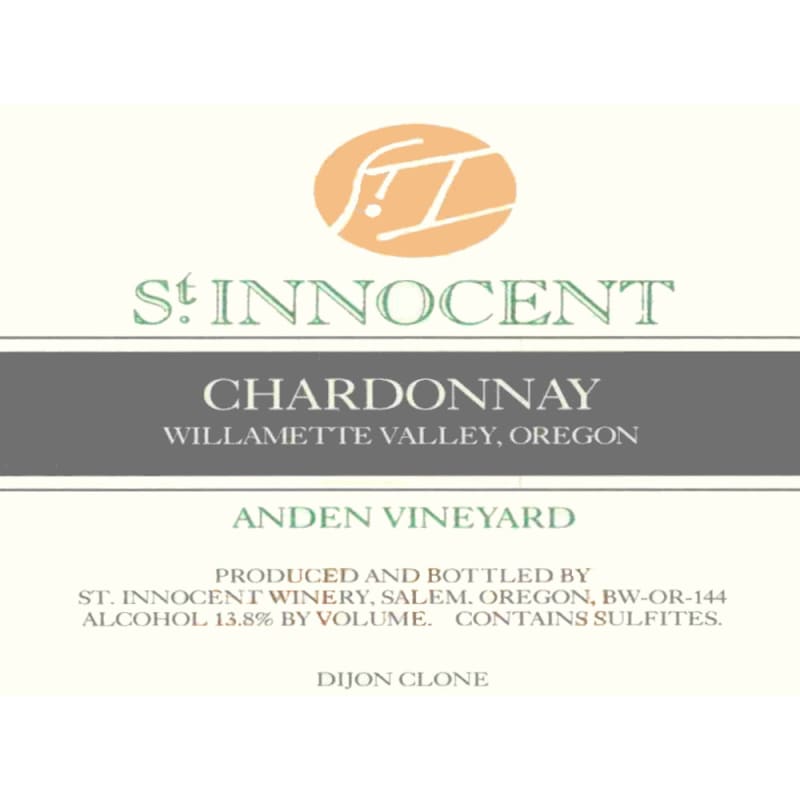
Anden Chardonnay is both fruit and texture driven. For me, great Chardonnay must have lovely fruit, acidity, viscosity, and complexity of flavor. The wood must be in balance and act to compliment the wine, not be "catnip for humans". When Chardonnay is truly layered and in balance, it is very versatile to eat with, and fun to drink. I fully agree that most Chardonnays are mono-chromatic and out of balance. This wine is very layered and has an very long finish.
2006 was a vintage that produced wines with an added dimension of concentration. The end of September was warmer and sunnier than normal for Oregon. This coincided with the final ripening phase resulting in an extra level ripeness and intensity in the fruit.
Carmelized pear and ripe citrus aromas are followed by ripe pear and with hints of ginger. This Chardonnay has bright acidity, rich textures throughout the palate and loads of sweet fruit into the finish. The oak component is completely integrated, adding fullness to the texture and length to the finish.
Try Anden Chardonnay with grilled chicken, tuna, swordfish, lobster (a classic), or even foods as flavorful as duck breast. For reasons that I can not explain, the Chardonnays from this site are fantastic with Asparagus. Usually the bane of wine, the combination enhances the fruit and spice notes in the Anden Chardonnay. Try it and let me know what you think. Mark Vlossak, winemaker


One of the most popular and versatile white wine grapes, Chardonnay offers a wide range of flavors and styles depending on where it is grown and how it is made. While it tends to flourish in most environments, Chardonnay from its Burgundian homeland produces some of the most remarkable and longest lived examples. California produces both oaky, buttery styles and leaner, European-inspired wines. Somm Secret—The Burgundian subregion of Chablis, while typically using older oak barrels, produces a bright style similar to the unoaked style. Anyone who doesn't like oaky Chardonnay would likely enjoy Chablis.

One of Pinot Noir's most successful New World outposts, the Willamette Valley is the largest and most important AVA in Oregon. With a continental climate moderated by the influence of the Pacific Ocean, it is perfect for cool-climate viticulture and the production of elegant wines.
Mountain ranges bordering three sides of the valley, particularly the Chehalem Mountains, provide the option for higher-elevation vineyard sites.
The valley's three prominent soil types (volcanic, sedimentary and silty, loess) make it unique and create significant differences in wine styles among its vineyards and sub-AVAs. The iron-rich, basalt-based, Jory volcanic soils found commonly in the Dundee Hills are rich in clay and hold water well; the chalky, sedimentary soils of Ribbon Ridge, Yamhill-Carlton and McMinnville encourage complex root systems as vines struggle to search for water and minerals. In the most southern stretch of the Willamette, the Eola-Amity Hills sub-AVA soils are mixed, shallow and well-drained. The Hills' close proximity to the Van Duzer Corridor (which became its own appellation as of 2019) also creates grapes with great concentration and firm acidity, leading to wines that perfectly express both power and grace.
Though Pinot noir enjoys the limelight here, Pinot Gris, Pinot Blanc and Chardonnay also thrive in the Willamette. Increasing curiosity has risen recently in the potential of others like Grüner Veltliner, Chenin Blanc and Gamay.