
Winemaker Notes
Professional Ratings
-
James Suckling
Fantastic aromas of blueberry, blackberry, violets, black licorice and stones. Full-bodied, firm, silky, and fresh. Very long and balanced. Beautiful tannins. All in harmony. Drink in 2019.
-
Wine & Spirits
Aron Weinkauf bases this wine on estate-grown fruit from the western benchlands of St. Helena. He includes fruit from growers in the eastern mountains of Oakville and the benchlands of Oak Knoll, south of Yountville, adding a cooler element to the blend. The length of fruit and the wine’s gentle elegance is immediately apparent, though it feels black and a little medicinal at first. With air, it develops brightness to balance the richness, a burst of freshness to open the flavors of a sleek and serious Napa Valley cabernet.
-
Wilfred Wong of Wine.com
The 2013 Spottswoode "Lyndenhurst" Cabernet Sauvignon is a wine of special merit. Why? While some folks may perceive this to be merely the winery's second label, this wine is much more than that. I see it as a wine made with the same care, attention, and goals that have made Spottswoode one of the Napa Valley's top names. Lyndenhurst is a testament to the vineyards and the purity of their grapes. This wine shows a great purity of flavors—black fruits, dried herbs, and pleasing earthiness. Drinks well now and will improve over the next half dozen years. (Tasted: October 24, 2016, San Francisco, CA)





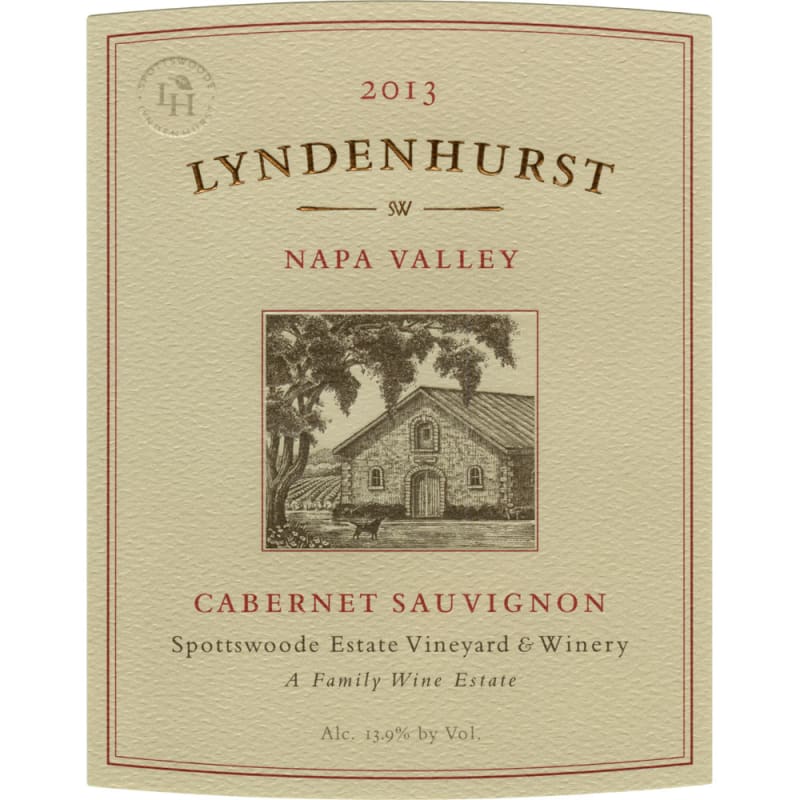
Spottswoode is an historic, family-owned estate vineyard and winery located on the western edge of St. Helena in Napa Valley. The estate was established in 1882 by George Schonewald, whose historic Victorian home is depicted on the label. Spottswoode was christened by Mrs. Albert Spotts, whose family owned the property from 1910 until its purchase in 1972 by Mary Weber Novak and her husband, Dr. Jack Novak. After Jack died unexpectedly in 1977, Mary carried out their shared dream, and Spottswoode’s debut Cabernet Sauvignon was produced in 1982, exactly one hundred years after the estate’s founding.
To ensure the highest quality, Spottswoode is dedicated to producing a handful of wines in very limited quantities: Spottswoode Estate Cabernet Sauvignon, Sauvignon Blanc, Lyndenhurst, and Field Book. The winery's goal is to produce exceptional, well-balanced, structured wines that exhibit texture, elegance, consistency and the ability to age well.
The 40-acre Spottswoode Estate Vineyard is an ideal terroir for growing wine grapes. Situated on the apex of the Sulphur Creek fan, the alluvial soils comprised primarily of sandy clay loam provide superb drainage. The gap between the Mayacamas Range and Spring Mountain admits cooling maritime breezes that temper the sun’s heat, creating an ideal microclimate for winegrowing. Among the first to introduce organic farming practices in the Napa Valley in 1985, Spottswoode is proud to have enjoyed the California Certified Organic Farmers (CCOF) certification since 1992 and Demeter Biodynamic Certification since 2020. Spottswoode is also Napa Valley’s first Certified B-Corp winery.

One of the most prestigious wines of the world capable of great power and grace, Napa Valley Cabernet is a leading force in the world of fine, famous, collectible red wine. Today the Napa Valley and Cabernet Sauvignon are so intrinsically linked that it is difficult to discuss one without the other. But it wasn’t until the 1970s that this marriage came to light; sudden international recognition rained upon Napa with the victory of the Stag’s Leap Wine Cellars 1973 Cabernet Sauvignon in the 1976 Judgement of Paris.
Cabernet Sauvignon undoubtedly dominates Napa Valley today, covering half of the land under vine, commanding the highest prices per ton and earning the most critical acclaim. Cabernet Sauvignon’s structure, acidity, capacity to thrive in multiple environs and ability to express nuances of vintage make it perfect for Napa Valley where incredible soil and geographical diversity are found and the climate is perfect for grape growing. Within the Napa Valley lie many smaller sub-AVAs that express specific characteristics based on situation, slope and soil—as a perfect example, Rutherford’s famous dust or Stags Leap District's tart cherry flavors.