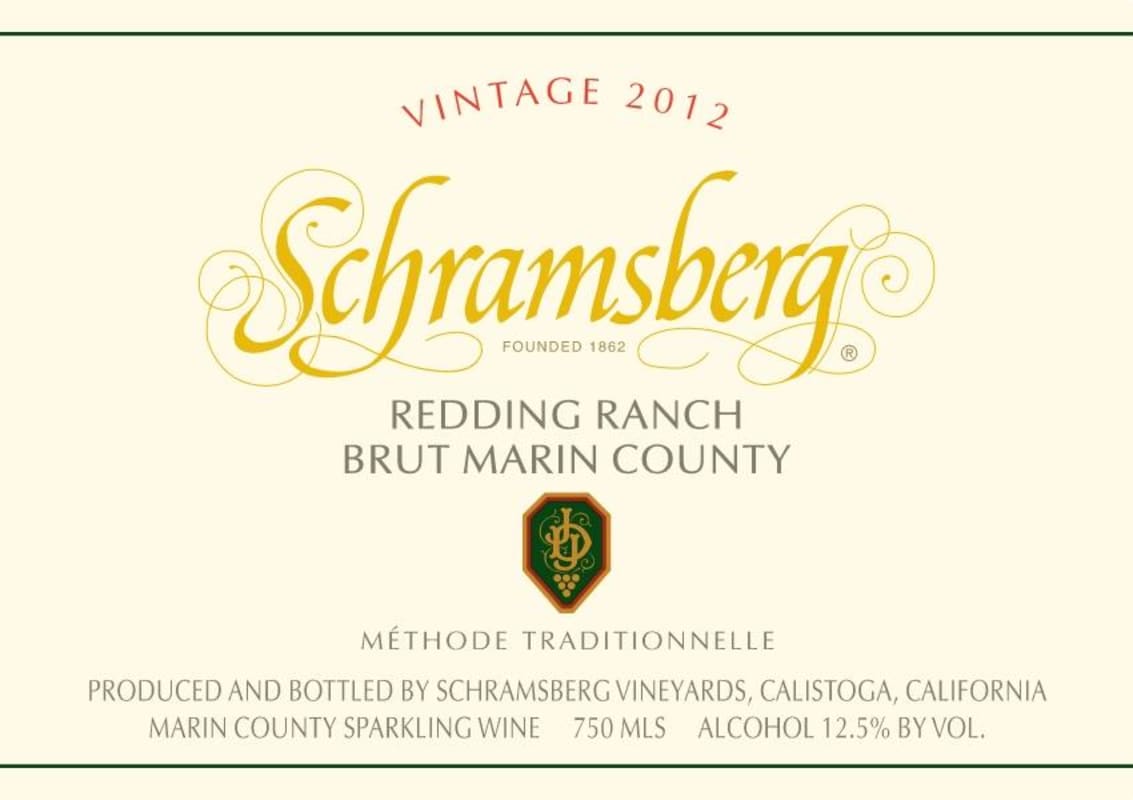

Winemaker Notes





In 1965, Jack and Jamie Davies founded Schramsberg and set out to make world-class sparkling wine in the true méthode traditionelle style on the property originally established in 1862 by German immigrant Jacob Schram. There were only 22 bonded wineries in Napa Valley and fewer than 100 acres of California vineyards planted to Chardonnay and Pinot Noir. Schramsberg was the first California winery to provide a Blanc de Blancs in 1965 followed by a Blanc de Noirs in 1967. Now their son, Hugh Davies, leads the winery’s management and winemaking team.
The Schramsberg estate in Napa Valley’s famed Diamond Mountain District is a registered historic landmark with Napa’s first caves, hand-dug in the 1880s, and its first hillside vineyards. Quality focus drives all aspects of wine production starting with access to over 120 cool-climate sites in Carneros, Marin, Mendocino and Sonoma, which result in over 200 separate lots. Unique among California sparkling wine houses, Schramsberg ferments about 25 percent of its juice in oak barrels to produce rich, flavorful, complex wines.
Most of Schramsberg’s viticultural and winemaking practices are carried out by hand: grapes are hand harvested, the wines are handcrafted, and the bottles are stacked and riddled in underground caves. The family and the winery embody excellence and innovation in winemaking, as well as preservation of their land, their history and their community.

Representing the topmost expression of a Champagne house, a vintage Champagne is one made from the produce of a single, superior harvest year. Vintage Champagnes account for a mere 5% of total Champagne production and are produced about three times in a decade. Champagne is typically made as a blend of multiple years in order to preserve the house style; these will have non-vintage, or simply, NV on the label. The term, "vintage," as it applies to all wine, simply means a single harvest year.

Bordered by Napa and Sonoma Valleys to the north and the Golden gate Bridge to the south, most of the region’s vineyards are planted on Marin County’s western side where they are exposed to the moist and cold air of the Pacific Ocean. Varieties like Pinot noir and Chardonnay do well here.