
Winemaker Notes
Professional Ratings
-
Wine Spectator
Exuberant and festive, with dynamic apple and cherry flavors accented by nectarine and strawberry blossoms, finishing.





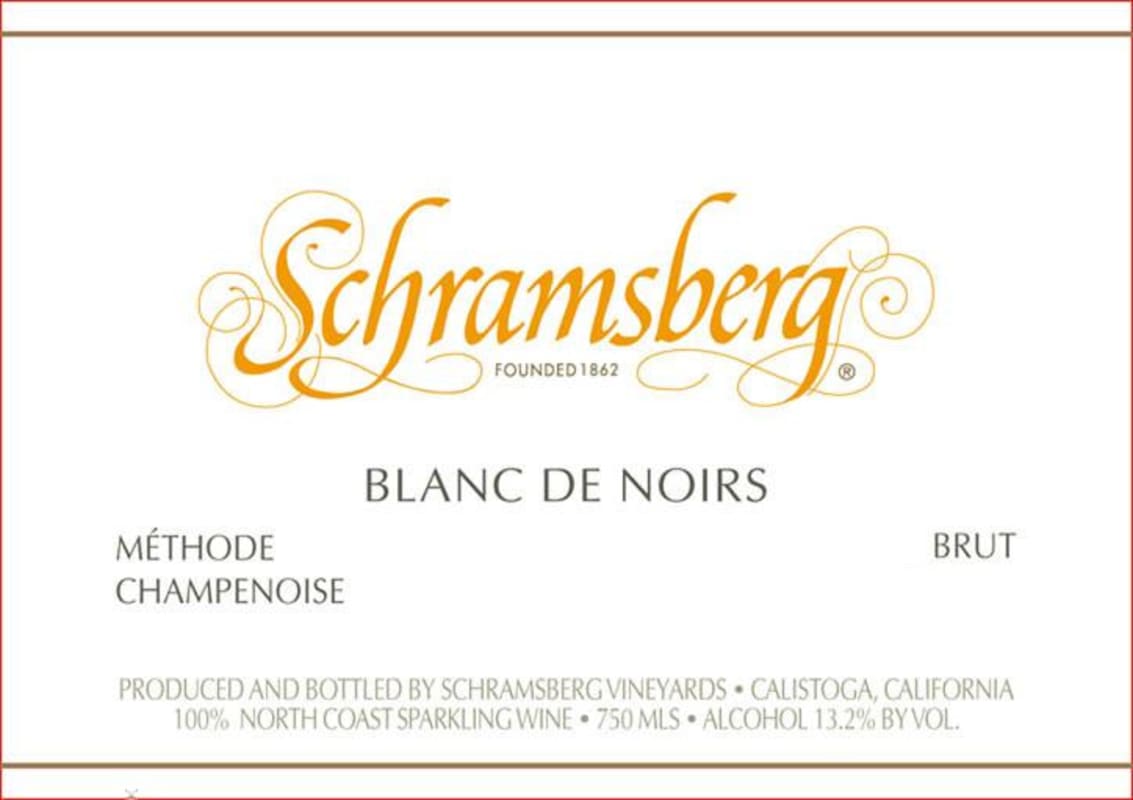
In 1965, Jack and Jamie Davies founded Schramsberg and set out to make world-class sparkling wine in the true méthode traditionelle style on the property originally established in 1862 by German immigrant Jacob Schram. There were only 22 bonded wineries in Napa Valley and fewer than 100 acres of California vineyards planted to Chardonnay and Pinot Noir. Schramsberg was the first California winery to provide a Blanc de Blancs in 1965 followed by a Blanc de Noirs in 1967. Now their son, Hugh Davies, leads the winery’s management and winemaking team.
The Schramsberg estate in Napa Valley’s famed Diamond Mountain District is a registered historic landmark with Napa’s first caves, hand-dug in the 1880s, and its first hillside vineyards. Quality focus drives all aspects of wine production starting with access to over 120 cool-climate sites in Carneros, Marin, Mendocino and Sonoma, which result in over 200 separate lots. Unique among California sparkling wine houses, Schramsberg ferments about 25 percent of its juice in oak barrels to produce rich, flavorful, complex wines.
Most of Schramsberg’s viticultural and winemaking practices are carried out by hand: grapes are hand harvested, the wines are handcrafted, and the bottles are stacked and riddled in underground caves. The family and the winery embody excellence and innovation in winemaking, as well as preservation of their land, their history and their community.

A term typically reserved for Champagne and Sparkling Wines, non-vintage or simply “NV” on a label indicates a blend of finished wines from different vintages (years of harvest). To make non-vintage Champagne, typically the current year’s harvest (in other words, the current vintage) forms the base of the blend. Finished wines from previous years, called “vins de reserve” are blended in at approximately 10-50% of the total volume in order to achieve the flavor, complexity, body and acidity for the desired house style. A tiny proportion of Champagnes are made from a single vintage.
There are also some very large production still wines that may not claim one particular vintage. This would be at the discretion of the winemaker’s goals for character of the final wine.

Reaching up California's coastline and into its valleys north of San Francisco, the North Coast AVA includes six counties: Marin, Solano, Napa, Sonoma, Mendocino and Lake. While Napa and Sonoma enjoy most of the glory, the rest produce no shortage of quality wines in an intriguing and diverse range of styles.
Climbing up the state's rugged coastline, the chilly Marin County, just above the City and most of Sonoma County, as well as Mendocino County on the far north end of the North Coast successfully grow cool-climate varieties like Pinot Noir, Chardonnay and in some spots, Riesling. Inland Lake County, on the other hand, is considerably warmer, and Cabernet Sauvignon, Zinfandel and Sauvignon Blanc produce some impressive wines with affordable price tags.