


Winemaker Notes
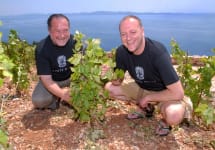
Dingac is their small Plavac from the best wine-growing area in Croatia, Sv. Lucia Dingac. This vineyard is rich in everything that pleases this variety: sun, calcareous soil full of quartz, mineral soil, and good winds. Plavac that grows here has specific pronounced aromas of prunes, cherries, and secondary aromas of tobacco and dark chocolate. Extremely rich and fragrant, it still remains drinkable and mild on the palate. It is aged for 24 months in new barriqua barrels of French oak, and after 3 years in the basement it sees the light of day.
Great with all meat dishes, from dark chocolate desserts, with aged cheeses, and I'm the best with a good cigar.
Professional Ratings
-
Wilfred Wong of Wine.com
COMMENTARY: The 2017 Saints Hills Dingac is a smooth-sailing red wine with soft tannins and a pleasing aftertaste. TASTING NOTES: This wine offers aromas and flavors of authentic, earthy, and rustic notes. Pair it with a savory lamb stew. (Tasted: March 21, 2022, San Francisco, CA)



Beyond the usual suspects, there are hundreds of red grape varieties grown throughout the world. Some are indigenous specialties capable of producing excellent single varietal wines, while others are better suited for use as blending grapes. Each has its own distinct viticultural characteristics, as well as aroma and flavor profiles, offering much to be discovered by the curious wine lover. In particular, Portugal and Italy are known for having a multitude of unique varieties but they can really be found in any region.

With viticulture and winemaking dating back to ancient Greek settlers, Croatia today is one of the most successful former Yugoslavia wine producing nations. Stretching along the Adriatic coastline, across the sea from Italy, it has become a hugely popular tourist destination in recent years.
Four distinct geographical Croatian wine regions comprise the country. Dalmatia, the most famous, gained global recognition with the 2002 discovery that its indigenous Crljenak Kaštelanski is actually genetically identical to California’s Zinfandel. At the time there were only nine vines of this Croatian wine variety at Kaštela near Split but in response to this discovery, vineyard acreage is increasing. Crljenak Kaštelanski is also a parent of the indigenous, Plavac Mali (Croatia’s second most planted grape). Dalmatia extends south from Kvarner along the Croatian coast and is the only Croatian wine region where reds dominate. Babić is another red skinned variety grown here; Dalmatian white wine varieties include Grk, Debit, Vugava, Bogdanuša, Gegic, and Maraština.
Istria and Kvarner reach along Croatia’s northern coastline and enjoy a Mediterranean climate. Here Croatia’s third most planted variety, Malvazija Istarska can be found in two main styles: light and fruity or made with extended skin contact and aged in oak. Teran is the main red variety here.
Inland, the Croatian Uplands are the coolest and international white varieties take up most of the vine acreage. Sauvignon blanc, Riesling, Pinot gris and Pinot Noir grow here as well as Hungary’s Furmint, locally called Moslavac
Slavonia and Danube are home to the most important Croatian white wine variety, Graševina (Welschriesling), as well as Traminac (Gewürztraminer) and Frankovka (Blaufränkisch).