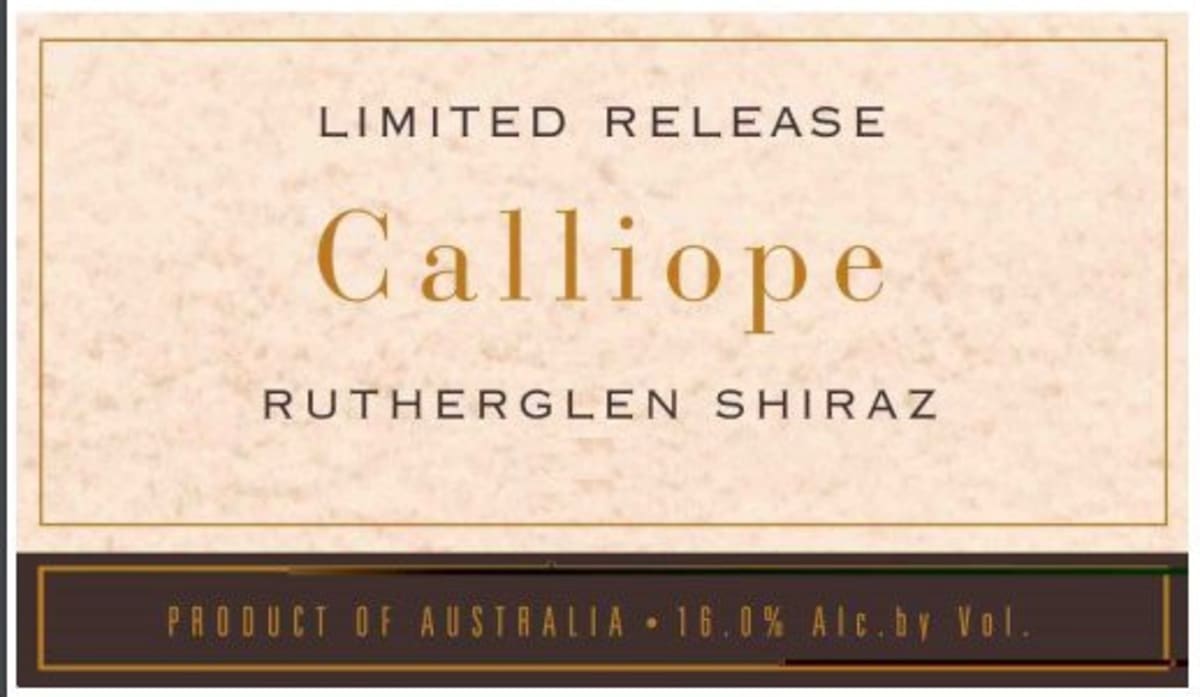

Winemaker Notes


Marked by an unmistakable deep purple hue and savory aromatics, Syrah makes an intense, powerful and often age-worthy red. Native to the Northern Rhône, Syrah achieves its maximum potential in the steep village of Hermitage and plays an important component in the Red Rhône Blends of the south, adding color and structure to Grenache and Mourvèdre. Syrah is the most widely planted grape of Australia and is important in California and Washington. Sommelier Secret—Such a synergy these three create together, the Grenache, Syrah, Mourvedre trio often takes on the shorthand term, “GSM.”

Located in the warm and dry northeastern corner of the state of Victoria, bordering the southern side of the Murray River, the Rutherglen region bears a long history of fortified wine production.
Rutherglen's main variety, Muscat blanc à Petits Grains (also known as Brown Muscat or Muscat à Petit Grains Rouge for its often pink- or red-tinged berries) flourishes in the region’s deep, moisture retaining, alluvial, red loam soils. To make the distinguished and aptly named fortified, "Rutherglen," these Muscat grapes are harvested after left to semi-raisin on the vine. Fermentation only reaches a few degrees alcohol before the juice is fortified with grape spirit and aged in a barrel system resembling a cross between a Sherry solera and a Madeira estufagem. Rutherglen wines boast great concentration and fine aromas hinting at orange flowers and spice, and are capable of astounding quality.
The Rutherglen region grows second grape, called Muscadelle (confusingly unrelated Muscat), which also produces a quality fortified wine. Historically Australians called the grape “Tokay” and believed it to have Hungarian ancestry but when the French ampelographer, Paul Truel, identified it as Muscadelle in 1976, the name had to be changed. Today varietal wines made from Muscadelle can be called, “Topaque.”