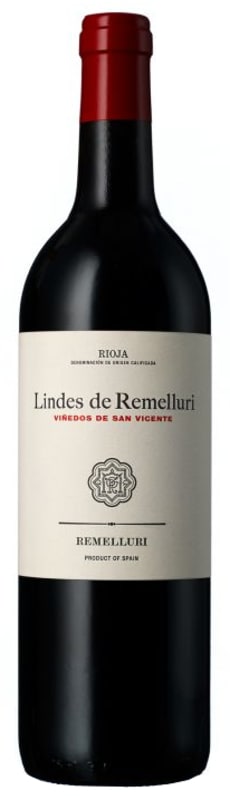


Winemaker Notes
An elegant and fine nose, with notes of ripe red fruits and some minerality. Smooth mouthfeel with balanced and ripe tannins.
Professional Ratings
-
Robert Parker's Wine Advocate
Since 2010, the grapes from external suppliers have gone into two separate and different bottlings. One of them this 2011 Lindes de Remelluri Viñedos de San Vicente, which in the future might extend the name to include the full name of the village, San Vicente de la Sonsierra where the grapes are sourced. As are all wines from here, this is a blend of grape varieties, including Tempranillo, Garnacha, Graciano, Viura and Malvasía fermented in stainless steel with indigenous yeasts and matured in French oak barrels for ten months. It's interesting to see the different character of the vineyards of San Vicente and Labastida, a character quite evident in the two vintages so far (there was one Lindes in 2009, but it contained the grapes from both villages), with San Vicente producing more approachable wines and Labastida more austere and elegant juice since the ripening is slower and the grapes are always harvested at least one week later. There are ripe aromas of hay and straw, black cherries and spices. The palate is medium-bodied with rusticity and moderate acidity, approachable and improving with time in the glass, which points at a positive evolution in bottle. In this vintage I find that both Lindes evolve toward something quite similar in the glass, and the San Vicente behaves really well. 50,000 bottles.
-
Wine Enthusiast
This is a ripe, earthy, modern-leaning Rioja with aromas of blackberry, raisin and rubber. Soft and fleshy on the palate, what this easygoing number lacks in structure is made up for in charm. Ultraripe flavors of plum and berry come with a chocolaty accent, while the finish is smooth and tastes earthy and spicy.


Hailed as the star red variety in Spain’s most celebrated wine region, Tempranillo from Rioja, or simply labeled, “Rioja,” produces elegant wines with complex notes of red and black fruit, crushed rock, leather, toast and tobacco, whose best examples are fully capable of decades of improvement in the cellar.
Rioja wines are typically a blend of fruit from its three sub-regions: Rioja Alta, Rioja Alavesa and Rioja Oriental, although specific sub-region (zonas), village (municipios) and vineyard (viñedo singular) wines can now be labeled. Rioja Alta and Alavesa, at the highest elevations, are considered to be the source of the brightest, most elegant fruit, while grapes from the warmer and drier, Rioja Oriental, produce wines with deep color, great body and richness.