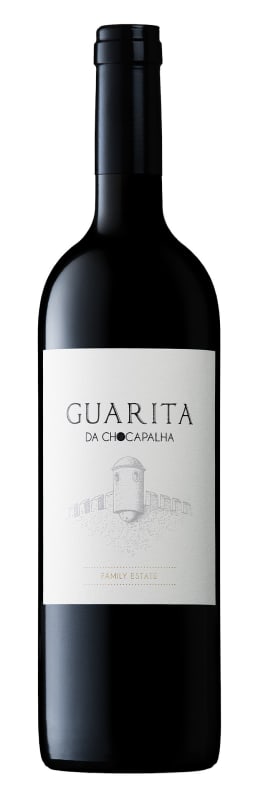


Winemaker Notes
Very deep and opaque color, with a great density of black fruit and chocolate in the nose, with a rich but very elegant profile. On the palate, this wine shows great volume with a silky texture, complemented by high-quality tannins which create an excellent body and an amazing aging capacity.
Alicante Bouschet typically creates a more structured wine, so it's best to pair it with equally
intense foods. BBQ, smoked meats, roasted pig, lamb, T-bone steak, as well as grilled
vegetables are fantastic options when enjoying this wine.
Professional Ratings
-
James Suckling
This is an intense yet focused red that goes deep on blackcurrants, blueberries and hints of chocolate, mint, iodine and wet earth. Succulent and layered on the palate, with a full body and compact but very fine tannins. I like the depth and intensity, with hints of coffee and licorice at the end. Drink or hold.
-
Robert Parker's Wine Advocate
The 2015 Guarita da Chocapalha is an Alicante Bouschet aged for 20 months in 60% new French oak. It comes in at 15% alcohol. "Guarita" is a sentry or guard house. Dense, powerful and intense, this is a wine that sort of belies the winery's typical elegance. To some extent, that is the grape. Yet it also has appealing freshness and lift to the fruit rather than merely feeling big and burly. The long and beefy finish is spectacular. It's still a bit tight, but the tannins, while evident, are not hard. This should age beautifully and develop as well. You can approach it now, as it is easily drinkable, but I'd suggest that you don't. It should have some secrets left to tell. This new bottling looks like a big hit. Sourced from 32-year-old vines, this runs around 50 euros in Portugal.
Rating: 93+ -
Wine Enthusiast
A dense wine with rich tannins and greater concentration. It has spice from wood aging and powerful black fruits. The wine is mature, impressive and ready to drink.


The most famous of the rare, red-fleshed grape varieties, Alicante Bouschet is known as a Teinturier grape. While most red grapes have red skin but clear flesh or pulp, the French, Alicante Bouschet and the Georgian (country) variety called, Saperavi, both have red. These make intensely hued, full-bodied red wines that take to oak well and can stand some time in the cellar. Somm Secret—While originally the product of a French crossing (Petit Bouschet and Grenache) of the late 1800s, today Alicante Bouchet grows widely in Spain and is gaining notoriety in Portugal.

The home of Port—perhaps the most internationally acclaimed beverage—the Douro region of Portugal is one of the world’s oldest delimited wine regions, established in 1756. The vineyards of the Douro, set on the slopes surrounding the Douro River (known as the Duero in Spain), are incredibly steep, necessitating the use of terracing and thus, manual vineyard management as well as harvesting. The Douro's best sites, rare outcroppings of Cambrian schist, are reserved for vineyards that yield high quality Port.
While more than 100 indigenous varieties are approved for wine production in the Douro, there are five primary grapes that make up most Port and the region's excellent, though less known, red table wines. Touriga Nacional is the finest of these, prized for its deep color, tannins and floral aromatics. Tinta Roriz (Spain's Tempranillo) adds bright acidity and red fruit flavors. Touriga Franca shows great persistence of fruit and Tinta Barroca helps round out the blend with its supple texture. Tinta Cão, a fine but low-yielding variety, is now rarely planted but still highly valued for its ability to produce excellent, complex wines.
White wines, generally crisp, mineral-driven blends of Arinto, Viosinho, Gouveio, Malvasia Fina and an assortment of other rare but local varieties, are produced in small quantities but worth noting.
With hot summers and cool, wet winters, the Duoro has a maritime climate.