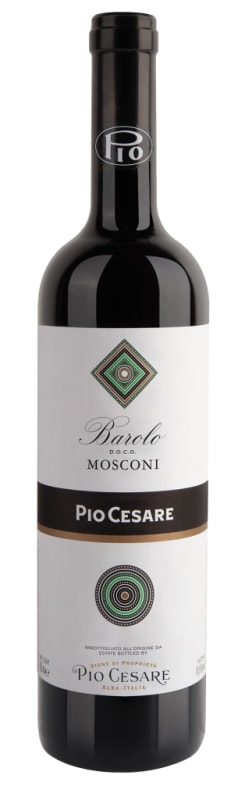


Winemaker Notes
Mosconi is thought to be one of the true “grand crus” of the commune of Monforte d’Alba, itself one the most prestigious areas within Barolo. Its soils and microclimates allow Nebbiolo to grow exceptionally well and produce styles of Barolo with great structure, incredibly unique and distinctive aromas, and big opulent tannins that are accessible and ripen, silky and rich.
Professional Ratings
-
James Suckling
This is so floral, with violets, roses, dark fruit and lovely sandalwood and cedar. A touch of flint, too. Medium- to full-bodied with such elegance and a long and rather endless finish. It goes on and on. What a wine. Drink after 2027.
-
Wine Enthusiast
This regal expression of Barolo comes from old vines in Monforte d'Alba's prized Mosconi vineyard. Aromas of dusty dried cherries lead a procession down a gravel path, accompanied by black tea leaves and whispers of cigar box spice. Warmed plums and fruit compote ascend on the palate, lifted by blood orange zest and fresh cut herbs. The elegant tannins, shaped by 30 months in French oak, descend like royalty on a grand staircase, floating not walking. The finish refuses to bid farewell, lingering like the last dance at a royal ball. A wine that makes time stand still. Drink from 2027.
Cellar Selection -
Vinous
The 2021 Barolo Mosconi is another superb wine from Pio Cesare. Dark red fruit, iron, white pepper, incense, tobacco, licorice, dried herbs and rose petal all hit the palate. This brawny Barolo captures all the structural intensity of Mosconi so well. The more classic style Pio Cesare favors these days goes a long way in balancing much of that intense, unbridled power.
-
Wine Spectator
Pure and expressive flavors of cherry and raspberry highlight this enticing, harmonious red, which is elegant yet well-structured, with dense tannins lining the finish. Though tight in the end, this reveals layers of mineral and savory elements, plus plenty of ripe fruit. Best from 2029 through 2047.
-
Robert Parker's Wine Advocate
The Pio Cesare 2021 Barolo Mosconi draws its fruit from one of the most celebrated MGA sites in Monforte d'Alba recognized for its rich and powerful wines. This expression does indeed open to a dark color and medium-rich concentration with a texture that is both velvety and smooth. Aromas recall sweet earth, spice, blackcurrant and cured tobacco. The wine is quite elaborate and complete, showing multiple dimensions of Nebbiolo both in terms of elegance and brawn. It ends with well-managed tannins that give this wine a slightly more approachable personality.
-
Jeb Dunnuck
Also a jeweled ruby red color, the 2021 Barolo Mosconi shows off layered notes of clove, dried cherries, lavender, dark stones, and rosemary. Medium to full-bodied, it’s savory on the palate, with a sanguine iron mineral feel, a noble-feeling structure, and a persistent finish. Drink 2026-2046.


Pio Cesare has been producing wine for more than 100 years and through generations. The tradition began in 1881, when Pio Cesare started gathering grapes in his vineyards and purchasing those of some selected and reliable farmers in the hills of Barolo and Barbaresco districts.
At Pio Cesare, there has always been a conviction that great wine can come only from the finest grapes and the winery's output has always been limited through adherence to the highest standards. Pio Cesare limits its production by using only the most mature and healthy grapes. The ripening of the grapes is carefully monitored and the harvest is rigidly controlled with each grape selected by hand.
Today, the estate is managed by Pio Boffa, great-grandson of Pio Cesare. Under his stewardship, the wines of Pio Cesare have become famous throughout the world. Great strides have been made in quality, and single vineyard offerings have dazzled the wine press.

Responsible for some of the most elegant and age-worthy wines in the world, Nebbiolo, named for the ubiquitous autumnal fog (called nebbia in Italian), is the star variety of northern Italy’s Piedmont region. Grown throughout the area, as well as in the neighboring Valle d’Aosta and Valtellina, it reaches its highest potential in the Piedmontese villages of Barolo, Barbaresco and Roero. Outside of Italy, growers are still very much in the experimentation stage but some success has been achieved in parts of California. Somm Secret—If you’re new to Nebbiolo, start with a charming, wallet-friendly, early-drinking Langhe Nebbiolo or Nebbiolo d'Alba.

The center of the production of the world’s most exclusive and age-worthy red wines made from Nebbiolo, the Barolo wine region includes five core townships: La Morra, Monforte d’Alba, Serralunga d’Alba, Castiglione Falletto and the Barolo village itself, as well as a few outlying villages. The landscape of Barolo, characterized by prominent and castle-topped hills, is full of history and romance centered on the Nebbiolo grape. Its wines, with the signature “tar and roses” aromas, have a deceptively light garnet color but full presence on the palate and plenty of tannins and acidity. In a well-made Barolo wine, one can expect to find complexity and good evolution with notes of, for example, strawberry, cherry, plum, leather, truffle, anise, fresh and dried herbs, tobacco and violets.
There are two predominant soil types here, which distinguish Barolo from the lesser surrounding areas. Compact and fertile Tortonian sandy marls define the vineyards farthest west and at higher elevations. Typically the Barolo wines coming from this side, from La Morra and Barolo, can be approachable relatively early on in their evolution and represent the “feminine” side of Barolo, often closer in style to Barbaresco with elegant perfume and fresh fruit.
On the eastern side of the Barolo wine region, Helvetian soils of compressed sandstone and chalks are less fertile, producing wines with intense body, power and structured tannins. This more “masculine” style comes from Monforte d’Alba and Serralunga d’Alba. The township of Castiglione Falletto covers a spine with both soil types.
The best Barolo wines need 10-15 years before they are ready to drink, and can further age for several decades.