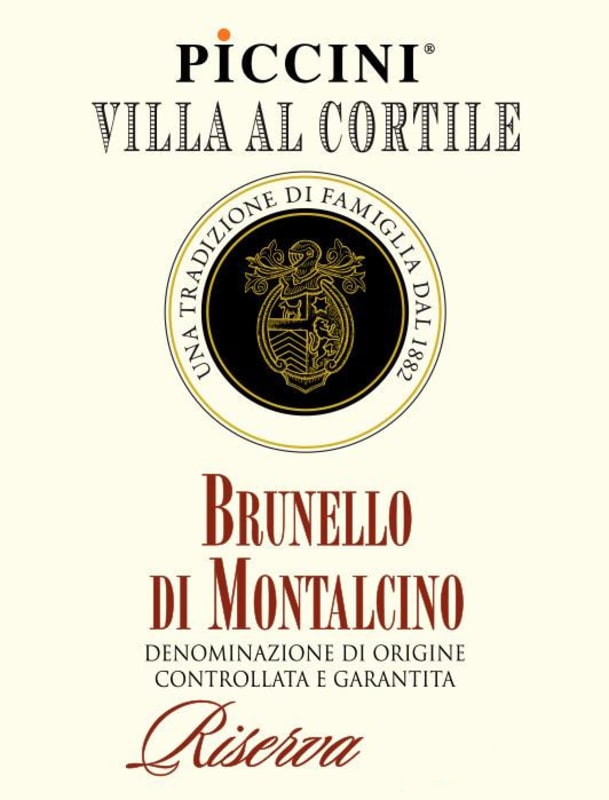

Winemaker Notes
Professional Ratings
-
Wilfred Wong of Wine.com
An excellent effort in an outstanding vintage, the 2010 Piccini Villa al Cortile Brunello di Montalcino Riserva showcases aromas and flavors that cross both the Old and New Worlds The wine is rustic yet clean. Its formidable red currants and dried earth flavors pair it well with savory lamb dishes. (Tasted: November 16, 2017, San Francisco, CA)



The Chianti Orange Label is the iconic wine, and reflects the family’s ambition to rediscover Chianti as a contemporary wine. The wines are grounded in tradition yet have an innovative, charming and fun personality, providing a bold and exciting choice for wine lovers around the world. Tenute Piccini is among the most prominent wine producers in Tuscany, playing a leading role in the production of Chianti, Chianti Classico and Montalcino wines.
The family has five other stand-alone properties in top Tuscan wine regions as well as the two “volcanic estates” on the Etna and Vulture mountains, a parallel project to the successful Piccini brand. The family’s philosophy behind the boutique estates is very classical: producing wines that reflect the region, focusing on expressiveness of the grapes variety in relation to the area of origin. The family estates have been converted to organic farming. These practices, together with a selection of drought-tolerant rootstocks, lower density trellising systems, indigenous grape varieties replacing some of the less suitable international ones, aim at a holistic approach towards sustainable vine growing.

Among Italy's elite red grape varieties, Sangiovese has the perfect intersection of bright red fruit and savory earthiness and is responsible for the best red wines of Tuscany. While it is best known as the chief component of Chianti, it is also the main grape in Vino Nobile di Montepulciano and reaches the height of its power and intensity in the complex, long-lived Brunello di Montalcino. Somm Secret—Sangiovese doubles under the alias, Nielluccio, on the French island of Corsica where it produces distinctly floral and refreshing reds and rosés.

Famous for its bold, layered and long-lived red, Brunello di Montalcino, the town of Montalcino is about 70 miles south of Florence, and has a warmer and drier climate than that of its neighbor, Chianti. The Sangiovese grape is king here, as it is in Chianti, but Montalcino has its own clone called Brunello.
The Brunello vineyards of Montalcino blanket the rolling hills surrounding the village and fan out at various elevations, creating the potential for Brunello wines expressing different styles. From the valleys, where deeper deposits of clay are found, come wines typically bolder, more concentrated and rich in opulent black fruit. The hillside vineyards produce wines more concentrated in red fruits and floral aromas; these sites reach up to over 1,600 feet and have shallow soils of rocks and shale.
Brunello di Montalcino by law must be aged a minimum of four years, including two years in barrel before realease and once released, typically needs more time in bottle for its drinking potential to be fully reached. The good news is that Montalcino makes a “baby brother” version. The wines called Rosso di Montalcino are often made from younger vines, aged for about a year before release, offer extraordinary values and are ready to drink young.