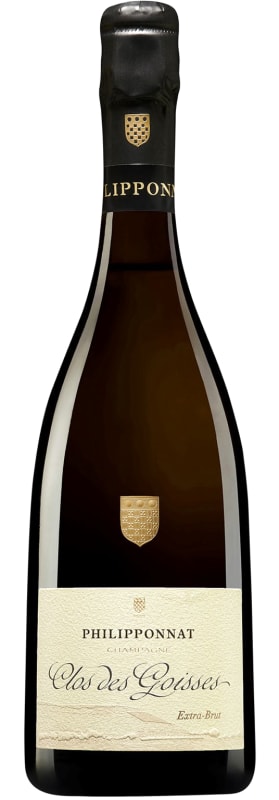


Winemaker Notes
Lovely, persistent bubbles bring elderflower, white fruit, salted caramel and ginger aromas, which lead to an intense and fruit-driven palate with layers of texture and minerality. This complex, mouth-filling wine evolves with aeration and finishes with salinity and a delicate spice note.
Pairs well with strong-flavored dishes, oysters, sushi, caviar, tempura preparations and rich, soft cheeses.
Blend: 68% Pinot Noir, 32% Chardonnay
Professional Ratings
-
Decanter
So fragrant and inviting on the nose, peach, pear and white flowers and a kiss of toast. Some buttery pastry, nutty, white chocolate and vanilla aspects too which are lovely. Round and filling, delicate mousse but so lively. Comple and charming this really extends vertically and horizontally. Super refined and graceful yet there's lots of life and character with racy acidity and spiced ginger. Lots of potential for this wine that was only disgorged in March of this year.
-
James Suckling
Berries, citrus, fantastic white peaches, pears and mangosteens on the nose. Sandalwood, licorice and sweet almonds, too. It has excellent depth, concentration and freshness. Serious yet very enjoyable. The peach flavors are stunning. Fermented in 100% wood without malolactic conversion. 68% pinot noir and 32% chardonnay. 4.5 g/L dosage. Disgorged March 2025. Drink or hold.
-
Robert Parker's Wine Advocate
Disgorged in March 2025 with a dosage of 4.5 grams per liter, Philipponnat’s 2016 Clos des Goisses has turned out beautifully, opening with aromas of pear, peach and spring flowers mingled with lychee and a subtle hint of ginger. On the palate, it is medium- to full-bodied, simultaneously textural and racy, with a concentrated core of ripe fruit and racy acidity, concluding with a long, sapid finish laced with lemon zest. While characteristically demonstrative—befitting a site of southern exposure—it is not an exuberant Clos des Goisses but rather a harmonious rendition. It shares some of the traits seen in the 2013, though with slightly less incisive spine of acidity. Charles Philipponnat notes that the harvest began on 19 September and that yields were relatively modest. The wine was vinified exclusively in oak—specifically, 228-liter barrels previously used in Burgundy—and did not undergo malolactic fermentation. The final assemblage consists of 68% Pinot Noir and 32% Chardonnay.
Rating: 96+ -
Vinous
The 2016 Extra-Brut Clos des Goisses is soft, delicate and open-knit. Gentle floral and tropical inflections open first in an airy, gracious Clos des Goisses that is more finesse than power. It will be fascinating to see how the 2016 evolves in the coming years. Today, it's elegant, light on its feet and very easy to drink, naturally with less of the textural intensity of more favorable vintages.



The Philipponnat family have been growing grapes in Champagne since 1522. The House was founded in 1910 by Pierre Philipponnat. Charles Philipponnat took over as CEO in 1999 and has improved the quality and production vastly by implementing smaller oak barrels, keeping different vineyard plots separate and utilizing only the first press. The jewel in the crown of the House is the historic and iconic 5.5 hectares 'Clos des Goisses' vineyard that sits on a steep, south-facing 45° slope starting at the Marne River. This is one of the warmest vineyard sites in all of Champagne and is planted to Pinot Noir and Chardonnay. In 1935 'Clos des Goisses' was the first single vineyard Champagne produced and it would take over 50 years for other Houses to start producing serious Champagne just from a single Clos.
Philipponnat applies natural methods to work the soil, hoeing by hand and plowing with horses. The House's expertise is particularly apparent in its use of the solera process. This technique is a very longstanding House tradition; it consists of keeping reserve wines in oak barrels and including them in non-vintage blends (in a proportion of one quarter to one third) and using this blend as a reserve wine for the following blend.
This progressive dilution allows every bottle to retain a trace of previous years' wines blended since the very beginning. Successive Cellar Masters have attached great importance to handing down this expertise. Philipponnat was the first Champagne House to indicate the main year used in its non-vintage blends, the dosage, and the date of disgorgement on back labels, informing consumers and wine experts of the characteristics of each cuvée.

Representing the topmost expression of a Champagne house, a vintage Champagne is one made from the produce of a single, superior harvest year. Vintage Champagnes account for a mere 5% of total Champagne production and are produced about three times in a decade. Champagne is typically made as a blend of multiple years in order to preserve the house style; these will have non-vintage, or simply, NV on the label. The term, "vintage," as it applies to all wine, simply means a single harvest year.

Associated with luxury, celebration, and romance, the region, Champagne, is home to the world’s most prized sparkling wine. In order to bear the label, ‘Champagne’, a sparkling wine must originate from this northeastern region of France—called Champagne—and adhere to strict quality standards. Made up of the three towns Reims, Épernay, and Aÿ, it was here that the traditional method of sparkling wine production was both invented and perfected, birthing a winemaking technique as well as a flavor profile that is now emulated worldwide.
Well-drained, limestone and chalky soil defines much of the region, which lend a mineral component to its wines. Champagne’s cold, continental climate promotes ample acidity in its grapes but weather differences from year to year can create significant variation between vintages. While vintage Champagnes are produced in exceptional years, non-vintage cuvées are produced annually from a blend of several years in order to produce Champagnes that maintain a consistent house style.
With nearly negligible exceptions, . These can be blended together or bottled as individual varietal Champagnes, depending on the final style of wine desired. Chardonnay, the only white variety, contributes freshness, elegance, lively acidity and notes of citrus, orchard fruit and white flowers. Pinot Noir and its relative Pinot Meunier, provide the backbone to many blends, adding structure, body and supple red fruit flavors. Wines with a large proportion of Pinot Meunier will be ready to drink earlier, while Pinot Noir contributes to longevity. Whether it is white or rosé, most Champagne is made from a blend of red and white grapes—and uniquely, rosé is often produce by blending together red and white wine. A Champagne made exclusively from Chardonnay will be labeled as ‘blanc de blancs,’ while ones comprised of only red grapes are called ‘blanc de noirs.’