
Winemaker Notes
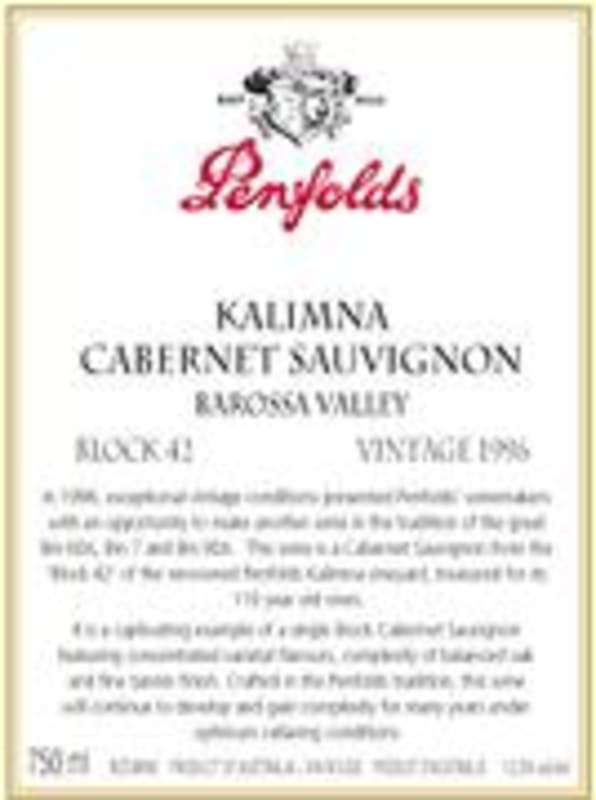
Penfolds Kalimna Block 42 was made from a single block -- Block 42' or Golf Course Block' -- of the renowned Penfolds Kalimna vineyard, the oldest Cabernet Sauvignon vineyard in Australia. The wine was made from the same 110-year-old patch of vines from which came Max Schubert's 1953 Grange Cabernet', the first (1964) vintage of Bin 707 and the 1963 Bin 64 Kalimna Cabernet Sauvignon, which won the prestigious Jimmy Watson Trophy in 1964.
Penfolds Block 42 is a captivating example of a single block of high-quality Kalimna Cabernet Sauvignon, featuring concentrated varietal flavours, complexity of balanced oak and a fine tannin finish. Experience has shown that wines sourced from this prestigious block are capable of long-term cellaring in optimum conditions. Enjoy it with a casserole or roast beef.
Nose: Compelling savoury and spicy notes -- ginger, nutmeg and cardamom -- interwoven with carob/dark chocolate flavours against a background of lightly charred, cedary oak.
Palate: Archetypical Barossa Valley Cabernet Sauvignon -- perfectly balanced and integrated with no rough edges. Concentrated fruits -- blackcurrant and dark plum -- merge into the chocolate and licorice spectrum. Hints of black olive and mineral elements. Rounded fine tannins in synergy with supportive oak.




Since 1844, Penfolds has been grounded in experimentation, curiosity and uncompromising quality. Their success has been driven by a lineage of visionary winemakers. It began with Dr. Christopher and Mary Penfold, the pioneers who dreamed big, inventing tonics, brandies, and fortified wines made from grapes and Australian sunshine. It continued with celebrated winemaking legends including Max Schubert, who pushed the development to extraordinary, bold new heights. It is this pioneering spirit and curiosity that still rings true after nearly two centuries, it is what has helped Penfolds become one of the most celebrated winemakers in the world today.

A noble variety bestowed with both power and concentration, Cabernet Sauvignon enjoys success all over the globe, its best examples showing potential to age beautifully for decades. Cabernet Sauvignon flourishes in Bordeaux's Medoc where it is often blended with Merlot and smaller amounts of some combination of Cabernet Franc, Malbecand Petit Verdot. In the Napa Valley, ‘Cab’ is responsible for some of the world’s most prestigious, age-worthy and sought-after “cult” wines. Somm Secret—DNA profiling in 1997 revealed that Cabernet Sauvignon was born from a spontaneous crossing of Cabernet Franc and Sauvignon Blanc in 17th century southwest France.

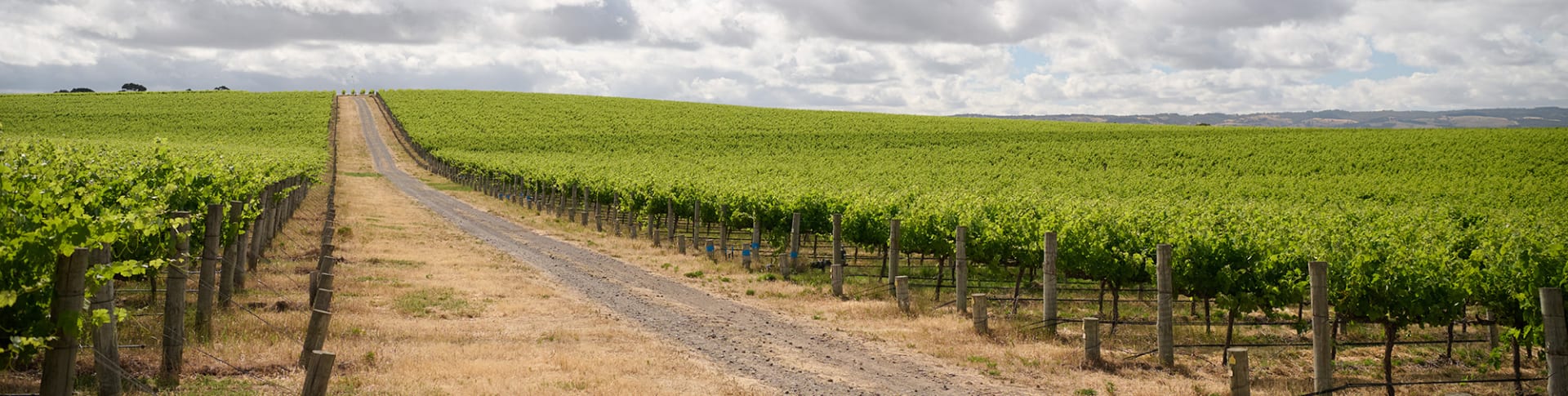
Historically and presently the most important wine-producing region of Australia, the Barossa Valley is set in the Barossa zone of South Australia, where more than half of the country’s wine is made. Because the climate is very hot and dry, vineyard managers work diligently to ensure grapes reach the perfect levels of phenolic ripeness.
The intense heat is ideal for plush, bold reds, particularly Shiraz on its own or Rhône Blends. Often Shiraz and Cabernet partner up for plump and powerful reds.
While much less prevalent, light-skinned varieties such as Riesling, Viognier or Semillon produce vibrant Barossa Valley whites.
Most of Australia’s largest wine producers are based here and Shiraz plantings date back as far as the 1850s or before. Many of them are dry farmed and bush trained, still offering less than one ton per acre of inky, intense, purple juice.