


Winemaker Notes
Professional Ratings
-
Decanter
Each year, the blend of Ovid wines varies depending on the vintage. Winemaker Austin Peterson prefers not to pre-plan the blend, instead approaching each vintage with a fresh perspective. Often, the wine needs more Cabernet Sauvignon to qualify as a Napa Valley varietal wine. The vineyard features an abundance of Clone 4, planted across four of its 17 blocks within the 6ha site. This clone contributes a distinctive savoury character and polish, evident in the 2021 vintage with its flinty minerals, green tobacco, and mulberry fruit, reminiscent of Napa Cabernets from the 1970s. Comprising 80% Cabernet Sauvignon, 10% Cabernet Franc, 6% Merlot, and 4% Petit Verdot, the wine is aged 20 months in 66% new French oak. It is full-bodied with ripe, chewy tannins that assert themselves on entry but gradually soften, revealing a beautifully layered wine with mineral-infused mulberry fruit and green tobacco aromas. The wine exhibits notable tension, supported by a pH level 3.78, ensuring vibrancy and freshness. It is a pedigreed wine characterised by balance, intensity, and complexity.
-
Jeb Dunnuck
Moving to the 2021 Cabernet Sauvignon, it's 79% Cabernet Sauvignon, 10% Cabernet Franc, and the balanced 7% Merlot and 4% Petit Verdot. Insanely pure, it offers kaleidoscope-like aromatics of black and blue fruits, spring flowers, chocolate, burning embers, and bouquet garni. Full-bodied on the palate, it doesn't get any better, and it's concentrated, has building tannins, and a monster of a finish. Offering more generosity and opulence than just about every other wine in the vintage, this is a killer bottle of wine! It will make your eyes roll back in your head today, yet will ideally be given 4-5 years of bottle age and will evolve gracefully over the following two decades. Bravo!
-
James Suckling
The purity of fruit and class to this wine is really impressive, with roses, lavender. violets and blackcurrants and a sweet lift. Medium- to full-bodied with very long and racy tannins. They go from the front of your palate to the back. This is so beautiful and graceful yet structured. Give this at least four to five years. Best after 2028.
-
Robert Parker's Wine Advocate
Like the 2021 Hexameter, Ovid's 2021 Red Wine combines red and black fruits, bright acids and ripe tannins. Hints of redcurrants accent black cherries, joined by mocha and baking spices on the nose, while the palate is full-bodied and framed by dusty tannins, finishing long and fresh. If I've been conservative in my rating of this blend of 80% Cabernet Sauvignon, 10% Cabernet Franc, 6% Merlot and 4% Petit Verdot, it's just because it comes across as a bit edgy, in need of several years of cellaring for it to show its best.
Rating: 96+
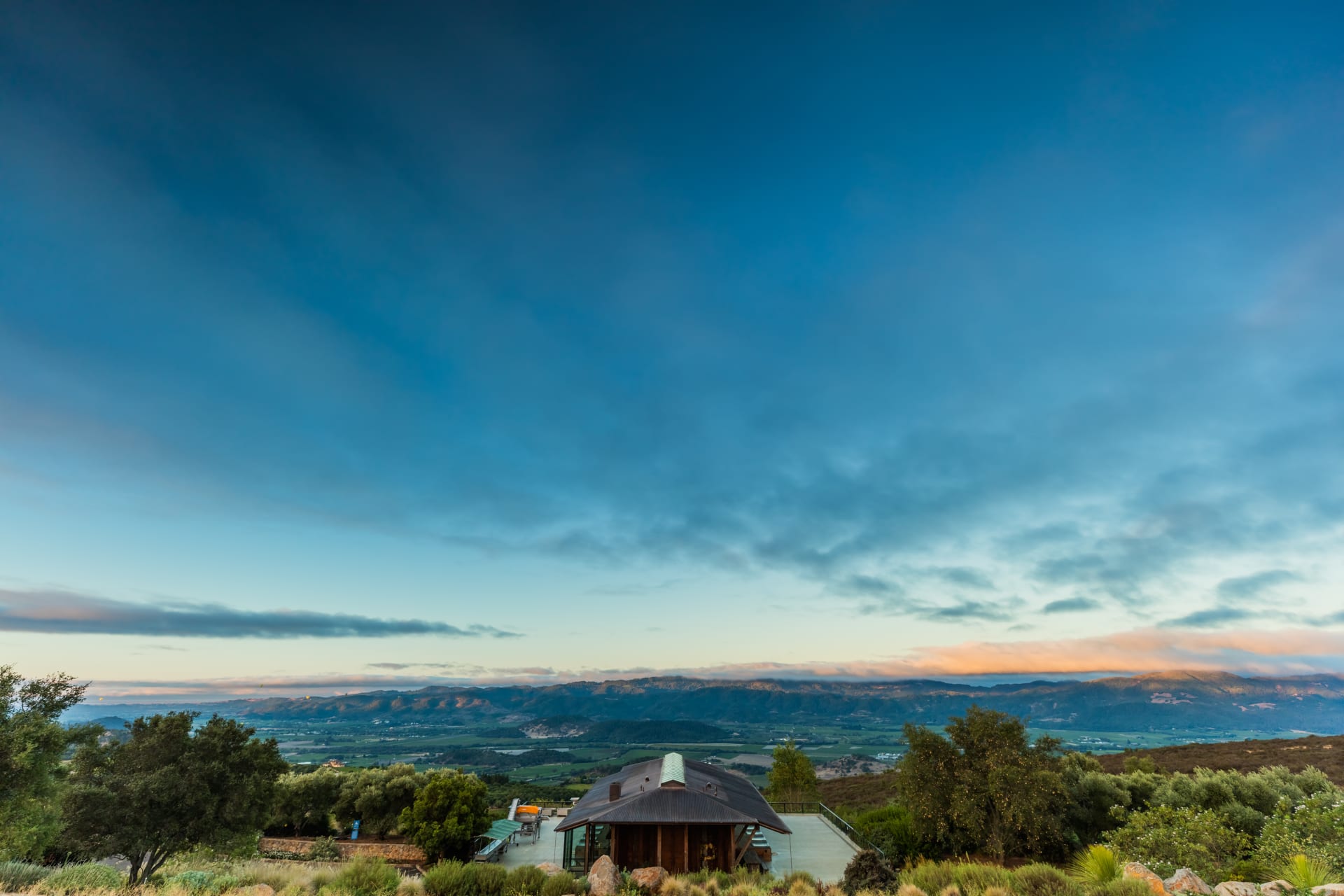



OVID is an organically farmed, 15-acre vineyard perched on a secluded mountaintop at 1,400 ft. elevation in the western reaches of the Pritchard Hill geography of Napa Valley. Here, they farm rocky red, volcanic soils to capture a true sense of place and craft long lived wines composed of Cabernet Sauvignon, Cabernet Franc, Merlot and Petit Verdot. They ferment only with native yeasts and bottle their wines without fining or filtering.
The Winemaker since 2006, Austin Peterson, combines his site-specific experience with a sense of experimentation, embracing a tension between classical and cutting-edge winemaking methods.
The name was inspired by the Roman poet Publius Ovidius Naso [Ovid], whose METAMORPHOSES, a poetic retelling of the Greek myths, celebrates themes of transformation and change.

Undoubtedly proving its merit over and over, Napa Valley is a now a leading force in the world of prestigious red wine regions. Though Cabernet Sauvignon dominates Napa Valley, other red varieties certainly thrive here. Important but often overlooked include Merlot and other Bordeaux varieties well-regarded on their own as well as for their blending capacities. Very old vine Zinfandel represents an important historical stronghold for the region and Pinot noir is produced in the cooler southern parts, close to the San Pablo Bay.
Perfectly situated running north to south, the valley acts as a corridor, pulling cool, moist air up from the San Pablo Bay in the evenings during the hot days of the growing season, which leads to even and slow grape ripening. Furthermore the valley claims over 100 soil variations including layers of volcanic, gravel, sand and silt—a combination excellent for world-class red wine production.