


Winemaker Notes
Perfect harmony of ripeness, minerality, fruit and acidity as well as density and balance. Very typical for the vineyard site, the smell is formed from the red slate, which creates hints of smoke, pepper, firestone, hay, tee and herbs. It also has the typical Riesling aromas like citrus, apple, peach and apricot. On the palate it has the same combination of aromas: the Riesling grape delivers the fruity taste and the soil provides the herby, spicy taste and minerality. Like all Rebholz wines, this wine has a huge ageing potential.
Professional Ratings
-
James Suckling
The wild herb intensity of this astonishing village wine must be experienced to be believed. Makes you feel at home in the wild landscape of the Kastanienbusch GG site at the edge of the Haardt forest where it grew. Enormous freshness is married to mineral depth and power on the focused, medium-bodied palate. Then the finish makes you feel as if you are floating on a cloud looking down on this high-altitude vineyard. From biodynamically grown grapes with Respekt certification. Drink or hold.
-
Robert Parker's Wine Advocate
The 2023 Birkweiler vom Rotliegenden Riesling trocken opens with a deep, pure, clear and smoky nose of lemon leaves, woodruff and herbs as well as notes of crushed and milled, iron-rich rocks. Full-bodied, round and dense on the palate, this is an intense, saline and crystalline, remarkably complex and finely tannic Riesling with a savory and saline finish. This is a great personality thanks to older vines and some almost 20 years old. 13% stated alcohol. Diam 10 cork.
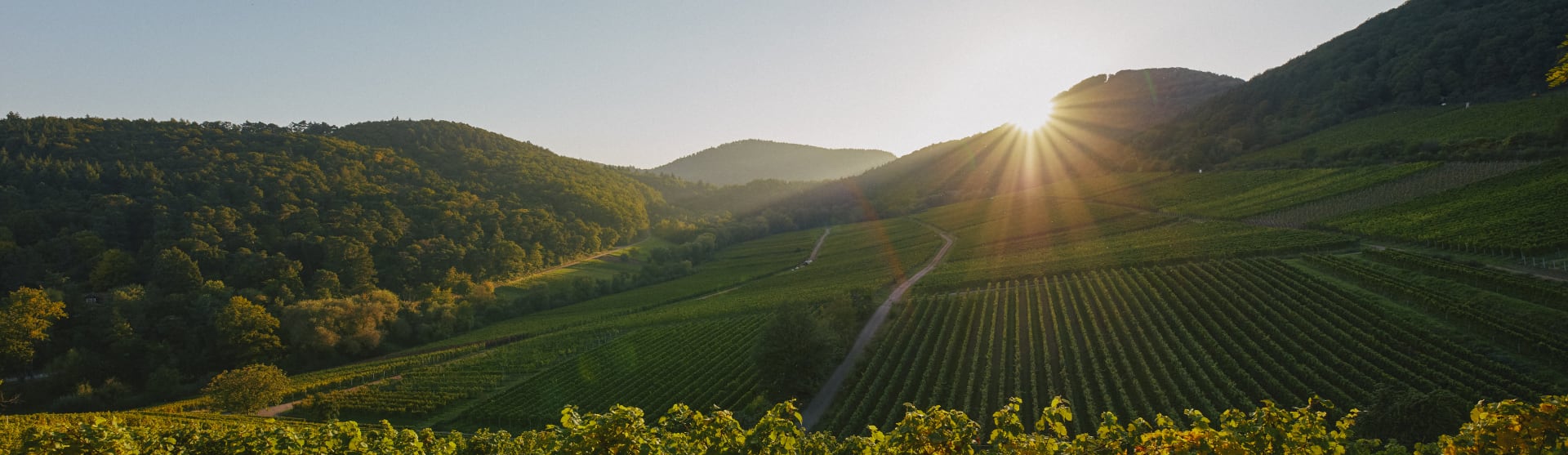


The Rebholz estate, in the southern Pfalz region of Germany, is a pioneer in organic and natural winemaking. The estate has been certified organic since 2005 and practicing biodynamic since 2006. However, even as far back as 1951, Eduard Rebholz (1889-1966), who received the title Ökonomierat, an honorary title conferred upon a deserving agriculturist, was commenting on his natural approach: "You will receive only natural wine from my cellar, wine that is the result of intense and loving cultivation of the vines and of similar vinicultural methods (no chaptalization, no artificial addition of a Süßreserve or similar fundamental structural changes that alter the native character of the wine and, in my eyes, mean that it is no longer a natural product."
This tradition continues with the current generation; Birgit and Hansjörg Rebholz together with their children Hans, Valentin and Helene work as close to nature as possible. In an effort to promote a healthy ecosystem and to protect the environment, they forgo the use of herbicides, synthetic fungicides and mineral fertilizers. They use only organic and biodynamic techniques and materials that promote healthy plants, helping the vines grow strong and prosper naturally. While these methods involve more time and effort, it is a price they are willing to accept in order to best protect and preserve the biodiversity within their vineyards
The earliest recorded history of winegrowing by the Rebholz family in Siebeldingen dates back to 1632. From beer brewer to village mayor, family members have held a wide range of titles over the years. The single constant: always at least one winemaker in the family. Around 100 years ago the Rebholz clan took the estate house, first built in the 16th century, as their family home. The Rebholz family only began bottling their wine following the Second World War, as an alternative to delivering entire barrels to local inns and restaurants.

Riesling possesses a remarkable ability to reflect the character of wherever it is grown while still maintaining its identity. A regal variety of incredible purity and precision, this versatile grape can be just as enjoyable dry or sweet, young or old, still or sparkling and can age longer than nearly any other white variety. Somm Secret—Given how difficult it is to discern the level of sweetness in a Riesling from the label, here are some clues to find the dry ones. First, look for the world “trocken.” (“Halbtrocken” or “feinherb” mean off-dry.) Also a higher abv usually indicates a drier Riesling.

This sunny and relatively dry region served for many years as a German tourist mecca and was associated with low cost, cheerful wines. But since the 1980s, it has gained a reputation as one of Germany’s more innovative regions, which has led to increased international demand.