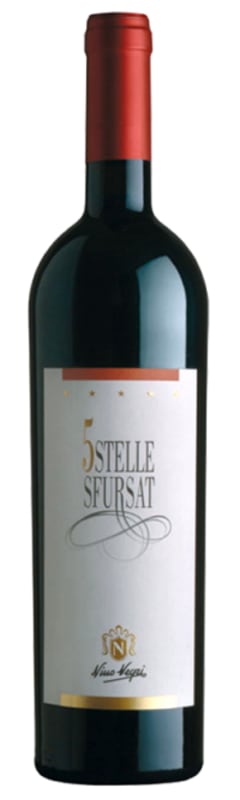


Winemaker Notes
With a garnet-brick color; the wine shows complex aromas of cloves, cinnamon and pepper with plum jam, raisins and tar notes. On the palate, the wine has a dry, warm, full-bodied character, austere from its prominent acidity yet harmonious, with an elegant finish, and roasted hazelnut and licorice traces.
Professional Ratings
-
Wine Spectator
A sculpted red, with hints of tea rose, dried thyme and spices accenting a core of baked raspberry and blackberry fruit, espresso, licorice and minerally iron and smoke. Featuring firm, lightly chewy tannins, this fresh and tightly meshed version opens nicely in the glass—sip slowly or decant ahead of time. Best from 2024 through 2034.
-
James Suckling
Overt and generous with Concord grapes and cherry ice-cream enhanced by milk and mint aromas, incense and smoky tones. Full-bodied with firm, velvety tannins, blood-orange flavors, crisp acidity and a creamy finish. Concentrated and savory.
-
Vinous
The 2018 Sfursat 5 Stelle is compelling. Macerated dark cherry, leather, herbs and baking spices are nicely pushed forward. Impeccable in its balance and overall harmony, the 2018 looks to offer fine drinking over the near and medium term. It is another terrific wine from Negri that points to a bright future.


Responsible for some of the most elegant and age-worthy wines in the world, Nebbiolo, named for the ubiquitous autumnal fog (called nebbia in Italian), is the star variety of northern Italy’s Piedmont region. Grown throughout the area, as well as in the neighboring Valle d’Aosta and Valtellina, it reaches its highest potential in the Piedmontese villages of Barolo, Barbaresco and Roero. Outside of Italy, growers are still very much in the experimentation stage but some success has been achieved in parts of California. Somm Secret—If you’re new to Nebbiolo, start with a charming, wallet-friendly, early-drinking Langhe Nebbiolo or Nebbiolo d'Alba.

Containing an exciting mix of wine producing subregions, Lombardy is Italy’s largest in size and population. Good quality Pinot noir, Bonarda and Barbera have elevated the reputation of the plains of Oltrepò Pavese. To its northeast in the Alps, Valtellina is the source of Italy’s best Nebbiolo wines outside of Piedmont. Often missed in the shadow of Prosecco, Franciacorta produces collectively Italy’s best Champagne style wines, and for the fun and less serious bubbly, find Lambrusco Mantovano around the city of Mantua. Lugana, a dry white with a devoted following, is produced to the southwest of Lake Garda.