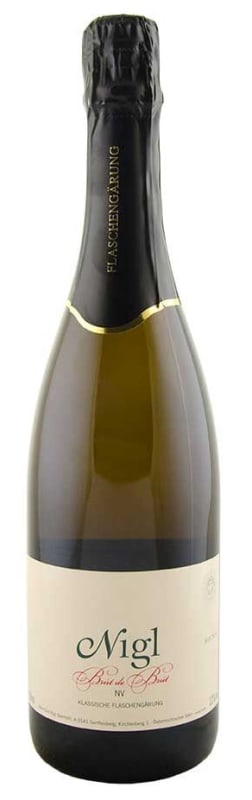


Winemaker Notes


A term typically reserved for Champagne and Sparkling Wines, non-vintage or simply “NV” on a label indicates a blend of finished wines from different vintages (years of harvest). To make non-vintage Champagne, typically the current year’s harvest (in other words, the current vintage) forms the base of the blend. Finished wines from previous years, called “vins de reserve” are blended in at approximately 10-50% of the total volume in order to achieve the flavor, complexity, body and acidity for the desired house style. A tiny proportion of Champagnes are made from a single vintage.
There are also some very large production still wines that may not claim one particular vintage. This would be at the discretion of the winemaker’s goals for character of the final wine.

The region of considerable geologic diversity and microclimates, Kremstal extends virtually without border east from Wachau along the Danube River. Its magnificent terraced and rocky vineyards in the west alongside Wachau include some of Austria’s most esteemed Riesling vineyards, the (Steiner) Hund and Pfaffenberg, as well as Kögl and Wachtberg nearer to the city of Krems. After Krems, the vineyards become excessively steep upstream around Senftenberg where Riesling and Grüner Veltliner thrive. Grüner Veltliner does best from here east where the soils become a mix of sand, gravel and loess.
Grüner Veltliner and Riesling together comprise two thirds of all of the Kremstal vineyards; the region itself represents about five percent of Austria’s total vineyard area.