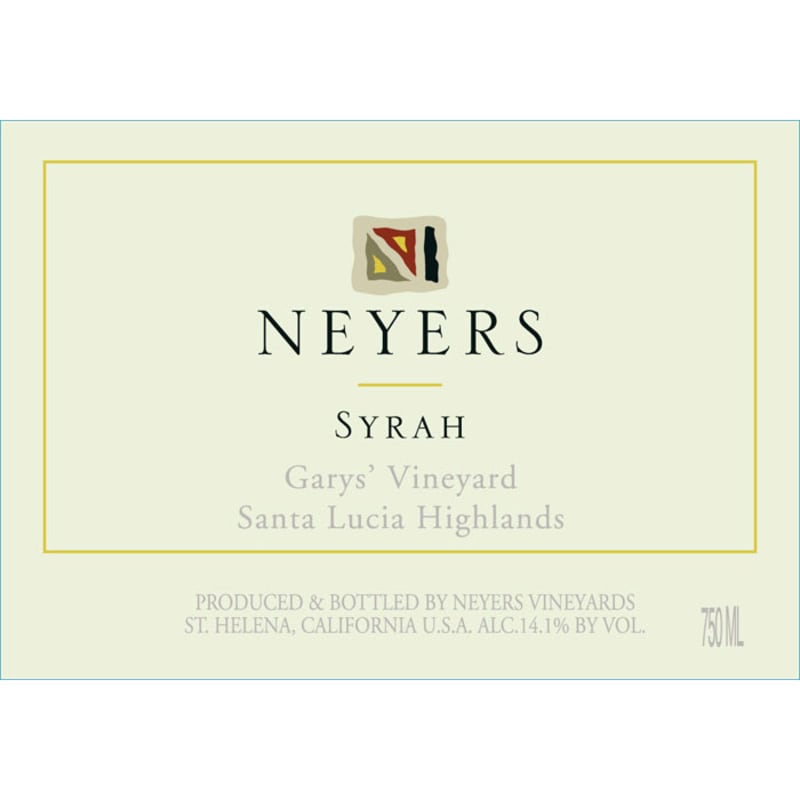

Winemaker Notes
We use traditional northern Rhone winemaking practices here - grapes are crushed by foot, then macerated for 45 days. We use only wild yeast, and the wine is not filtered. The result is a Syrah bottling that shows intense blueberry fruit, with an aroma of wildflowers and fresh white pepper.
Blend: 100% Syrah
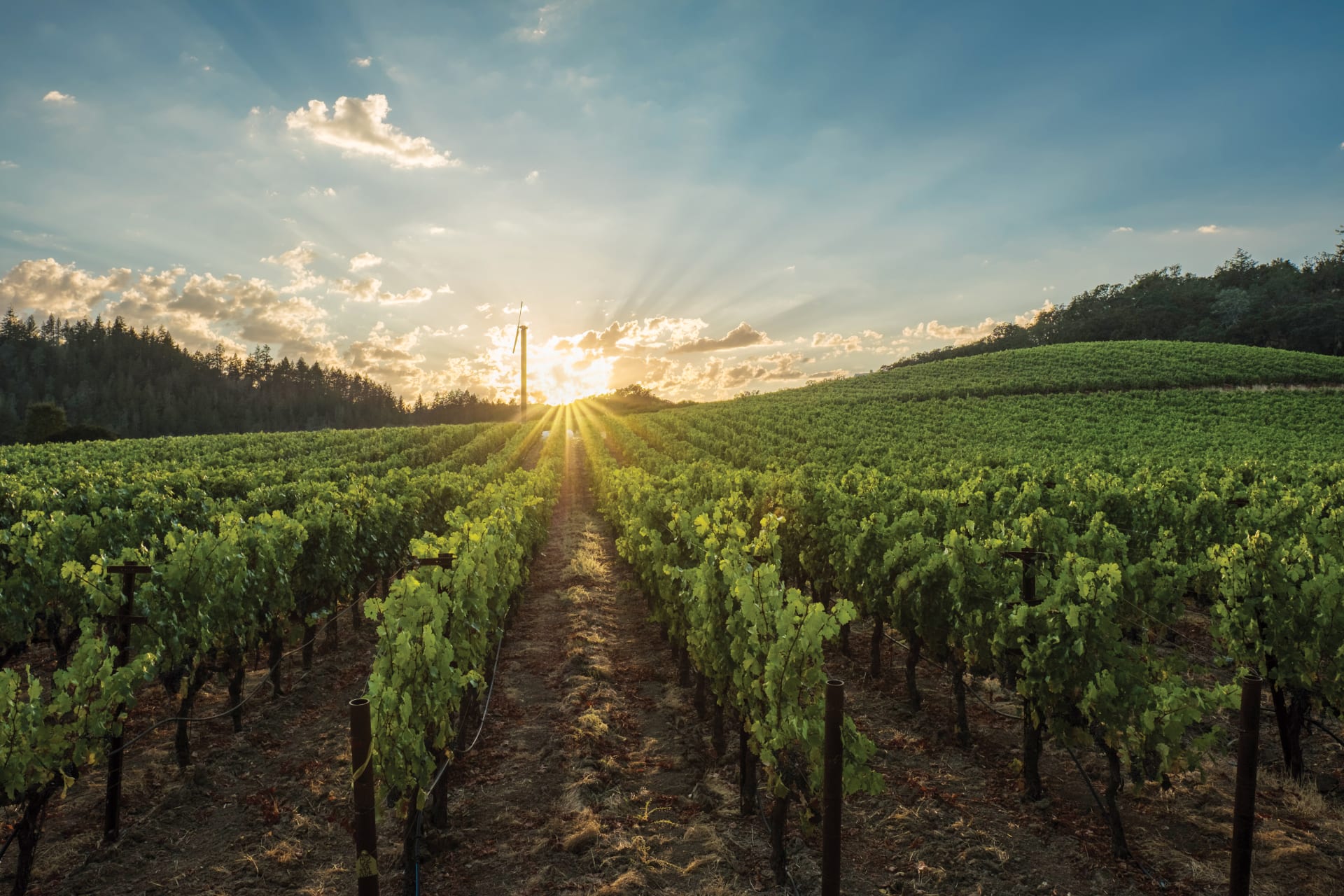


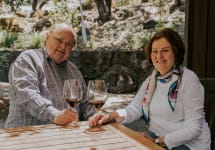
"In 1999, Bruce and Barbara Neyers purchased and renovated a winery on a thirty-acre parcel in the Sage Canyon area of Napa Valley. Over the next 14 months they built a modern, highly functional winery designed for traditional winemaking practices. They produced their first vintage in this state of the art facility in 2000. In 2002, Wine and Spirits Magazine named Neyers Vineyards the Artisan Winery of the Year.
About 25% of our production is Merlot and Cabernet Sauvignon grown on Bruce and Barbara’s 50-acre, Conn Valley ranch. They purchase additional grapes from a select group of growers, among them the Sangiacomo family of the Carneros District, Will Nord of Napa, the Rossi Ranch of Sonoma County, Markus Bokisch and the Evangelho family.
Even though Neyers Vineyards sits in the heart of the Napa Valley, Bruce's experience with French wine importer Kermit Lynch has had an undeniable influence on their wines. Many of the French producers Bruce has worked with farm organically, make their wines naturally without use of cultured yeast or laboratory designed malo-lactic starter, and bottle their wines without fining or filtration. Neyers barrels are made in France, to our specifications, from wood that we buy in bulk and air dry for three years, two years longer than normal. All of the grapes are picked by hand, into small bins that hold only one-half ton. They are then laboriously hand sorted and inspected at the winery as winemaker Tadeo Borchardt gently guides the winemaking process along. As Bruce says, “No expense has been spared in our grape growing, winemaking practices, or processing equipment, yet customers repeatedly tell us that our wines represent great value in today's highly competitive wine market.” Bruce Neyers produces his own content for the company blog, “Vintner Tales.” "

Marked by an unmistakable deep purple hue and savory aromatics, Syrah makes an intense, powerful and often age-worthy red. Native to the Northern Rhône, Syrah achieves its maximum potential in the steep village of Hermitage and plays an important component in the Red Rhône Blends of the south, adding color and structure to Grenache and Mourvèdre. Syrah is the most widely planted grape of Australia and is important in California and Washington. Sommelier Secret—Such a synergy these three create together, the Grenache, Syrah, Mourvedre trio often takes on the shorthand term, “GSM.”
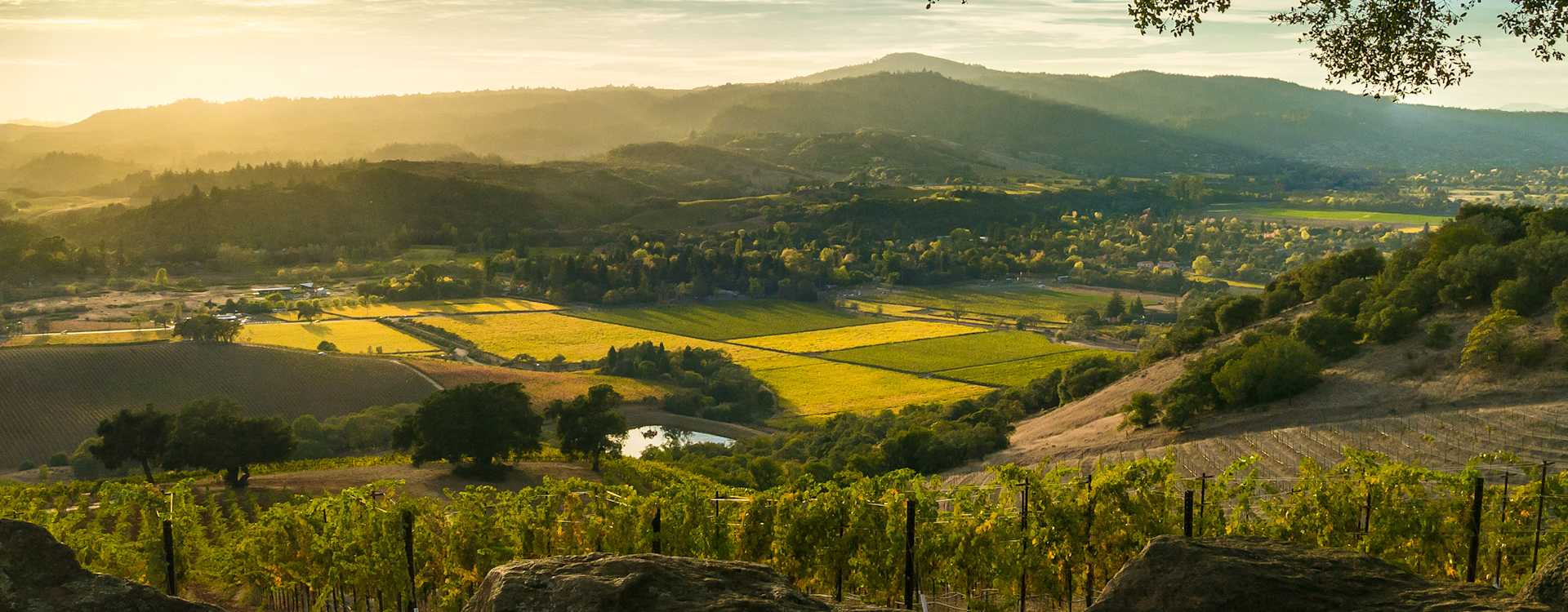
Home to a diverse array of smaller AVAs with varied microclimates and soil types, Sonoma County has something for every wine lover. Physically twice as large as Napa Valley, the region only produces about half the amount of wine but boasts both tremendous quality and variety. With its laid-back atmosphere and down-to-earth attitude, the wineries of Sonoma are appreciated by wine tourists for their friendliness and approachability. The entire county intends to become a 100% sustainable winegrowing region by 2019.
Sonoma County wines are produced with carefully selected grape varieties to reflect the best attributes of their sites—Dry Creek Valley’s consistent sunshine is ideal for Zinfandel, while the warm Alexander Valley is responsible for rich, voluptuous red wines like Cabernet Sauvignon. Chardonnay and Pinot Noir are important throughout the county, most notably in the cooler AVAs of Russian River, Sonoma Coast and Carneros. Sauvignon Blanc, Merlot and Syrah have also found a firm footing here.