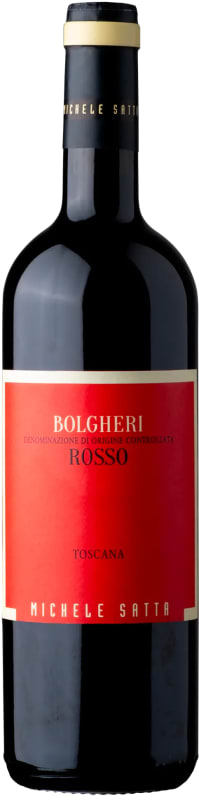


Winemaker Notes
This wine is the expression of the vineyard and has the characteristics of their terroir for a red wine with great character and pleasure.
Professional Ratings
-
James Suckling
A super-fragrant and polished wine with aromas of plums, black cherries, fresh violets, Mediterranean herbs, licorice and smoke. Medium-bodied and supple, with refined tannins, crisp acidity and a chewy, structured finish. Well done. Easy and delicious to drink now.
-
Wine Enthusiast
The nose sparkles with gently energetic aromas of blackberry tea, pomegranate syrup, cola and soil, and the palate has a similar feel, as flavors of vanilla, black cherry and a chocolatey cola recall and old-fashioned ice cream float, but savory overtones of pepper and more soil provide a practiced balance.
-
Wilfred Wong of Wine.com
The 2023 Michele Satta Rosso shimmers a deep ruby in the glass, releasing evocative aromas of cedar box, dried blackberries, and a touch of spice. On the palate, it pulses with tart blackberry fruit layered over subtle oak nuances, giving the wine both vibrancy and depth. A perfect partner for Scottadito alla Fiorentina—succulent lamb chops seared over blazing coals until smoky and juicy, their rosemary-and-garlic perfume echoing the wine’s rustic elegance. (Tasted: August 29, 2025, San Francisco, CA)



In 1982 Michele started his own winery, one of the first in Bolgheri, withnewly acquired vines from his previous employer. In this famous region ofTuscany, Michele rapidly earned respect and became known quickly as a vigneron. Michele even worked as a consultant for other properties in the early 1990s, including Ornellaia at which time Michele planted many of their vineyards. Michele has always been the local expert on the great terroir of Bolgheri and this is why his wines have been so well regarded in Italy.
Michele is a father of six (an example of his traditional roots), a farmer and a winemaker. He is an uncomplicated, sincere and humble man with very clear priorities; family and vines. While he is a traditionalist, he is also a non-conformist. This deferential character, when combined with a deep dedication to perfection, balance in the vineyards and great attention to detail in the cellar, produces Bolgheri wines that communicate the amazing uniqueness of this man and his terroir. Walking with giants is no easy feat, unless you are Michele Satta.

Disenchanted with Italian winemaking laws in the 1970s, a few rebellious Tuscan winemakers decided to get creative. Instead of following tradition, to bottle Sangiovese by itself, they started blending it with international varieties, namely Cabernet Sauvignon, Merlot and Syrah in differing proportions and with amazing success. However, some Tuscan Blends don’t even include Sangiovese. Somm Secret—The suffix –aia in Italian modifies a word in much the same way –y acts in English. For example, a place with many stones (sassi) becomes Sassicaia. While not all Super Tuscan producer names end in –aia, they all share a certain coy nomenclature.

An outstanding wine region made famous by Marchese Mario Incisa della Rocchetta, who planted Cabernet Sauvignon vines for his own consumption in 1940s on his San Guido estate, and called the resulting wine, Sassicaia. Today the region’s Tuscan reds are based on Cabernet Sauvignon and Merlot, which can be made as single varietal wines or blends. The local Sangiovese can make up no more than 50% of the blends. Today Sassicaia has its own DOC designation within the Bogheri DOC appellation.