


Winemaker Notes
Blend: 48% Cabernet Sauvignon, 46% Merlot, 5% Cabernet Franc, 1% Petit Verdot
Professional Ratings
-
Robert Parker's Wine Advocate
This is a wine with a long and beloved following that was first made in 1980. The Meerlust 2021 Stellenbosch Rubicon is a blend of Cabernet Sauvignon, Merlot, Cabernet Franc and Petit Verdot. Dark fruit layers are interwoven with grilled herb and earthy tones, supported by firm tannins and a notably lean mouthfeel. The estate’s gravelly, granite-derived soils naturally emphasize freshness and tension, giving Rubicon its classical frame, even in riper vintages.
-
Wine Spectator
Chock-full of blackberry and cassis, this red features tobacco and black tea aromas, along with an elegant, earthy character reminiscent of kiln-dried clay. Generous on the palate and supported by fine tannins, this moves through the long finish, decorated with iron. Cabernet Sauvignon, Merlot, Cabernet Franc and Petit Verdot. Drink now through 2033.


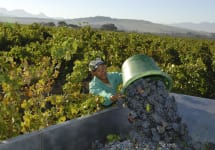
Meerlust is one of South Africa's most famous and historical wine estates. The land where the farm is now situated was originally owned by a powerful and wealthy free burgher named Henning Huising. After his death in 1713 the estate passed through many hands until it was bought in 1756 by Johannes Albertus Myburgh - and has remained in the Myburgh family ever since.
Nicholaas Myburgh (7th generation of the Myburgh family, and father of present owner Hannes Myburgh) took over the farm in 1950, but the condition of the property had declined severely from its 18th century splendor. Nicolaas set about an extensive restoration of both the buildings and the vineyards. One of his first projects was the construction of a damn that allows for irrigation in exceptionally dry years, but is usually used only after the vintage. He also replanted the vineyards with mainly red varietals.
The farm is approximately 15 kilometers outside Stellenbosch, and is the Stellenbosch estate nearest the Indian Ocean (the name Meerlust is of German origin, and translates to "pleasure of the sea"). The cooling breezes off False Bay allow a slower, steadier ripening period for the grapes. This translates to less loss of fruit aromas, and there is also a lesser risk of a crop being ruined in the event of a sudden, dramatic rise in temperature.

One of the world’s most classic and popular styles of red wine, Bordeaux-inspired blends have spread from their homeland in France to nearly every corner of the New World. Typically based on either Cabernet Sauvignon or Merlot and supported by Cabernet Franc, Malbec and Petit Verdot, the best of these are densely hued, fragrant, full of fruit and boast a structure that begs for cellar time. Somm Secret—Blends from Bordeaux are generally earthier compared to those from the New World, which tend to be fruit-dominant.

South Africa’s most famous wine-producing district, Stellenbosch, surrounds the historic town with the same name; fine winemaking here dates back to the late 1600s. Its valleys of granite, sandstone and alluvial loam soils between the towering blue-grey mountains of Stellenbosch, Simonsberg and Helderberg have the capacity to produce beautiful wines from many varieties. The climate is warm Mediterranean, tempered by the cool Atlantic air of nearby False Bay.
Perhaps most well-known for its Pinotage and Bordeaux blends, Stellenbosch also produces noteworthy wines from Syrah, Chenin blanc, Chardonnay and Sauvignon blanc. The district’s wards—Banghoek, Bottelary, Devon Valley, Jonkershoek Valley, Papegaaiberg, Polkadraai Hills and Simonsberg-Stellenbosch—all produce distinctive wines from vines with relatively low yields.