
Winemaker Notes
The 1999 vintage was characterised by an unusually dry autumn and winter with numerous frosts in both seasons. As a result, budbreak was later than normal in recent years. There were no spring frosts to reduce the harvest and heavy rain in the months of April, May and June. Completely dry summer with a little rainfall in September at harvest time.
Made using grapes from the best properties and vines of the Tempranillo variety from the gravelly soils of alluvial vineyards in the Duero region, this wine displays a violet red colour with no yellowish hues. Fruity aromas with hints of roses and bitter almond. The fragrance of roses emerges in the glass when the wine is still and the aromas of almond are revealed on agitation. Soft on the palate with a slight touch of acidity on the initial impression which passes to a final fixation of tannin on the edges of the tongue. Fermentation controlled at 24ºC. The wine is aged for 5 months in American oak barrels.
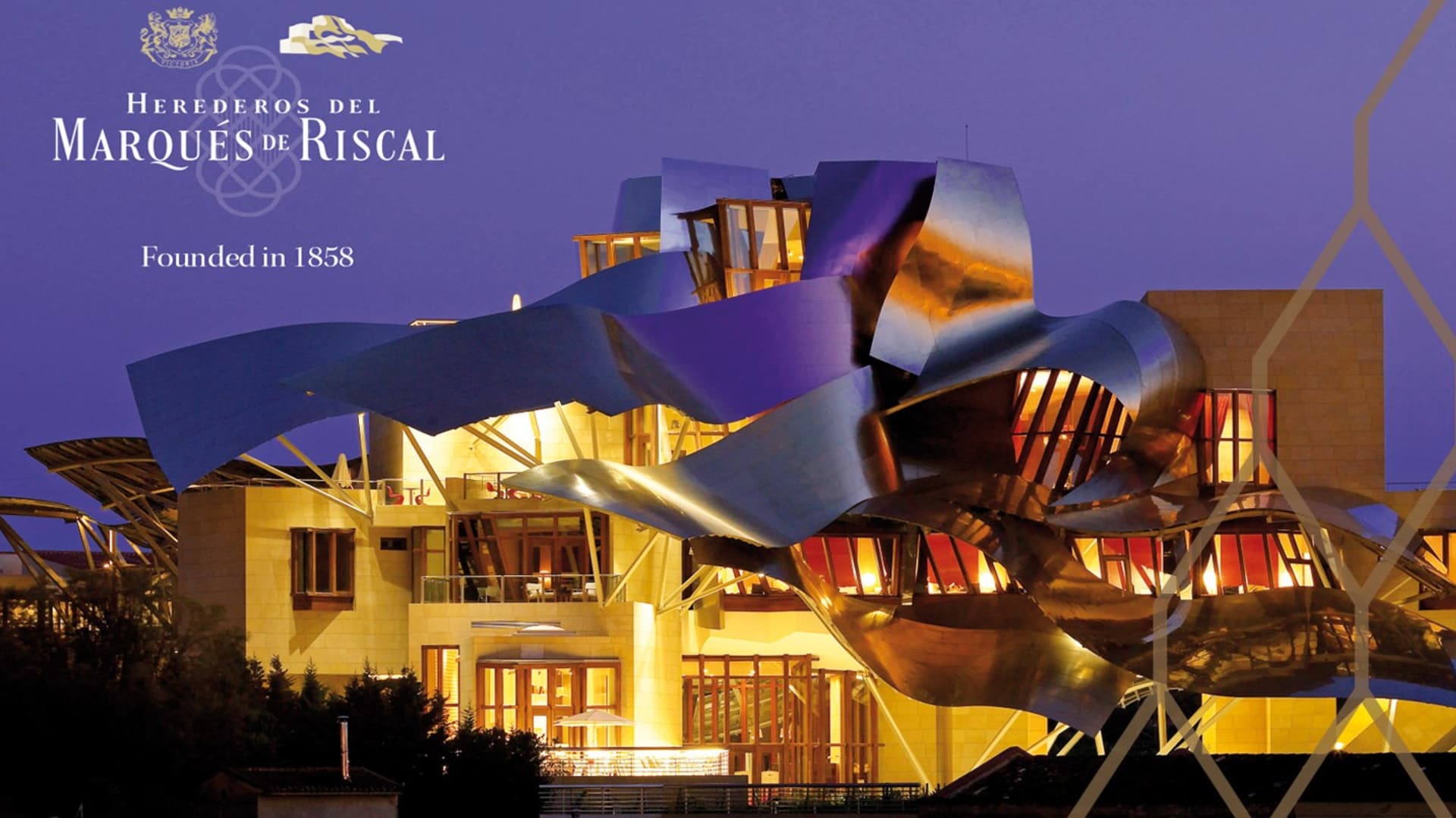



Wines of the Herederos de Marqués de Riscal has always been a leading and pioneering company in the wine producing sector. In 1858, it became the first winery in the Rioja to produce wines following the Bordeaux method and in 1972, it was the first winery to promote the Rueda Designation of Origin, where it produced its famous Marqués de Riscal white wines. Marqués de Riscal sells its products in over 70 countries and its wines have enjoyed the highest international distinctions as well as numerous awards and mentions in the media. Showcasing design, art, gastronomy, wine and the lush landscape all combine to create a memorable sojour… The vision of Frank O. Gehry was to create a 21st century château, an icon for one of the oldest wineries in the Rioja region, Vinos de los Herederos de Marqués de Riscal that connect the historic legacy with the modern art and wine nature. The building is a composition of rectilinear prisms that float above the ground by three super columns that support the building. The building rises nine meters above the ground and crosses the underground wine store of Marqués de Riscal to support itself with the three super columns. This allows spectacular views in all levels, to see the vineyards, Elciego, and the mountains of the Sierra de Cantabria as a background. Everything is wrapped in cascades of titanium (Canopies) colored in pink, gold and silver symbolizing the reddish hues of red wine, the mesh of the wine bottle of Marqués de Riscal and the capsule of the bottle

Hailed as the star red variety in Spain’s most celebrated wine region, Tempranillo from Rioja, or simply labeled, “Rioja,” produces elegant wines with complex notes of red and black fruit, crushed rock, leather, toast and tobacco, whose best examples are fully capable of decades of improvement in the cellar.
Rioja wines are typically a blend of fruit from its three sub-regions: Rioja Alta, Rioja Alavesa and Rioja Oriental, although specific sub-region (zonas), village (municipios) and vineyard (viñedo singular) wines can now be labeled. Rioja Alta and Alavesa, at the highest elevations, are considered to be the source of the brightest, most elegant fruit, while grapes from the warmer and drier, Rioja Oriental, produce wines with deep color, great body and richness.