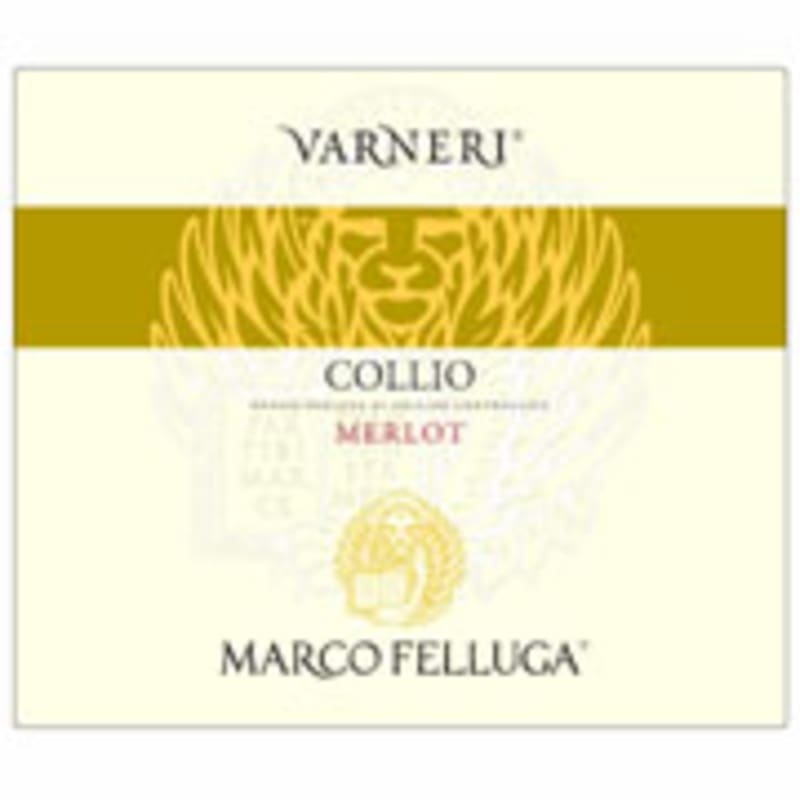

Winemaker Notes



The Marco Felluga family traces its wine-industry lineage to the late 1800s, when Ilaria Felluga's great-great-great-grandfather, Michele, started a business buying and selling wine in Istria (then part of the Austro-Hungarian Empire). Michele's son Marco added winemaking to the business, growing grapes and making some wine on the family farm just south of Trieste in what is now southwestern Slovenia. After World War I, Marco's son Giovanni continued the family wine trade, selling Istrian wine in Trieste and in Grado in southern Friuli. He also opened a cellar in Gradisca d'Isonzo in Collio in 1938, but World War II soon broke out, disrupting life for a decade. After the war, Istria became part of Soviet-dominated Yugoslavia; the family lost their farm there, and Collio became their home.
Two of Giovanni's seven children ultimately established wineries nearby. After graduating from the enology school in Conegliano, Marco Felluga worked for his older brother, Livio, before Livio started his own winery in Rosazzo. Marco stayed in Gradisca d'Isonzo and founded his winery in 1956. In 1967, he acquired the Russiz Superiore estate in Capriva del Friuli, which continues to operate as a separate winery. The Marco Felluga estate has vineyards in four parts of the Collio—Farra d'Isonzo, San Floriano del Collio, Oslavia, and Cormòns—allowing strategic grape selection. About 75% of production is white wine from international and local varieties. Russiz Superiore has 50 ha of vines, mainly from single vineyard lots, with some white wines vinified in oak.
In the 1990s, Marco's son Roberto began managing both estates, officially taking over in 2000, improving quality through sustainable viticulture. In 2017, his daughter Ilaria joined after studying viticulture and enology. Roberto died unexpectedly in 2021, and Marco in 2024, leaving Ilaria to manage the estates. The Tommasi Family partnered with her, aiming to preserve and enhance Collio's wine heritage. Today, Ilaria leads both estates, focusing on sustainability and high-quality wines, gaining recognition for her personality and deep knowledge of Friuli and her family's legacy.

With generous fruit and supple tannins, Merlot is made in a range of styles from everyday-drinking to world-renowned and age-worthy. Merlot is the dominant variety in the wines from Bordeaux’s Right Bank regions of St. Emilion and Pomerol, where it is often blended with Cabernet Franc to spectacular result. Merlot also frequently shines on its own, particularly in California’s Napa Valley. Somm Secret—As much as Miles derided the variety in the 2004 film, Sideways, his prized 1961 Château Cheval Blanc is actually a blend of Merlot and Cabernet Franc.

The source of some of Italy’s best and most distinctive white wines, Friuli-Venezia Giulia is where Italian, Germanic and Slavic cultures converge. The styles of wines produced in this region of Italy's far north-east reflect this merging of cultures. Often shortened to just “Friuli,” the area is divided into many distinct subzones, including Friuli Grave, Colli Orientali del Friuli, Collio Goriziano and Carso. The flat valley of Friuli Grave is responsible for a large proportion of the region’s wine production, particularly the approachable Pinot grigio and the popular Prosecco. The best vineyard locations are often on hillsides, as in Colli Orientali del Friuli or Collio. In general, Friuli boasts an ideal climate for viticulture, with warm sunny days and chilly nights, which allow grapes to ripen slowly and evenly.
In Colli Orientali, the specialty is crisp, flavorful white wine made from indigenous varieities like Friulano (formerly known as Tocai Friulano), Ribolla gialla and Malvasia Istriana.
Red wines, though far less common here, can be quite good, especially when made from the deeply colored, rustic Refosco variety. In Collio Goriziano, which abutts Slovenia, many of the same varieties are planted. International varieties like Merlot, Cabernet Sauvignon, and Cabernet Franc are also common, but they tend to be Loire-like in style with herbaceous character and mellow tannins. Carso’s star grape is the red Teranno, notable for being rich in iron content and historically consumed for health purposes. It has an earthy, meaty profile and is often confused with the distinct variety Refosco.