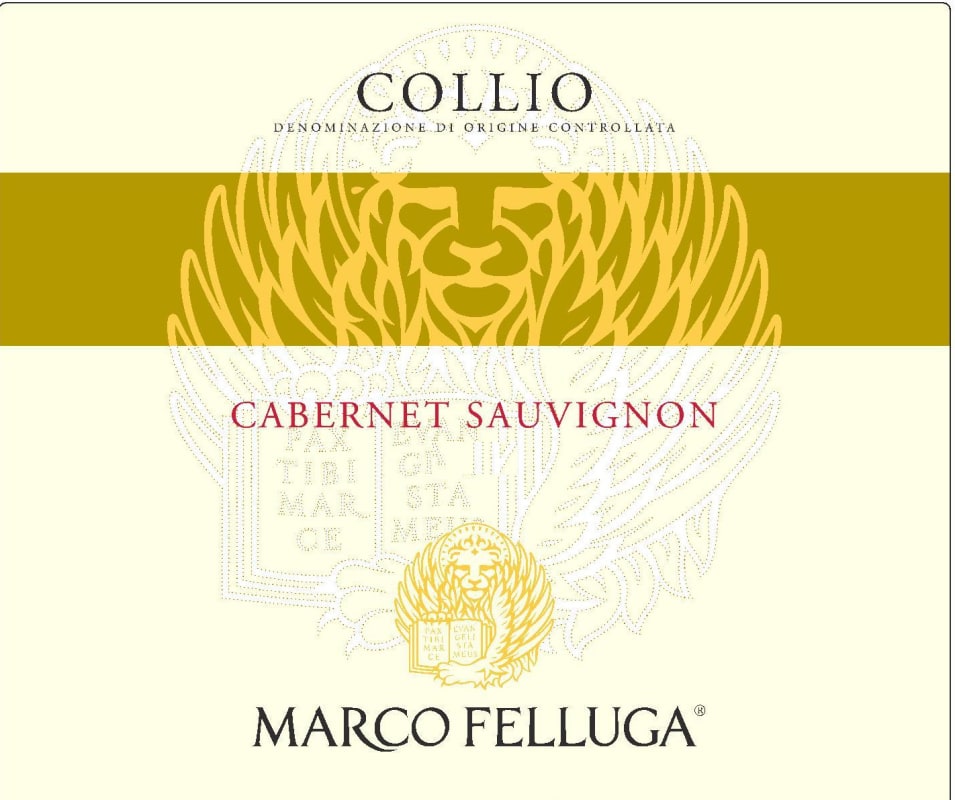

Winemaker Notes


The Felluga family traces its wine industry lineage to the late 1800s, when Roberto Felluga’s great-great-grandfather Michele started a business buying and selling wines in Istria (then part of the Austro-Hungarian Empire). Michele’s son Marco added winemaking to the business, growing grapes and making some wine on the family farm just south of Trieste in what is now southwestern Slovenia. After World War I, Marco’s son Giovanni continued the family wine trade, selling Istrian wine in Trieste and in Grado in southern Friuli. He also opened a cellar in Gradisca d’Isonzo in Collio in 1938, but World War II soon broke out, disrupting life for a decade.
After the war, Istria became part of Soviet-dominated Yugoslavia, the family lost their farm there, and Collio became their home. Two of Giovanni’s seven children ultimately established wineries in the vicinity. Marco Felluga, after graduating from the renowned enology school in Conegliano, worked for his elder brother Livio for a while, before Livio left to open his own winery in Rosazzo. Marco stayed in the walled 15th-century fortress town of Gradisca d’Isonzo and founded his eponymous winery in 1956.
Marco Felluga and Russiz Superiore are now managed by Marco's son Roberto Felluga, with Roberto's daughter Ilaria studying enology and perhaps to follow in the family business as the sixth generation. The vineyards are located in four different parts of Collio, Farra d'Isonzo, San Floriano del Collio, Oslavia, and Cormòns, which allows for strategic grape selection for the numerous wines produced. Three-quarters of the winery's production is white wines, made from both international and local grape varieties. The Marco Felluga line of white wines are kept mostly in stainless steel to ensure freshness but are also left on the lees to add richness and complexity. They are designed to improve with age for several years and are considered an incredible value given their pedigree and quality. They also make red wines from Merlot and the indigenous variety Refosco dal Peduncolo Rosso.

A noble variety bestowed with both power and concentration, Cabernet Sauvignon enjoys success all over the globe, its best examples showing potential to age beautifully for decades. Cabernet Sauvignon flourishes in Bordeaux's Medoc where it is often blended with Merlot and smaller amounts of some combination of Cabernet Franc, Malbecand Petit Verdot. In the Napa Valley, ‘Cab’ is responsible for some of the world’s most prestigious, age-worthy and sought-after “cult” wines. Somm Secret—DNA profiling in 1997 revealed that Cabernet Sauvignon was born from a spontaneous crossing of Cabernet Franc and Sauvignon Blanc in 17th century southwest France.

Collio is a crescent-shaped sub region of Friuli-Venezia Giulia that hugs right up against the Slovenian border. It is perfectly situated for growing wine grapes, especially of the white variety.
The Julian Alps to Collio’s north allow the influx of cool, nighttime breezes, while the Adriatic Sea to its south regulates the region’s temperatures. The area contains flysch soils,locally known as, ponca, a layered, sedimentary rock that formed millions of years ago as continents collided under the sea. Today the flysch soils that dominate the hills of Collio provide an interesting substrate for vine roots, with measurable mineral variations within small areas. The fractured layers of flysch soils also facilitate drainage and deepening of vine roots.
The region boasts a unique set of indigenous white varieties including Friulano, Ribolla Gialla, Malvasia and the rare, Picolit. International whites—Pinot Grigio, Pinot Bianco, Sauvignon (Blanc) and Chardonnay—have also been in the area for well over 100 years. Today Collio is often associated with crisp, clean, floral and fruity whites. But in recent years, there has been a resurgence in popularity of the ancient Slovenian style of fermenting white grapes on their skins. This process retains additonal colors and phenols, producing a complex finished wine with an orange hue, warranting the term, "orange wines."
Reds are far less common but the indigenous Pignolo makes an age-worthy red, and the international varieties Merlot and Cabernet grow here as well.