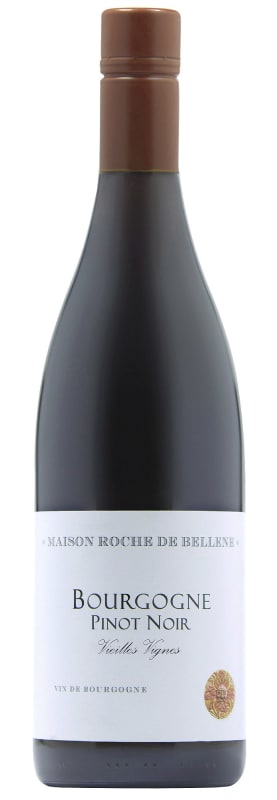


Winemaker Notes
The entry-level red Burgundy comes from old-vine vineyards in the Côte de Beaune and Côte Chalonnaise. The major part (80%) of this wine is matured in barriques and the remainder is produced in stainless steel. This maintains a pure style with bright fruit and a fine texture.
Professional Ratings
-
Wine Enthusiast
This fruity, lightly textured wine has ripe red-cherry and berry flavors. Balanced with some tannic dryness and lots of juicy acidity, the wine is ready to drink.


Celebrated as some of the best wine in the universe, red wine from Burgundy, otherwise known as red Burgundy, is Pinot noir. In fact Burgundy is the birthplace of Pinot noir and the source of the planet’s most sensual, delicate, valuable and sought-after Pinot noir wines.
Understanding and enjoying red Burgundy can stay simple, with a basic knowledge of its subregions, become more intricate by dialing down to the villages and vineyards or become a life-long passion, exploring climats (plots of vines), vintages and the post French Revolution land ownership laws. In any case, a fine red Burgundy will display refined nuances of black currant, red fruit, earth, spice, alluring floral aromatics and have great elegance, complexity and longevity.
Most famous, praised and collected of Burgunday are those from the Côte d'Or. Hundreds of millions of years ago, the area now called Côte d'Or was under a warm ocean whose sea floor has, over time, shifted and decomposed into various layers of limestone, sandstone and clay interspersed with ancient fossilized sea creatures. This is what is referred to as the famous escarpment upon which all of the highly sought-after Grands Crus and Premiers Crus vineyards can be found. In other words, from north to south, the best vineyards of Gevrey-Chambertin, Morey-St-Denis, Chambolle-Musigny, Vougeot, Vosne-Romanée, Flagey-Echezeaux, Nuits-St-Georges, Aloxe-Corton, Pommard and Volnay follow the path of this ancient sea bed.