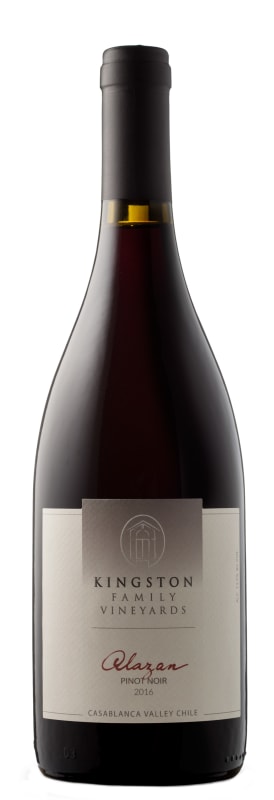


Winemaker Notes
The 2016 Alazan is one of the least extracted but most fruit-rich and energetic Alazans to date. It is forward and honest. Like all the Kingston Pinot Noirs, it shows little oak influence although most of it is raised in French oak cooperage. It sits in the red, rather than black fruit camp. There is an interesting note of spice that comes from the whole bunches and stems they use in the fermentations, as well as a note best described as RedHots candy, which may sound funny but gives the wine great liveliness.
This wine would do well with sophisticated fare with earthy/savory notes. In addition to its friendly, open personality, there is something classy about it too.
Professional Ratings
-
Robert Parker's Wine Advocate
The 2016 Pinot Noir Alazan was produced with fruit from their oldest vineyards planted in 1998 and 1999 in the Casablanca Valley. Some 15% of the wine matured in egg-shaped concrete vats, and the rest was kept in French oak barrels for eight months. There is more depth here, with contained ripeness and bright cherry aromas, hints of spices and a palate with good acidity and moderate alcohol.


Thin-skinned, finicky and temperamental, Pinot Noir is also one of the most rewarding grapes to grow and remains a labor of love for some of the greatest vignerons in Burgundy. Fairly adaptable but highly reflective of the environment in which it is grown, Pinot Noir prefers a cool climate and requires low yields to achieve high quality. Outside of France, outstanding examples come from in Oregon, California and throughout specific locations in wine-producing world. Somm Secret—André Tchelistcheff, California’s most influential post-Prohibition winemaker decidedly stayed away from the grape, claiming “God made Cabernet. The Devil made Pinot Noir.”

A region that has become synonymous with some of the best whites of Chile, the Casablanca Valley is full of dozens of bodegas who either grow fruit here or come from outside to source from local growers for their own white wine programs. The valley runs from east to west, which means that its westernmost vineyards receive the most cooling influence from the reliable afternoon sea breezes. The soils also tend to be heavier in clay in the west, whereas the eastern end of the valley is warmer and its soils are predominantly granitic. Sauvignon blanc thrives here, Chardonnay does well and Pinot noir is not uncommon.